
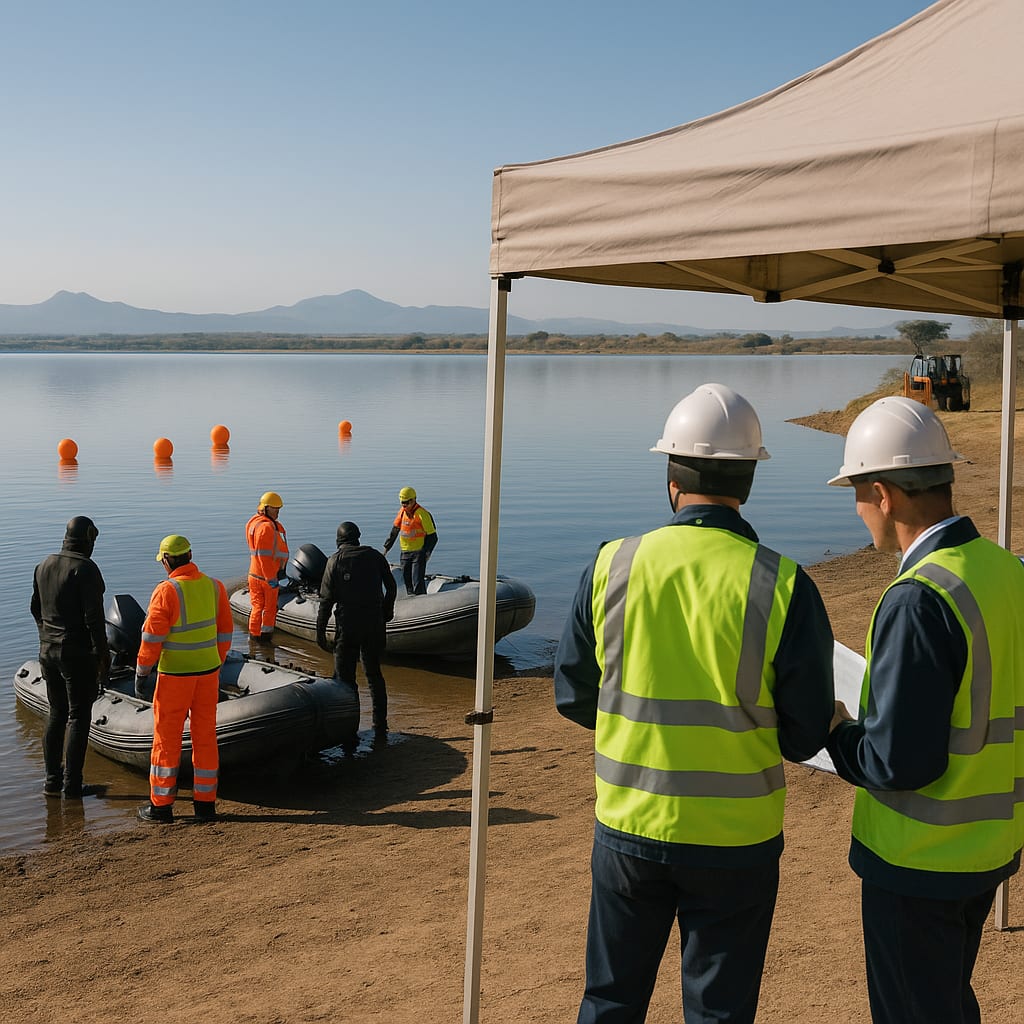
Zimbabwe’s Lake Kariba ferry disaster intensifies as death toll rises and government orders safety, transport fixes
Narrative Snapshot
Across outlets, the arc of coverage moves from immediate condolence and state directives to casualty verification and community impact. CGTN centers President Emmerson Mnangagwa’s framing of “serious deficiencies” in maritime capabilities, his declaration of a national disaster, and an instruction for security and safety agencies to lead remedial interventions, alongside state support for families and the accounting of the missing. AllAfrica, relaying New Zimbabwe, gives that policy response a sharper edge, noting pledges to replace the Mbuya Nehanda ferry and rehabilitate an impassable Kariba–Siakobvu–Chalala road, but underscoring that these commitments followed the loss of dozens of lives.
International wires and broadcasters foreground the human toll and operational factors. France24 and Le Monde emphasize that the ferry was a vital link for villagers and fish traders and reportedly overloaded; The Hindu adds capacity specifics, stating the boat was authorized for 90 but carried 114 adults plus five crew and an unspecified number of children. The Guardian, Toronto Star/AP, Al Jazeera, and Sky News track a rising death count, highlight the presence of child victims, and, in the Guardian’s case, cite heavy winds alongside overloading as factors. Divergent tallies across outlets reflect an evolving recovery effort rather than substantive disagreement on causes or the imperative for safety reforms.
What Happened
A passenger ferry capsized on Lake Kariba on Tuesday, on the Zimbabwe–Zambia border, prompting a large rescue and recovery operation. Zimbabwean authorities declared a national disaster and reported 77 people rescued, according to CGTN. The Hindu reports the vessel was authorized to carry 90 but had 114 adults and five crew aboard, with an unspecified number of children; multiple outlets describe it as overloaded. Casualty figures climbed as divers recovered additional bodies: the count moved from 44 (CGTN) and “at least 46” (France24) to 68 (The Hindu, Toronto Star/AP, The Guardian), 69 (Al Jazeera), and at least 72 (Sky News). Police and media updates variously cited 22, 23, or 26 bodies newly recovered on Saturday. Officials and outlets noted the ferry’s role as a key transport link for nearby villagers and fish traders (France24, Le Monde).
Why It Matters
The incident exposes chronic transport and safety deficits on an essential inland waterway where a ferry substitutes for reliable roads. AllAfrica’s report that the government will replace the Mbuya Nehanda ferry and urgently rehabilitate the Kariba–Siakobvu–Chalala road highlights a structural dependence on a single vessel for basic connectivity. CGTN’s account of presidential directives to maritime and security agencies signals a push to expand state capacity for inland maritime oversight, rescue, and enforcement. International reporting that the ferry was overloaded, combined with The Hindu’s capacity details, points to regulatory and operational gaps—licensing, load control, weather protocols—that have direct implications for public safety. For decision-makers, this underscores the need to align transport infrastructure investment with enforceable safety regimes on Lake Kariba, a cross-border lake where reliable casualty accounting, coordinated response, and community protection are foundational to regional mobility and livelihoods.
Diverging Narratives
Outlets diverge on the latest fatality count and incremental recoveries rather than on the broad contours of cause and response. CGTN reported 44 deaths on Wednesday; France24 cited at least 46 at a memorial; by Saturday, The Hindu, Toronto Star/AP, and The Guardian reported 68, Al Jazeera 69, and Sky News at least 72. Those differences track with staggered police updates on newly recovered bodies—22 (Le Monde, The Guardian), 23 (Al Jazeera), or 26 (Sky News)—and reflect the fluidity of a still-active search rather than conflicting interpretations.
On causation, multiple outlets emphasize overloading (France24, Al Jazeera, The Guardian), with The Hindu supplying capacity data, while the Guardian adds heavy winds as an aggravating factor. Framing of state action diverges more than facts: CGTN spotlights swift rescue efforts, presidential condolences, and directives for systemic fixes, whereas AllAfrica stresses that commitments to replace the ferry and repair the road arrived after the mass-casualty event. International pieces largely center on victim profiles—villagers, traders, and children—and the ferry’s role as a lifeline (France24, Le Monde, Toronto Star/AP), situating the disaster within everyday economic necessity.
What Happens Next
Key decisions now hinge on three linked tracks documented in the coverage. First is casualty accounting and recovery: police-reported tallies are still moving, with Saturday updates differing across outlets; analysts should watch for a consolidated official death toll and confirmation of the number of missing, as flagged by CGTN. Second is the investigation into operational factors: reporting points to overloading, capacity exceedance, and heavy winds; the publication of findings will shape enforcement priorities on loading limits and weather-related suspensions. Third is the government’s remedial program: Mnangagwa directed maritime and security agencies to lead safety interventions (CGTN), while authorities pledged to replace the Mbuya Nehanda ferry and rehabilitate the Kariba–Siakobvu–Chalala road (AllAfrica). Concrete procurement steps, budget allocations, and timelines for road works will indicate whether immediate pledges translate into durable transport and safety capacity on Lake Kariba.