
Europe’s fifth summer heatwave pushes record temperatures, deepens drought and strains infrastructure
Narrative Snapshot
Across outlets and regions, coverage converges on the breadth and intensity of Europe’s latest heatwave as a stress test for core systems: water supply, health care, energy, transport and wildfire management. European and international outlets report the UK’s hottest day of the year at 38.1C in London, temperatures of 40C and above in parts of France, and forecasts that more than 135 million people would face highs over 35C, with some accounts placing the exposed population closer to 150 million. Several sources emphasize Europe as the fastest-warming continent and in parts ill-prepared for sustained extreme heat, tying acute impacts to structural underinvestment in adaptation.
National lenses shape emphasis. British coverage details domestic extremes and resource constraints, from the Kew Gardens peak to “exceptionally low” reservoirs and mounting drought risk. French reporting interrogates why heatwaves are arriving so frequently, noting scientific debate over drivers even as the role of anthropogenic warming is not in doubt, and documents the lived persistence of heat in the southeast. German reporting foregrounds energy-system sensitivities, including nuclear output limits when rivers run hot and low. US outlets frame the continent-wide picture: repeated heatwaves, infrastructure under duress, mounting wildfire risk, uneven readiness, and the prospect of short-term meteorological relief.
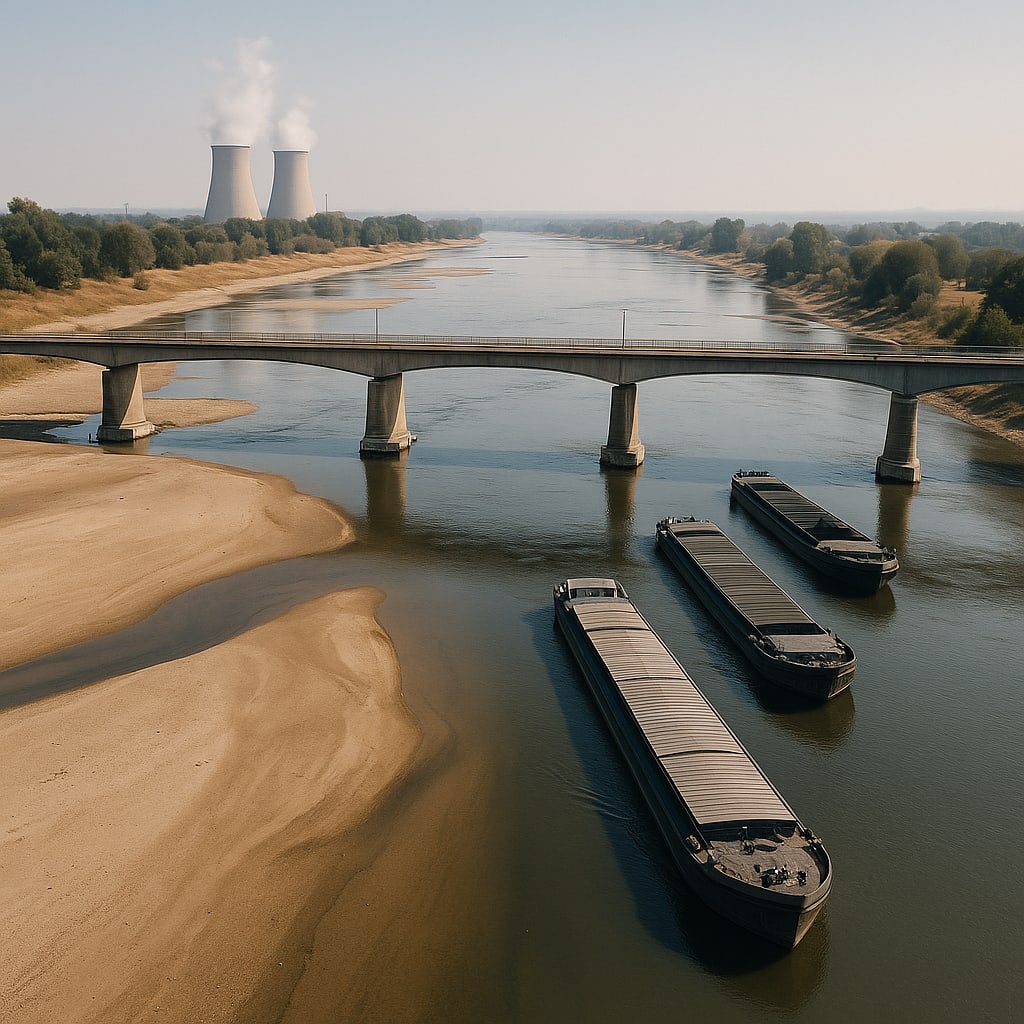
Global context threads through the reporting. Multiple outlets link land extremes with ocean anomalies, citing record-high average global sea temperatures and exceptionally warm waters around Europe. Others highlight downstream economic and social signals—from disrupted inland shipping on the Danube and Rhine and resurgent river hazards to escalating health risks in “cold” countries with low air-conditioning penetration and insufficient preparedness.
What Happened
A fifth heatwave since May gripped Europe in mid-August. On August 13, the UK provisionally logged its hottest day of the year at 38.1C at Kew Gardens, with forecasters expecting up to 38C in parts of England and more than 40C in parts of Europe under a heat dome. More than 135 million people were forecast to face temperatures above 35C, and reports cited as many as 150 million. France recorded temperatures soaring toward and above 40C, with Meteo-France noting highs over 42C in central regions. Central and eastern Europe set or approached records, including Austria, Slovakia, and Hungary. Authorities and monitors reported Western Europe’s hottest June–July on record, deepening drought, record-low river levels on the Danube and Rhine, and surging wildfire activity. Infrastructure strains included health services, water supply pressures across England and Wales, and curtailed nuclear output on hot, low rivers. Some outlets noted potential temperature relief by late weekend.
Why It Matters
The episode exposes structural vulnerabilities across multiple European systems. Energy security is sensitive to thermal and flow constraints on river-cooled nuclear plants, with operators forced to reduce output on critical days, which can affect grids and prices even if annual losses are limited. Water management is under pressure: reservoirs in England and Wales are “exceptionally low,” drought status expanded rapidly across English regions, and record-low river levels constrain shipping and energy logistics on key corridors like the Danube and Rhine. Public health readiness is uneven; lethal outcomes during a June heatwave in Belgium and neighbors reveal gaps likely to recur as new heat surges arrive. Climate-monitoring agencies report Western Europe’s hottest early summer on record and record-high global sea temperatures, placing national responses within persistent warming trends. The cumulative economic consequences are significant, with one study estimating heat’s costs at about 1% of EU GDP and major budgetary impacts in Italy.
Diverging Narratives
Attribution and mechanisms are treated with different emphases. French reporting underscores that while climate change’s role is uncontested, the sheer frequency of heatwaves was not anticipated, and possible atmospheric causes remain debated in the scientific community. US coverage points to shifts in weather patterns—such as persistent high-pressure systems and heat domes—to explain repeated European extremes. Global agencies add a diagnostic layer: the WMO cites a pattern of alternating high- and low-pressure systems across the Northern Hemisphere, consistent with observed land and marine heat anomalies.
Readiness is another fault line. Several international outlets stress that Europe is the fastest-warming continent and parts of it are ill-equipped for extreme heat, with limited air conditioning in countries historically built for cold seasons. Others highlight active, if strained, institutional responses: the UK’s National Drought Group expanding drought status to cover nearly three-quarters of England, water-use restrictions, and ad hoc energy-saving measures as rivers fall. Temporal framing also diverges. Some coverage flags imminent moderation of temperatures, while local reporting from southeastern France documents a near-unbroken stretch of heat since May that is exhausting residents. Finally, impact metrics vary: estimates of population exposure to 35C-plus heat range from more than 135 million to at least 150 million, reflecting different forecasting windows and geographies.
What Happens Next
Several decision points will shape impacts. Water management choices in the UK and beyond—whether to extend or tighten restrictions—will track reservoir levels and rainfall into autumn; outlets warn of “real trouble” for public supply if dry conditions persist. Energy operators will face recurring short-term constraints when river temperatures and levels breach operating thresholds, with implications for grid balancing and price spikes on peak days; observers should watch plant output adjustments and regulatory waivers during heat episodes. Transport and industry responses will depend on Danube and Rhine levels; shipping restrictions signal knock-on effects for fuel, commodities, and power generation logistics. Health authorities’ readiness measures are likely to be tested again, especially in regions flagged as underprepared after lethal outcomes earlier in the summer. Climate services’ reporting on sustained marine heat and continued heatwave patterns will inform whether this season’s acute pressures harden into medium-term adaptation imperatives across sectors.