
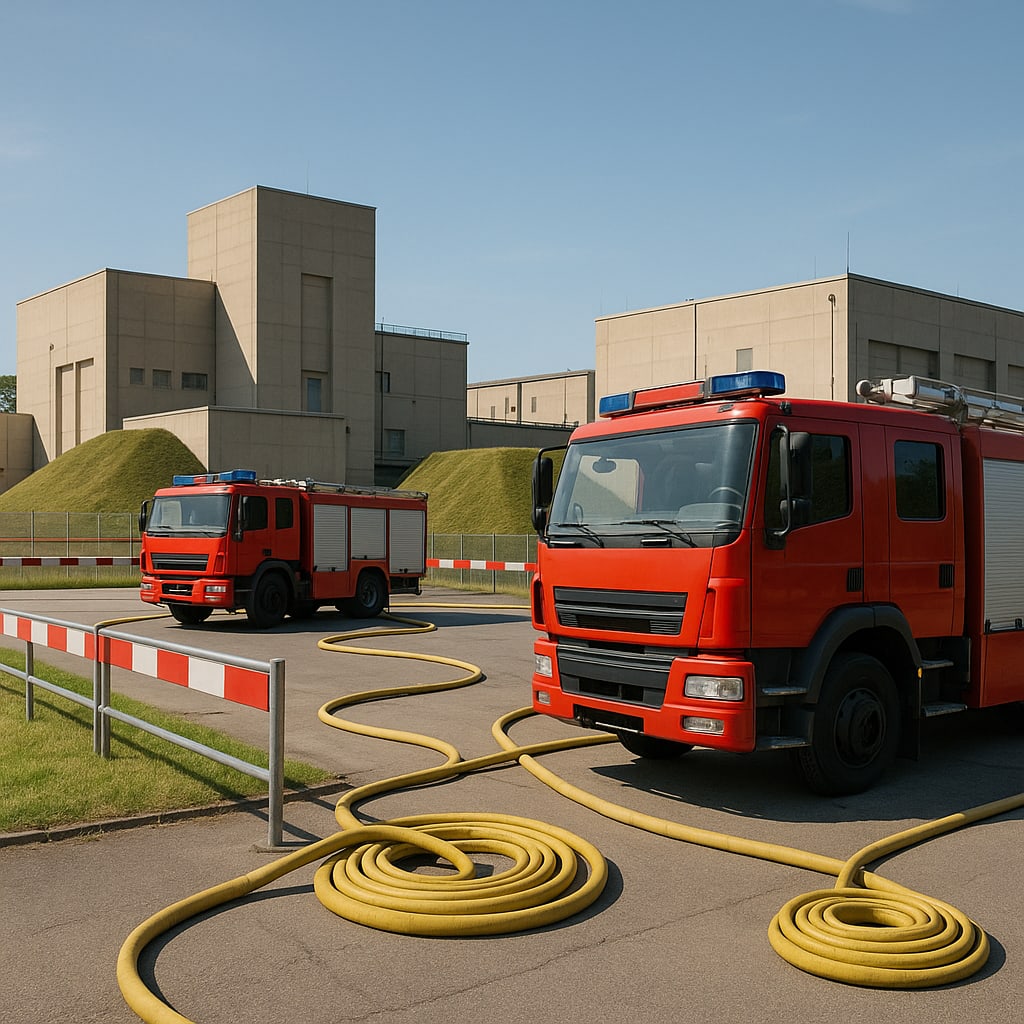
Explosion and fire reported at KNDS-linked ammunition plant near Rome; no injuries
Narrative Snapshot
Across outlets, the baseline facts align: an explosion struck a munitions facility in Colleferro, south of Rome, with no reported casualties. Italian and Russian state-affiliated wires emphasize plant identity and operational detail. ANSA points to the powder pressing department as the incident site, while TASS situates the event at the former “Sammel/Simmel Difesa” works, reflecting a focus on legacy and plant lineage. Global general-interest coverage—Associated Press via the Toronto Star and Al Jazeera—highlights location and magnitude, using language like “powerful” and “huge” to characterize the blast but without extending into supply-chain implications.
Ukrainian and Russian outlets explicitly link the plant to the Ukraine war supply chain. The Kyiv Independent identifies the operator as KNDS Ammo Italy and says the facility produces artillery shells supplied to Ukraine through European partners. RT underscores the same connection, specifying 155mm shells and adding eyewitness-style video and local color from the mayor. What is most at stake in these framings is whether the episode is treated as a local industrial incident or as a stress point in Europe’s transnational munitions pipeline.
What Happened
An explosion and fire struck an ammunition plant in Colleferro, south of Rome, on Thursday. Italian outlet ANSA reported the incident would have occurred in the powder pressing department. Local authorities cited by the Associated Press, via the Toronto Star, reported no injuries; Clarin also noted no victims. RT reported that Mayor Giulio Calamita said a larger tragedy was averted because many employees were on summer holiday, and that 24 workers present were safe, citing RAI. RT also described footage showing flames followed by a blast. TASS identified the site as the former “Sammel Difesa” factory; ANSA described it as the ex Simmel Difesa plant. The Kyiv Independent said the facility is operated by KNDS Ammo Italy, part of the French-German defense group KNDS, and produces artillery shells supplied to Ukraine via European partners.
Why It Matters
The link drawn by the Kyiv Independent and RT between the Colleferro facility and European deliveries of artillery shells to Ukraine situates a local industrial incident within the broader architecture of Europe’s defense production. If, as reported, the plant contributes to shell supplies for Ukraine, the episode touches on allied efforts to sustain munitions output and manage single-point vulnerabilities. The emphasis by ANSA on a specific department underscores operational risk within critical nodes of that supply chain. For municipal authorities, the mayor’s comments reported by RT reflect the persistent governance challenge of balancing community safety with the presence of strategic industry. For European governments and industry consortia, the incident highlights the importance of redundancy, safety assurance, and transparent communication in defense manufacturing that is interwoven with alliance commitments.
Diverging Narratives
Outlets converge on the absence of casualties, but diverge on framing. ANSA and TASS anchor their accounts in plant identity and process details, keeping the focus on the site’s legacy and the department implicated. AP reporting carried by the Toronto Star, along with Al Jazeera, privileges immediacy and scale without assigning strategic significance. Clarin adds product scope—medium and large-caliber ammunition for land and naval defense—broadening the industrial context without touching on Ukraine.
By contrast, the Kyiv Independent centers the plant’s role in supplying Ukraine via European partners, and RT adopts a similar linkage, adding the 155mm caliber and portraying KNDS as a major Ukrainian supplier. RT layers in mayoral remarks and viral video, shaping a narrative that blends strategic relevance with spectacle. A minor inconsistency appears in the plant’s legacy name—“Sammel” in TASS versus “Simmel” in ANSA—while no source identifies a cause, quantifies damage, or describes production impacts, leaving those material questions open.
What Happens Next
Two decision points stand out. First, operator and local authority communications: ANSA’s reference to the powder pressing department is preliminary; further statements could confirm the affected area, clarify damage, and update personnel counts, complementing the no-injury reports from AP/Toronto Star, Clarin, and RT’s RAI-cited figures. Analysts should watch for KNDS Ammo Italy or municipal briefings that establish the incident’s scope.
Second, supply-chain signaling: because the Kyiv Independent and RT tie the plant to artillery deliveries for Ukraine, any KNDS update on operational status will shape perceptions of continuity or strain. If the company indicates minimal impact and rapid normalization, the narrative remains one of resilience; if it acknowledges disruptions, European partners may need to rebalance sourcing. Monitoring for calibrated statements by KNDS, mentions of 155mm output as highlighted by RT, and follow-on coverage about production timelines will indicate which path is taken.