
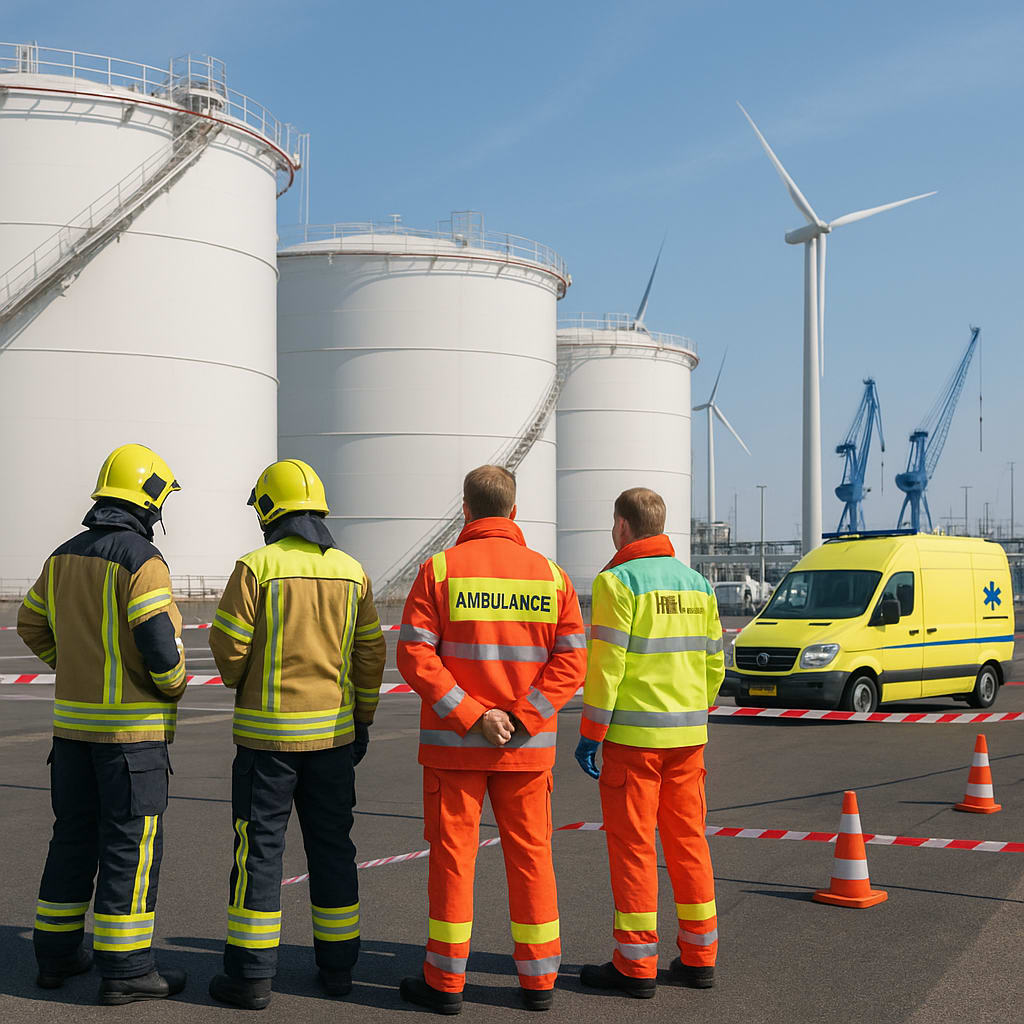
Explosion at Rotterdam petroleum storage site kills one, injures several as probe focuses on maintenance context
Narrative Snapshot
Across outlets, the core facts align: a blast at a petroleum products storage facility in the Port of Rotterdam left at least one person dead and injured multiple others, with authorities investigating the cause. Several reports emphasize the industrial setting and the operator link: the facility is associated with Gunvor, a major energy commodities trader, and statements from both company and police stress that maintenance work was underway and that there is no immediate sign of sabotage.
Differences cluster around precision and emphasis. Some outlets specify casualty figures while others keep them broad; some foreground the facility’s role within Europe’s largest port and the scaling up of emergency response. The stakes in coverage hinge on whether investigators ultimately attribute the incident to maintenance-related factors, how authorities characterize the risk environment at petroleum storage sites, and how operators communicate about safety and incident management.
What Happened
An explosion on Thursday at a storage facility for petroleum products in the Port of Rotterdam killed at least one person and injured several others, according to Dutch officials and city police cited by multiple outlets. Sky News reported six people wounded, while other reports described “several” injuries. The blast occurred around 11:30 a.m., Dutch regional broadcaster Rijnmond reported, as relayed by CGTN. A spokesperson for Gunvor, identified as a major energy commodities trading company, said the incident happened during maintenance work on a storage tank. Police said the cause was unknown, there was no immediate sign of sabotage, and all possible scenarios were under investigation. ANSA specified the site as a branch of the Swiss-based Gunvor Group, adding that inquiries are ongoing. Emergency services significantly scaled up their response, according to CGTN.
Why It Matters
The incident took place at a petroleum products storage facility within Europe’s largest port, a hub setting underscored by multiple outlets and explicitly noted by the South China Morning Post. Company and police statements place the episode in a maintenance context while stressing that investigators have not identified a cause and see no immediate sign of sabotage. That combination—industrial maintenance work at a major port facility, a fatal outcome, and an expanded emergency response—situates the event squarely within how authorities and operators manage safety and incident response at oil product storage sites. Because the site is linked to Gunvor, described as a major energy commodities trading company, subsequent official findings and company communications will shape how the episode is recorded and understood in the operational and regulatory narratives surrounding port-based petroleum infrastructure.
Diverging Narratives
Variation is most visible in casualty reporting and causal framing. Sky News cites six injuries, while other outlets, including the Toronto Star (via AP), report “several” wounded; all agree on at least one fatality. On causality, the South China Morning Post reports a Gunvor spokesperson’s statement that the incident occurred during maintenance on a storage tank, which is directionally consistent with TASS noting repair works. At the same time, officials quoted by SCMP say the cause remains unknown, that all scenarios are being examined, and there is no immediate sign of sabotage, highlighting investigative openness alongside a preliminary rejection of deliberate harm. ANSA anchors the location to a branch of the Swiss Gunvor Group and states that investigations are ongoing, while CGTN adds timing and the scaling up of emergency response. Some reports emphasize the facility’s petroleum profile and the port’s status; others offer more concise updates without additional context.
What Happens Next
Key decision points center on the investigative determination of cause. Police have said all scenarios are under investigation, with no immediate sign of sabotage; analysts should watch for formal updates that either confirm a maintenance-related accident, as suggested by the Gunvor spokesperson and echoed by TASS, or identify another cause. Casualty figures also remain fluid in reporting, with “several” versus “six” injuries; official statements from Dutch authorities will clarify the toll. Company communications are another focal point: Gunvor’s initial characterization places the event during maintenance, and further disclosures may address the status of the affected tank and site operations. Emergency services have already scaled up their response, according to CGTN; subsequent announcements from local authorities will indicate when that posture changes and what investigative steps follow, framing the timeline for conclusions on both causality and any necessary remedial measures.