
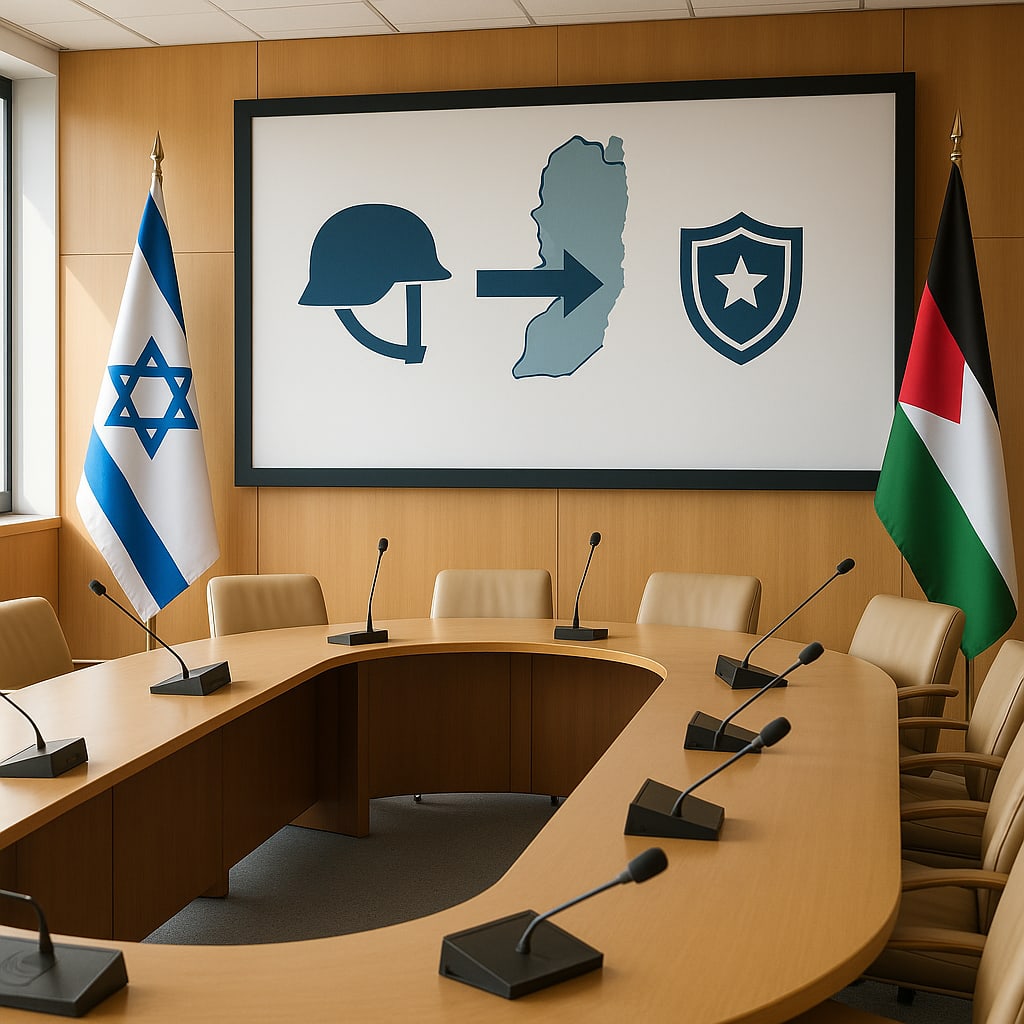
Israel moves to shift West Bank civilian enforcement from army to police
Narrative Snapshot
Across outlets, the move is widely framed as structurally significant rather than procedural. Middle East Eye, The Hindu, Folha de S.Paulo, and Tehran Times converge on the assessment that transferring “civilian” enforcement from the army to the police advances de facto annexation of occupied territory. The Guardian underscores that Palestinian leadership calls it a “flagrant violation of international law” and a step toward full annexation, while the Organisation of Islamic Cooperation, reported by IRNA and Middle East Eye, warns of “grave risks” and cites the International Court of Justice’s advisory opinion. This cluster of coverage centers legal status and international response as the core stakes.
Israeli official framing emphasizes normalization and security compartmentalization. Katz argues police oversee civilian affairs “in every other place in the State of Israel,” with the army refocused on “Palestinian terrorism” and border protection, according to Middle East Eye. The same report notes the announcement was not coordinated with the military or police, yet cites Israel Hayom’s claim that the army welcomed the shift and had pushed for it. The Bangkok Post highlights domestic pressure from Israel’s right wing over the army’s attempts to remove settlers harassing Palestinians, while The Guardian situates the decision alongside recent failures to stop militants besieging Palestinian families in Qusra. In parallel, The Guardian’s earlier briefing points to an accelerated push on settlements and challenges at al-Aqsa ahead of Israeli elections, suggesting a broader pattern into which this policing transfer is being read.
What Happened
Israel’s defense minister, Israel Katz, instructed the military to draft a plan to transfer law enforcement for civilian matters in the occupied West Bank from the army to the police. His office said the police would build an “appropriate force” for civilian issues, leaving the army to focus on “Palestinian terrorism” and border and community protection, Middle East Eye reported. The move was announced without coordination with the army or police, though Israel Hayom was cited as reporting that the military welcomed the change and had advocated it for weeks. The Guardian said the plan covers policing of Israelis in the West Bank and followed criticism over the army’s failure to confront militants besieging Palestinian families in Qusra. The Bangkok Post noted right-wing criticism of the army for trying to remove settlers harassing Palestinians. Palestinian and OIC officials condemned the shift as unlawful and escalatory.
Why It Matters
Several outlets characterize the policing transfer as a legal and institutional inflection point that normalizes Israeli domestic policing structures inside occupied territory. Middle East Eye, The Hindu, Folha de S.Paulo, and Tehran Times describe it as a step toward de facto annexation; The Guardian reports a Palestinian vice-president calling it a gross breach of international law. The OIC’s statements, carried by IRNA and Middle East Eye, invoke the ICJ advisory opinion and urge UN Security Council action, signaling potential multilateral friction.
The move intersects with broader policy dynamics. The Guardian’s recent briefing ties it to a wider acceleration of settlement expansion and pressure around al-Aqsa. In the UK, Middle East Eye reports the government is preparing post-recess measures that could include a ban on goods from illegal settlements, suggesting space for allied policy responses to tighten. For decision-makers, the issue tests enforcement of non-recognition norms, the capacity of international institutions to deter further institutionalization of occupation, and the trajectory of third-country trade and sanctions policies related to settlements.
Diverging Narratives
Israeli officials frame the shift as rational administrative alignment and security optimization. Katz argues that, as elsewhere in Israel, police should handle civilian matters, freeing the army to address terrorism and borders (Middle East Eye). According to Israel Hayom, as relayed by Middle East Eye, the army has favored this realignment, though the public announcement was not coordinated with security bodies. The Bangkok Post notes domestic right-wing pressure on the army over attempts to remove settlers harassing Palestinians, indicating a political backdrop favoring reduced military intervention in settler conduct.
Opponents focus on legality and annexation. The Guardian quotes a Palestinian vice-president calling the plan a “flagrant violation of international law” and a step toward full annexation. Middle East Eye, The Hindu, Folha de S.Paulo, and Tehran Times similarly present the transfer as consolidating Israeli control. The OIC warns of “grave risks,” labels settlement-related institutions illegal, and urges UNSC pressure (IRNA; Middle East Eye). Coverage also emphasizes settler violence and the Qusra siege context (Middle East Eye; The Guardian; Bangkok Post). The Guardian’s earlier analysis situates the policy in a broader pattern of accelerated settlement expansion and challenges to the al-Aqsa status quo. Separately, The Times of Israel highlights Katz’s hardline posture in Lebanon, underscoring a security-first orientation, though it does not directly address the West Bank policy shift.
What Happens Next
Three decision points will shape outcomes. First, the scope and mechanics of the transfer depend on the plan the defense ministry tasked the army to prepare; indicators include whether the police formally stand up a dedicated West Bank unit and how responsibilities are delineated between police and army (Middle East Eye). Second, domestic alignment: Middle East Eye notes the announcement was uncoordinated; watch for formal endorsements or objections from the military and police leadership, and for whether right-wing political actors press for rapid implementation, as suggested by Bangkok Post’s account of settler-related pressure. Third, external response: the OIC has urged UN Security Council action (IRNA; Middle East Eye), and Middle East Eye reports the UK is considering measures such as a settlement-goods ban in September. Analysts should track UNSC scheduling, allied policy announcements, and whether escalations like the Qusra incidents recur, as these could influence both Israeli timelines and international responses.