
Vance makes low oil prices top U.S. goal in Iran war, with new sanctions looming
Narrative Snapshot
Across outlets with different vantage points, there is broad agreement that Vice President J.D. Vance publicly reordered Washington’s objectives by placing cheap oil and gasoline for U.S. consumers ahead of nonproliferation. U.S., Israeli, Indian, Thai, Russian, and British-based coverage all carry the core formulation that “goal number one” is low prices, with “goal number two” to prevent Iran from acquiring a nuclear weapon. Several outlets situate the remarks within an imminent escalation of economic pressure, with Treasury Secretary Scott Bessent signaling unprecedented measures and officials or cabinet members threatening an indefinite maritime squeeze.
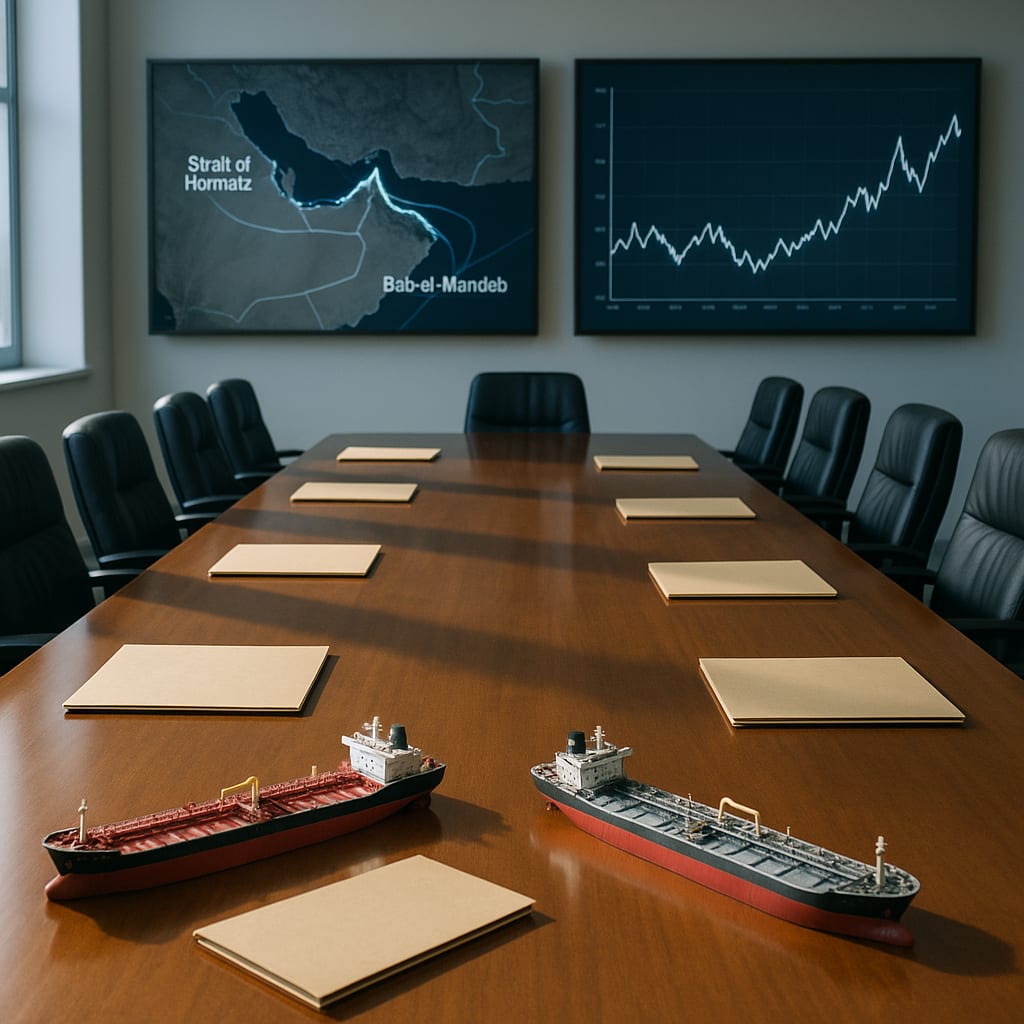
Where the coverage diverges is in how control over maritime chokepoints is described and by whom it is exercised. Hong Kong and UK-based reporting stresses the leverage Iran has accrued by constraining the Strait of Hormuz and elevating it in negotiations, while U.S. and Israeli outlets frame American threats of an indefinite blockade and “never before seen” isolation as the next turn of the screw. In parallel, reporting on Red Sea dynamics highlights Houthi threats to Bab el‑Mandeb and the potential for a U.S. basing shift along Africa’s coast, underscoring how a Hormuz-centered conflict is radiating across adjacent sea lanes.
Several pieces pull policy and politics into the same frame. A U.S. domestic measure—the narrowed extension of the Jones Act waiver to ease fuel transport amid disrupted crude flows—anchors Vance’s prioritization in concrete economic management. At the same time, Fox News’ scrutiny of CNN’s anonymous sourcing on Iran talks and an official’s pushback about “foreign propaganda” reflect contested narratives about the state of negotiations. Finally, local reporting from Pakistan’s Balochistan spotlights downstream economic disruption from the war, a dimension largely absent from the Washington‑ and Jerusalem‑centric policy emphasis elsewhere.
What Happened
Vice President J.D. Vance said on Fox News that keeping oil and gas “cheap for Americans” is the United States’ “goal number one” in the Iran war, with preventing Tehran from obtaining a nuclear weapon as “goal number two.” The remarks were widely reported across U.S. and international outlets. Treasury Secretary Scott Bessent said new “economic punishment” is imminent, pledging measures “like have never been seen” in economic isolation next week. U.S. officials and cabinet members also threatened an indefinite naval blockade. Reporting from Hong Kong highlighted that Iran has gained leverage by shutting down or severely restricting the Strait of Hormuz and putting it at the center of talks. The UAE’s WAM agency reported two vessels struck transiting Hormuz, according to ADNOC. In the Red Sea, Iran‑backed Houthis vowed to close Bab el‑Mandeb and conducted attacks. Domestically, President Trump extended and narrowed a 90‑day Jones Act waiver to ease fuel transport.
Why It Matters
By publicly elevating price stability over nonproliferation, the administration is reshaping the stated hierarchy of U.S. war aims, with implications for alliance cohesion and signaling. Israeli and U.S. coverage emphasizes an indefinite maritime blockade and unprecedented sanctions, moves that could test coordination with Gulf partners already absorbing shipping attacks and price pressures. Maritime chokepoints—Hormuz and Bab el‑Mandeb—are now central instruments of leverage, as noted by Hong Kong and UK outlets, reinforcing a longer‑term trend in which control of sea lanes conditions negotiation dynamics and economic resilience.
Institutionally, a sanctions escalation of the scale previewed by Treasury would expand coercive economic statecraft and raise enforcement demands across jurisdictions. Regionally, reporting on potential U.S. basing shifts along Africa’s Red Sea coast and on China’s expanding military footprint in Djibouti points to intensifying great‑power competition around maritime access. Localized spillovers—from Pakistan’s fuel smuggling lifelines to Gulf shipping casualties—signal humanitarian and governance pressures that multilateral bodies will confront if chokepoint disruptions persist.
Diverging Narratives
Outlets differ on agency and leverage at sea. Hong Kong reporting says Iran has “shut down” Hormuz and forced it to the top of the negotiating agenda; a U.S. piece underscores “severely restricted” access. By contrast, U.S. and Israeli reports emphasize that Washington has threatened or could sustain an indefinite blockade of Hormuz and that Iran faces “never before seen” isolation—framing coercion as primarily American. These frames coexist with on‑the‑water facts from the UAE’s WAM, via ADNOC, of vessels struck in Hormuz.
On aims and trade‑offs, UK‑based coverage highlights a contrast between Vance’s prioritization of cheap oil and President Trump’s prior framing of nonproliferation as the sole objective even at economic cost. Several outlets center imminent sanctions; a U.S. analyst warns Tehran may answer “kinetically” as pressure mounts, placing military escalation as a likely countermove rather than a bargaining chip. Meanwhile, China’s state media stresses quiet U.S. diplomacy and Iran’s institutional steps—a parliamentary framework for Hormuz “security” and top‑level security reshuffles—casting Tehran as organizing for a drawn‑out standoff rather than merely reacting.
Finally, media process becomes part of the story. Fox News’ challenge to CNN’s anonymous sourcing on negotiations and an official’s dismissal of “snub” reports as propaganda introduce uncertainty about the status and direction of talks. Parallel local reporting from Balochistan foregrounds livelihoods disrupted by curtailed informal fuel trade, a perspective absent from security‑first narratives but indicative of the conflict’s broader economic reach.
What Happens Next
Three decision points emerge. First, Treasury’s promised sanctions package “next week” will signal the administration’s escalation ceiling: specificity, scope, and enforcement mechanisms will indicate whether “never before seen” isolation is operationalized or rhetorical. Second, maritime posture at Hormuz and Bab el‑Mandeb will clarify leverage. If Washington moves from threats to a sustained blockade, as reported by U.S. and Israeli outlets, watch for shipping patterns, naval deployments, and insurer behavior; if Iranian restrictions persist, as highlighted by Hong Kong reporting, expect negotiations to hinge on phased reopening terms. Third, regional spillovers will shape basing and partnership choices. U.S. interest in African Red Sea partners amid Houthi threats—and China’s expansion in Djibouti—are signals to track for access agreements.
Analysts should watch for vessel strike tempo in Hormuz, any implementation steps from Iran’s Hormuz “security” plan, adjustments to the Jones Act waiver as a domestic price lever, and indicators of Iranian “kinetic” pushback as sanctions tighten.