
Renewed Yemen fighting, Houthi-claimed strikes on Saudi oil sites, and activation of a Saudi-led maritime coalition
Narrative Snapshot
Across outlets, there is broad agreement that hostilities between Yemen’s Houthi movement and the Saudi-backed government have intensified, with cross-border repercussions. Canadian and Argentine reporting frames the flare-up as raising the risk that Yemen’s civil war could reignite while worsening humanitarian stress, echoing UN warnings about famine risk and a possible collapse of the 2022 truce. Regional and European coverage foreground battlefield and cross-border dimensions: French and UK outlets detail lethal Houthi strikes in Mokha/Moka and repeated Houthi claims of drone attacks on Saudi Aramco facilities in Jizan and Najran, alongside Saudi official statements that a Jizan refinery fire was extinguished without a stated cause.
Outlets diverge on framing. Some situate the violence within a wider Iran–US confrontation and maritime contestation, reporting Houthi declarations of a blockade of Saudi-linked shipping in tandem with Iranian moves around the Strait of Hormuz. Others focus on local fear of renewed displacement and on changes in the military balance, noting that drones are now a contested capability rather than an asymmetric edge for a single side. Reporting from Russia and China highlights Saudi Arabia’s formal launch of a multinational maritime coalition and, separately, a purported Turkey–Saudi–Pakistan defense pact, while US reporting links Red Sea threats to potential shifts in Washington’s regional posture.
What is most at stake, across sources, is the intersection of Yemen’s internal conflict with regional energy infrastructure and strategic waterways. Coverage consistently connects violence in Mokha and along the Saudi–Yemen frontier to risks for Red Sea navigation and Saudi oil assets, even as casualty figures, the status of the truce, and the effectiveness of claimed blockades are recounted differently.
What Happened
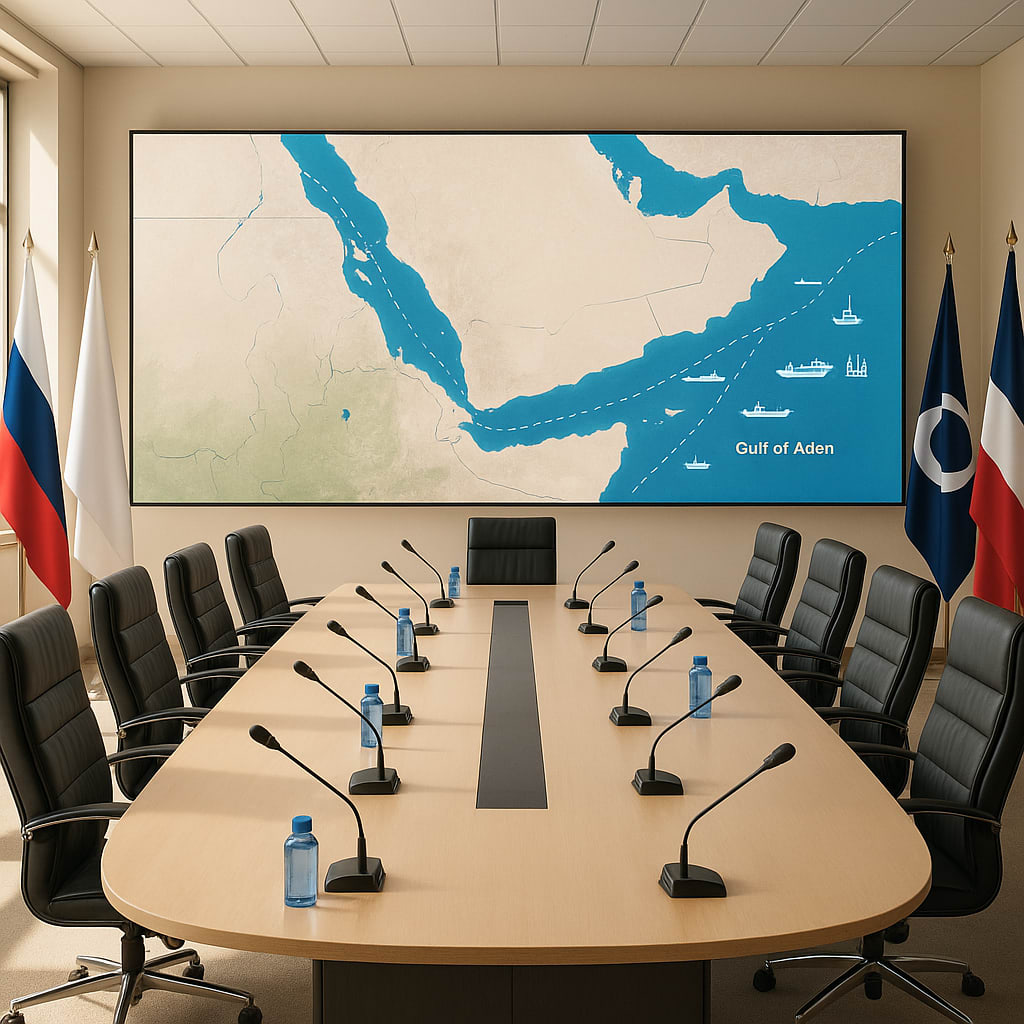
Houthi forces launched attacks on government-held areas, including strikes on the port city of Mokha/Moka that killed at least eight to eleven people, according to French and UK reporting that cited local medical sources, while a Russian outlet relayed higher injury counts from government-aligned media. The Houthis also claimed multiple drone strikes against Saudi Aramco facilities in Jizan and Najran; Saudi authorities confirmed a Jizan refinery fire was extinguished and reported no casualties, without specifying a cause. In response to a new Houthi offensive, Yemeni government forces backed by Saudi Arabia struck back in areas under their control. UN warnings described the highest risk since the 2022 truce of a return to war amid a deepening humanitarian crisis, as other coverage noted UN famine concerns. Saudi Arabia announced the formal activation of a multinational maritime defense coalition to safeguard Red Sea and Gulf of Aden shipping.
Why It Matters
The reported escalation bridges Yemen’s internal battlefield and regional strategic arteries. Houthi claims of targeting Saudi energy infrastructure and announcing a blockade of Saudi-linked shipping, alongside lethal strikes in Mokha, move the conflict into direct tension with Red Sea commerce and Saudi oil assets. Saudi Arabia’s activation of a multinational maritime coalition signals a shift toward institutionalized protection of shipping lanes, including intelligence sharing and joint operations. Analysis also points to a changing military environment in Yemen: drones are now fielded by multiple actors, eroding prior asymmetric advantages and complicating air defense and escalation management. UN warnings about famine risk and truce fragility underscore limited international capacity to contain humanitarian fallout if fighting widens. External linkages—reported Iranian conditions for reopening Hormuz and discussions of new security alignments—tie Yemen’s trajectory to broader regional deterrence frameworks and the stability of two chokepoints: Bab al-Mandeb and the Strait of Hormuz.
Diverging Narratives
Claims and attributions differ across outlets. The Houthis frame cross-border strikes as responses to Saudi violations of Yemeni airspace and to an “unjust siege,” a view amplified in Iranian and Russian reporting that also presents operations as leverage to secure Yemeni sovereignty and lift restrictions. Saudi authorities acknowledged a refinery fire but gave no cause; multiple outlets reported Houthi responsibility claims without Saudi confirmation. Casualty figures from Mokha vary: French reporting cited eight dead, while UK coverage cited at least eleven, and a Russian outlet relayed different injury numbers from government-aligned sources.
There is no single account of the truce’s status. UN-linked reporting describes the highest risk since the 2022 truce of a return to war, while one UK outlet said the truce appeared to collapse last month. Maritime dynamics are framed unevenly: some regional outlets report a Houthi-declared blockade and Iranian moves around Hormuz; US reporting ties Red Sea attacks to potential shifts in American basing and partnerships along Africa’s coast, citing specific ship attacks not corroborated elsewhere in this source set. Meanwhile, analysis from Qatar emphasizes that drones are now widely available, reframing the conduct and risks of any renewed Yemen war.
What Happens Next
Key decision points cluster around maritime security, cross-border escalation, and diplomacy. The operationalization of Saudi Arabia’s multinational maritime coalition—command appointments, patrol patterns, and any reported interdictions—will indicate how far Riyadh and partners move from statements to active risk mitigation at Bab al-Mandeb and in the Gulf of Aden. On land and across the border, whether Houthi forces sustain strikes on government positions and Saudi energy assets—and whether Saudi authorities attribute or disclose damage—will shape prospects for further escalation or renewed talks. UN warnings about famine risk and civilian fear of displacement raise the stakes for humanitarian access and mediation; new statements from UN agencies will signal whether relief operations can scale amid fighting. Regionally, reported Iranian conditions for reopening Hormuz and separate claims of emerging security alignments bear watching for spillover into Red Sea traffic. Finally, any verified attacks on commercial vessels—beyond contested claims—would quickly recalibrate external actors’ responses.