
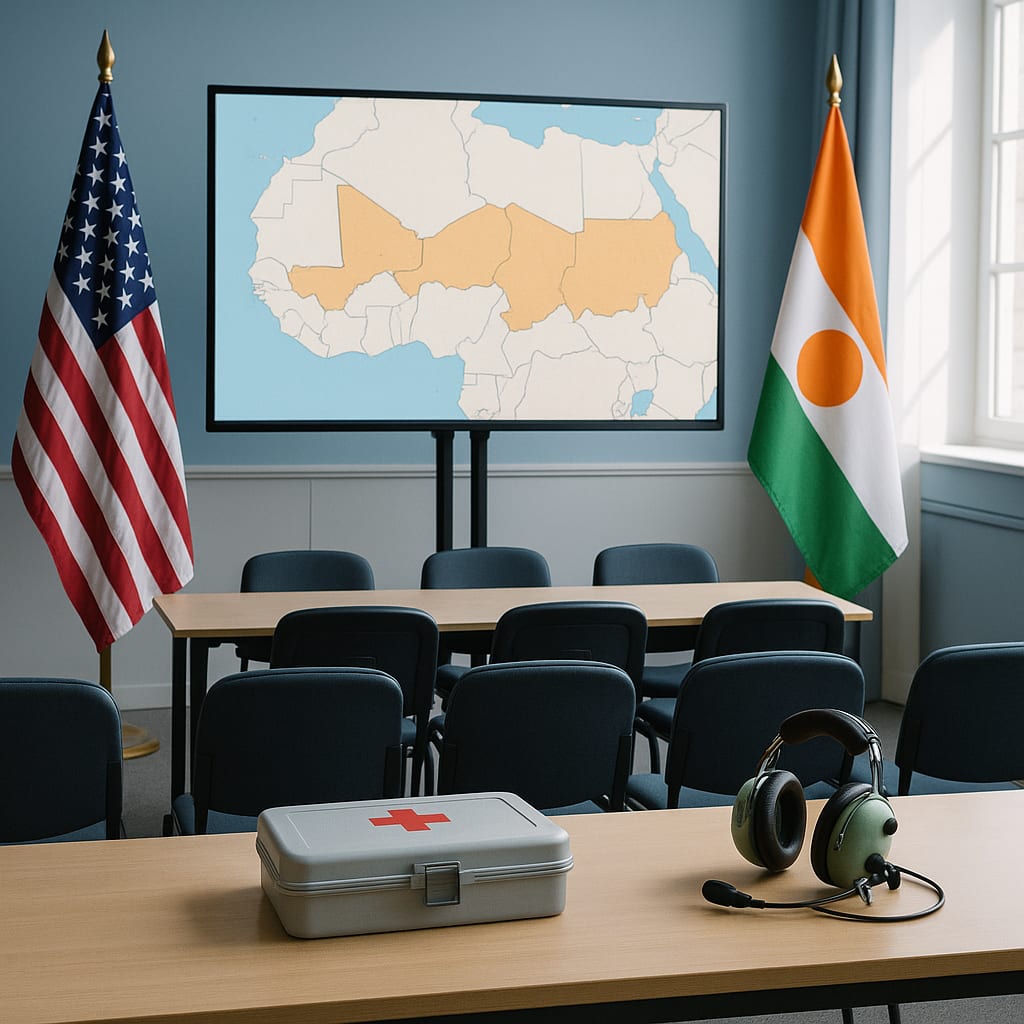
American missionary pilot kidnapped in Niger freed after nine months
Narrative Snapshot
Across outlets, the core facts are consistent: SIM International announced Kevin Rideout’s release after roughly nine months in captivity; he is in good health, in the care of US officials, and expected to reunite with his family. The BBC and the Guardian highlight his handover to US officials and the absence of confirmed information on his abductors, while Clarin relays the organization’s assurance that he will see his family soon. Fox News adds personal detail, naming his wife, Krista, and noting SIM’s gratitude for support during his captivity.
Coverage diverges on the circumstances and mechanics. UK and US reports keep the focus on Rideout’s welfare and SIM’s statement, with the New York Times adding that his case was a White House priority. Middle East Eye, citing Reuters, introduces contested claims about how the release occurred, including alleged involvement by Libya’s Khalifa Haftar and conflicting accounts of a brokered deal, ransom, or a military operation in Mali. African and European angles add texture: Kenya’s Daily Nation emphasizes the abduction’s tactical setting near an airport run, and Le Monde underscores Rideout’s 19-year tenure in Niger as a missionary pilot, citing the New York Times.
What is most at stake in the reporting is not the fact of the release but the unresolved questions about who held Rideout and how he was freed. Al Jazeera situates him within an evangelical agency, while an Africa-wide assessment published by AllAfrica/ACSS documents persistently high militant Islamist violence across the Sahel, providing a structural backdrop that helps explain the risks to foreign workers and the complexity of securing hostages’ freedom.
What Happened
SIM International said on 14 August 2026 that Kevin Rideout, an American missionary pilot abducted in Niger in October 2025, has been released and is in good health under the care of US officials, with plans to reunite with his family (Guardian; BBC; Clarin; Fox News). Outlets describe the abduction as occurring near Rideout’s home in Niamey, either outside the residence or while he was heading to the airport (BBC; Fox News; Daily Nation). The New York Times reports the case had been a White House priority. Le Monde, citing the New York Times, notes Rideout has served as a missionary pilot in Niger for 19 years. Middle East Eye, citing Reuters, reports claims that authorities aligned with Libya’s Khalifa Haftar facilitated the release, with sources divided over whether it involved a brokered deal, a ransom, or a military operation in Mali; US officials did not comment.
Why It Matters
Hostage-taking in the Sahel intersects with broader regional insecurity and fragmented authority structures. AllAfrica, citing ACSS, reports that fatalities tied to militant Islamist violence in Africa have exceeded 20,000 annually for four consecutive years, underscoring the resilience of armed groups operating in the Sahel. Within this environment, Rideout’s release highlights the operational risks to foreign civilians and faith-based workers and the multi-jurisdictional complexity of securing their freedom. The New York Times’ note that the case was a White House priority signals sustained US executive branch engagement on hostage issues. If elements of Middle East Eye’s Reuters-cited account prove accurate, the reported role of eastern Libyan authorities could underscore the leverage of non-central actors in cross-border files and the potential for de facto security brokers to shape outcomes. For policymakers, the episode touches on detainee policy, counterterrorism coordination, and the practical challenges of attribution and negotiation in a diffuse conflict landscape.
Diverging Narratives
Several unresolved questions shape the coverage. The identity of Rideout’s captors remains unclear in UK and US reporting that refers to “unknown assailants” (Guardian), while Middle East Eye, citing Reuters, attributes responsibility to an Islamic State affiliate in the Sahel. Accounts of how the release was achieved also diverge: Reuters’ sources, as reported by Middle East Eye, variously describe a brokered deal, a ransom, or a military operation in Mali conducted by forces aligned with Khalifa Haftar, while the US State Department declined to comment and the White House did not respond to Reuters’ request for comment. SIM International and most outlets emphasize Rideout’s health and repatriation rather than operational details, and there is no official US confirmation of the mechanics.
Even the abduction setting varies in emphasis: the BBC places it outside his home in Niamey, Fox News says near his home on 21 October 2025, and Kenya’s Daily Nation reports he was seized while heading to the airport. Le Monde centers Rideout’s long-standing presence and role in Niger, while the New York Times highlights the White House’s prioritization of his case without elaborating on methods. These gaps and inconsistencies are central to assessing responsibility, the nature of any mediation, and the precedent set for future cases.
What Happens Next
Key decisions and signals to watch flow from official disclosures and corroboration. First, any US government statement confirming or contesting reported roles in the release, including the Reuters-cited involvement of Haftar-aligned authorities, would clarify whether mediation, payments, or a military operation occurred; current positions are non-comment from the State Department and no response from the White House (Middle East Eye). Second, further detail from SIM International or Rideout’s family may narrow uncertainty about his captors and conditions, though their statements to date focus on health and reunion (Guardian; Fox News; Clarin). Third, given ACSS’s data on persistent militant activity in the Sahel (AllAfrica), analysts should watch whether regional actors publicly claim credit or furnish evidence for their roles, as that would shape future channels for hostage recovery amid fragmented security governance.