
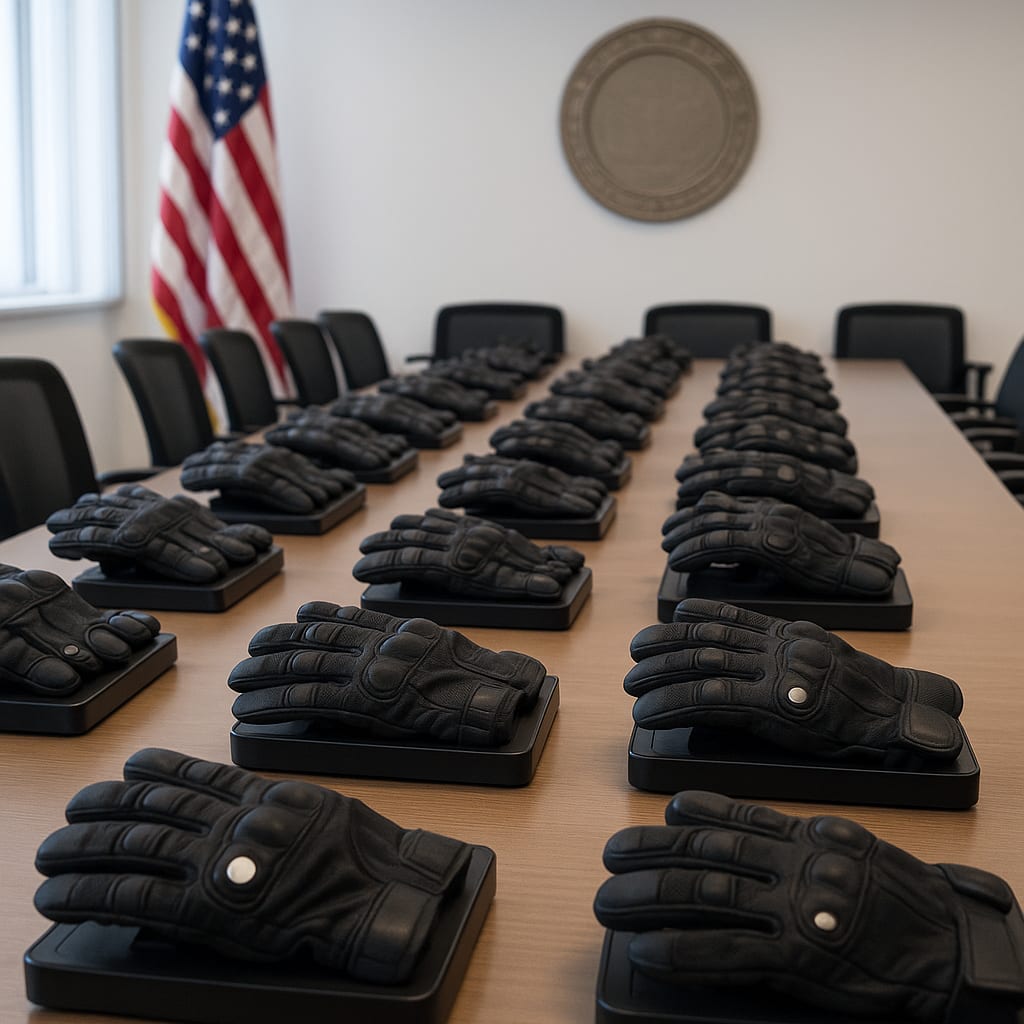
DHS plans $10–$20 million purchase of electric-shock gloves for ICE agents
Narrative Snapshot
Across outlets, there is broad agreement on the basic contours: the Department of Homeland Security intends to equip Immigration and Customs Enforcement with electric-shock gloves made by Compliant Technologies, described by DHS as “conductive distraction and de-escalation devices,” with spending referenced in the $10–$20 million range. Where coverage diverges is in framing and emphasis. RT foregrounds procurement mechanics, including a planned sole-source award, a contract window through March 2027, and expectations of purchasing “thousands” of units, attributed to AP. By contrast, Associated Press copy carried by the Toronto Star highlights official justification from White House border czar Tom Homan, who defends the gloves as a way to avoid deadly force.
Left-leaning and international outlets emphasize risks and political pushback. Telesur centers Democratic lawmakers and migrant advocates rejecting the plan and quoting the National Immigration Law Center’s president calling the devices “repugnant and barbaric,” while noting DHS’s own “de-escalation” framing. The Bangkok Post and Clarín echo concerns about potential abuse and risks to immigrants, with the Post citing critics who see ICE as over-zealous and under-trained. Le Monde places the development in a longer arc, identifying ICE as a symbol of the Trump-era deportation policy’s perceived excesses. The New York Times flags the plan in a news digest, signaling mainstream attention without adding detail.
What Happened
DHS plans to equip ICE officers with electric-shock gloves manufactured by Kentucky-based Compliant Technologies. RT reports the devices—marketed as G.L.O.V.E. (Generated Low Output Voltage Emitter) and used by some U.S. prisons and police—are slated for purchase under a contract running through March 2027, with spending between $10 million and $20 million and a planned sole-source award; RT also cites AP in reporting ICE intends to acquire thousands of units. Telesur says DHS announced a $20 million contract for CTG-5 gloves and described them as a “de-escalation device.” The plan has drawn opposition from Democratic lawmakers and migrant advocates quoted by Telesur, while AP copy in the Toronto Star quotes White House border czar Tom Homan defending the gloves as a tool to reduce the need for deadly force. International outlets including the Bangkok Post, Clarín, and Le Monde highlight fears of potential abuse and broader concerns about ICE’s conduct.
Why It Matters
The procurement sits at the intersection of U.S. immigration enforcement, the adoption of less-lethal technologies, and institutional oversight. DHS’s characterization of the gloves as “conductive distraction and de-escalation devices” implies a shift in use-of-force tools, while critics worry about expanding coercive capabilities within an agency they already view as over-zealous and under-trained, as reported by the Bangkok Post. RT’s account of a noncompetitive award and a multi-year contract horizon raises governance questions about transparency and oversight in homeland security procurement. Politically, the pushback cataloged by Telesur—featuring Democratic lawmakers and civil society—signals potential scrutiny of ICE’s budgetary latitude, which NILC’s Kica Matos characterizes as a “blank check.” International coverage by Clarín and Le Monde underscores reputational stakes for U.S. immigration policy, linking equipment choices to longstanding debates over enforcement practices shaped during the Trump administration.
Diverging Narratives
Two principal frames emerge. DHS and the White House’s border policy leadership present the gloves as tools to end confrontations without lethal force, a de-escalatory step that could reduce shootings, as reflected in both DHS’s terminology reported by RT and Telesur, and Tom Homan’s defense cited by the Toronto Star. Opponents argue the devices institutionalize pain compliance and heighten risks of abuse, particularly against immigrants; Telesur reports Democratic lawmakers and advocates denouncing the plan as “repugnant and barbaric,” while Clarín and the Bangkok Post stress expert and critic concerns about harm and misuse by an already criticized force.
There are also procedural discrepancies in the reporting. RT describes a forthcoming, sole-source solicitation and a contract window through March 2027, while Telesur refers to DHS having announced a $20 million contract earlier in the week. Device nomenclature varies by outlet—G.L.O.V.E. versus CTG-5—but both refer to Compliant Technologies products that deliver electric pulses upon contact. Finally, scope and scale are unevenly specified: RT, citing AP, mentions “thousands” of units, while other outlets focus on the total spend and potential implications rather than precise quantities.
What Happens Next
Key inflection points revolve around procurement finalization, political oversight, and deployment scope. If DHS proceeds with a sole-source award to Compliant Technologies on the timeline suggested by RT, analysts should look for a public solicitation or award notice and details on contract ceilings and delivery schedules through March 2027. Telesur’s reporting on Democratic and advocacy opposition—and calls from NILC’s president for Congress to rein in ICE funding—points to potential legislative scrutiny; signals to watch include committee inquiries, letters, or appropriations riders addressing the purchase. RT’s reference to “thousands” of devices, attributed to AP, makes subsequent disclosures on unit counts a useful proxy for how widely ICE intends to field the gloves. Public statements from DHS reiterating the “de-escalation” rationale, as reported across outlets, would indicate an intent to stay the course amid criticism; any pause or revision would suggest responsiveness to the concerns cataloged by Telesur, Clarín, the Bangkok Post, and Le Monde.