
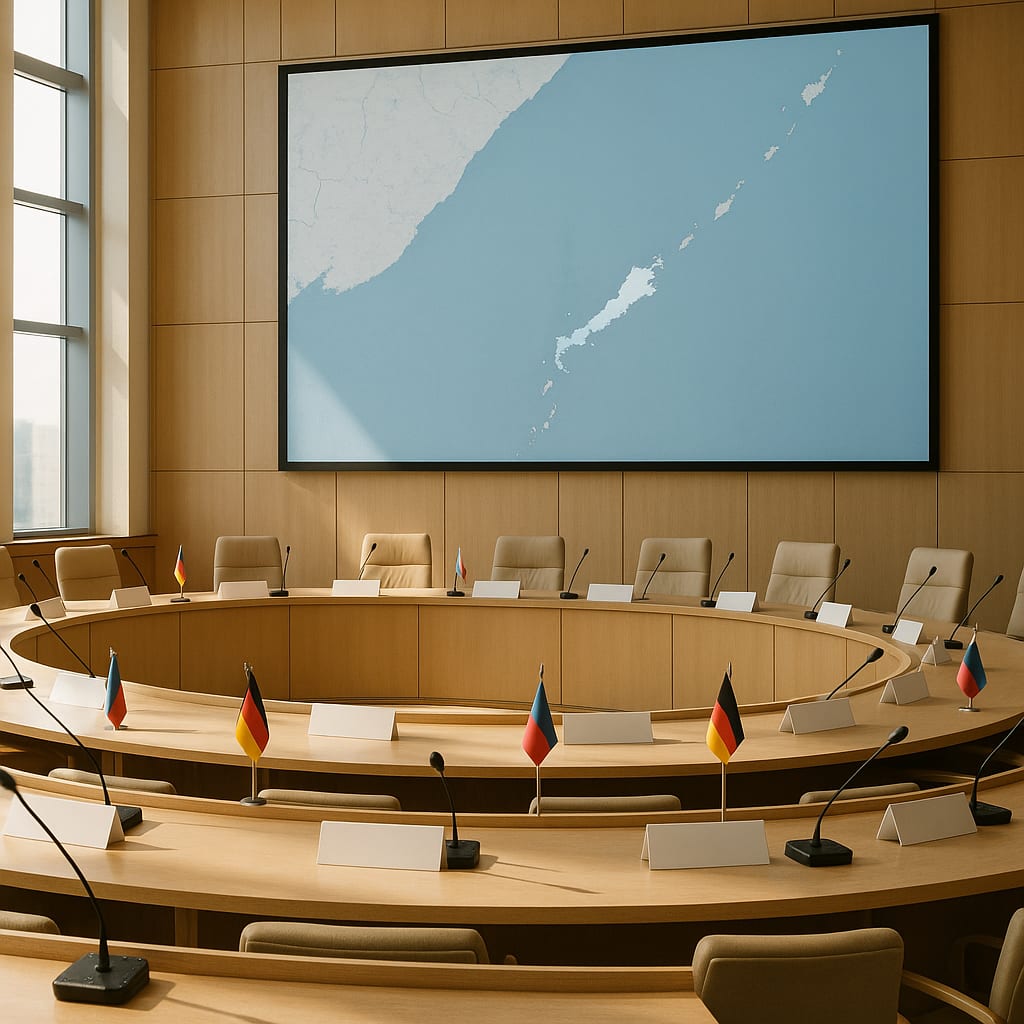
Putin’s first visit to the disputed Southern Kurils triggers Japanese protest, Russian rebuff, and allied statements
Narrative Snapshot
Across outlets, there is broad agreement that the visit was unprecedented and politically charged, with Japanese officials labeling it “absolutely unacceptable” and summoning Russia’s ambassador in Tokyo. Russian and Chinese state-aligned coverage counters by asserting uncontested Russian sovereignty and portraying Tokyo’s protest as unfounded. The United States and Ukraine publicly aligned with Japan’s position, adding a wider diplomatic layer.
Where coverage diverges is in framing and emphasis. Several Western and Japanese reports focus on international law and postwar history to reinforce Japan’s claim, while Russian and Chinese sources anchor legitimacy in World War II outcomes and accuse Japan of security “buildup” and sanction hostility. Some outlets center the visit’s symbolism and timing—days before Japan’s WWII surrender anniversary—while others spotlight an on-the-ground economic itinerary in the Far East. A further cleavage runs through the China angle: some reporting links the trip to broader Sino-Russian signaling toward Japan; others treat it as a Russia–Japan bilateral confrontation intensified by Ukraine-related sanctions.
What Happened
On August 13, 2026, Vladimir Putin made his first trip to the southern Kuril Islands administered by Russia since 1946, landing on Iturup (Etorofu) during a wider tour of Siberia and the Far East. Kremlin footage and reporting noted stops at a fish plant, a school, and a hospital, and a meeting with Sakhalin Governor Valery Limarenko on regional economic conditions. Japan’s government lodged a formal protest, with Prime Minister Sanae Takaichi calling the visit “absolutely unacceptable” and Foreign Minister Toshimitsu Motegi summoning Russia’s ambassador. Moscow rejected Tokyo’s stance: Russian officials called the protest an unjustified demarche, and Dmitry Medvedev declared the Southern Kurils “have been, are and will remain Russian,” warning of severe consequences for those denying it. The United States publicly recognized Japan’s sovereignty over the islands visited, and Ukraine’s foreign minister expressed solidarity with Tokyo. Peace-treaty talks remain halted since 2022 amid Japan’s sanctions on Russia.
Why It Matters
The episode reinforces a structural hardening around the long-stalled Japan–Russia peace process and the unresolved status of the four islands seized by the Soviet Union in 1945. Russia’s post-2022 break-off of peace talks after Japan joined Western sanctions sets a context in which symbolic assertions of control and reciprocal diplomatic protests are more likely than negotiation. Japan’s alliance framework is salient: Washington’s on-record recognition of Japan’s sovereignty underscores allied backing at a moment of sharper U.S.–Russia confrontation and Tokyo’s expanded sanctions posture.
Regionally, Chinese and Russian messaging that warns against “reinterpretation” of World War II outcomes intersects with concerns over military buildup in the Asia-Pacific. Some reporting ties the visit to a wider Sino-Russian effort to pressure Japan on grievances spanning sanctions and Taiwan. For decision-makers, the event tests whether established non-resolution can be managed within existing deterrence and diplomacy channels, or whether hardened narratives foreclose future compromise options.
Diverging Narratives
Tokyo-centered coverage emphasizes legal claims and procedure: the islands are described as Japanese under international law, and the government’s steps—ambassadorial summons and harsh political language—are highlighted. U.S. backing for Japan’s sovereignty and Ukrainian solidarity extend this framing beyond the bilateral plane.
Russian and Chinese state-aligned accounts stress sovereignty settled by wartime outcomes. They reject Japan’s protest as baseless and cast Takaichi’s statements as ineffective rhetoric. Medvedev’s warnings, widely carried, set a confrontational tone that positions any questioning of Russian control as unacceptable and potentially consequential. These outlets also locate the dispute within a broader critique of Japan’s sanctions and security policies, noting the 2022 suspension of peace-treaty talks and concerns over regional military buildup.
Other coverage narrows to the visit’s local content—economic sites, civilian engagement, and regional development discussions—downplaying geopolitical escalation. A separate strand connects timing and strategy: scheduling near the WWII surrender anniversary and, in some reporting, the alignment of Beijing and Moscow in pressuring Japan across multiple fronts. The result is a split between legal-diplomatic, sovereignty-historical, and developmental-security lenses.
What Happens Next
Tokyo is weighing concrete responses, including tightening sanctions on Russia and temporarily recalling its ambassador, which would signal a deliberate escalation in diplomatic pressure. Analysts should watch cabinet deliberations and public guidance on the scope of any new measures. Moscow’s next moves bear on risk: further rhetorical hardening or additional high-profile visits and development initiatives on the islands would underscore a policy of entrenchment, while any engagement signals would be notable against the backdrop of suspended peace talks.
Allied positioning is another indicator. The U.S. statement recognizing Japan’s sovereignty could be followed by coordination with Tokyo on sanctions or security messaging. Regionally, attention should focus on whether Chinese and Russian diplomatic narratives—warning against reinterpretation of World War II outcomes—are paired with additional joint signaling. The tenor of statements around the WWII anniversary, and any follow-on economic or military activity in the area, will clarify whether this remains managed contention or drifts toward deeper confrontation.