
Trump says he will ‘soon’ declare the Strait of Hormuz US territory
Narrative Snapshot
Across outlets, the quote is uncontested: Donald Trump told a New York audience he would “soon” declare the Strait of Hormuz “a territory of the United States” after defeating Iran. International coverage diverges on how to situate the remark. Several English-language outlets highlight ambiguity over whether it signals policy. The South China Morning Post and the Guardian both underscore that it was unclear how seriously Trump intended the line or whether it represented a new position, even as they note the strait’s importance to global oil flows, with the Guardian calling it a chokepoint for roughly a fifth of seaborne crude. TASS reduces the story to the pledge alone, absent context on feasibility or legal standing.
Coverage anchored in the region’s security dynamics places the comment inside a live contest over control and access. Al Jazeera says control of Hormuz is a sticking point in ongoing US–Iran ceasefire talks. Chinese state media emphasizes dueling claims of control: CGTN reports Trump had asserted “complete control” and a US naval “wall of steel,” while Iran’s Strait Management Authority said the waterway “remains closed” until US conditions are met. CGTN also details US Central Command’s enforcement actions and Iranian diplomacy with Oman on “safe shipping routes,” signaling parallel military and deconfliction tracks.
Economic framing is most explicit in Canadian, Israeli, and German reports. CBC and the Times of Israel report Trump urging Americans to accept higher gasoline prices as the price of denying Iran a nuclear weapon, with the Times of Israel adding he would hit Iran “hard economically.” Deutsche Welle ties price spikes to Iran’s earlier closure of the strait in response to US and Israeli attacks. Meanwhile, maritime trade-focused coverage stresses hard indicators: Fox News cites UKMTO and Kpler to show transits remain roughly 90 percent below prewar baselines; CGTN relays Kpler’s count of only two vessels passing on Friday, underscoring the operational reality beneath competing claims.
State-aligned and regional outlets frame stakes in sovereignty terms. Tehran Times argues Iran “continues to exercise strategic control” despite US victory claims, while Telesur calls the remark an “alarming annexation threat,” reporting an Iranian foreign minister’s condemnation. Argentine daily Clarín reports Washington reaffirming a blockade, touting battlefield momentum, and preparing new sanctions, linking Hormuz pressure to broader coercive leverage.
What Happened
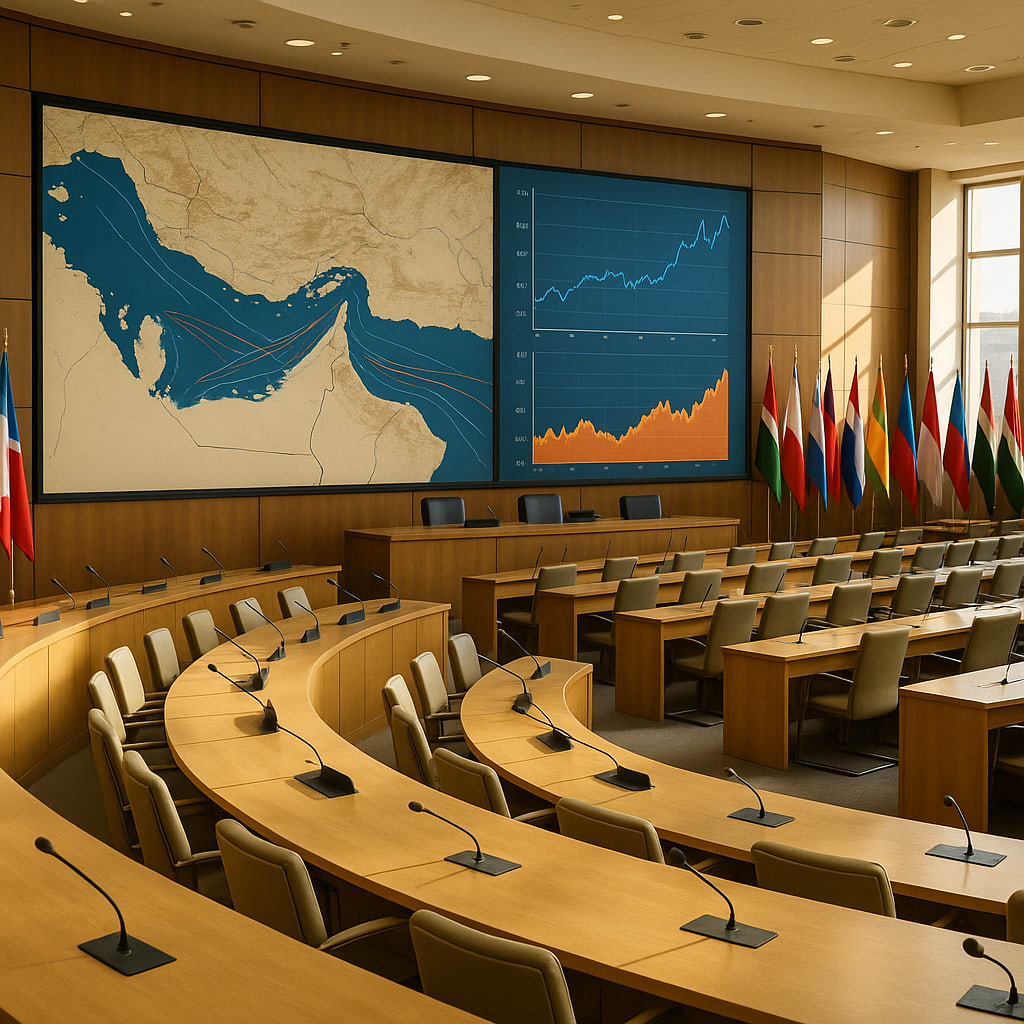
At a rally at a police academy in Garden City, New York, US President Donald Trump said he would “pretty soon” declare the Strait of Hormuz “a territory of the United States” after defeating Iran, a comment reported by multiple outlets and flagged by the South China Morning Post and the Guardian as of uncertain policy significance. The remark comes amid a months-long war, with Fox News noting tensions remain unsettled more than five months in, and amid deadlocked talks; Al Jazeera reports control over the strait is a sticking point in ceasefire negotiations. In recent days, CGTN reported Trump had claimed on social media that the US has “complete control” of Hormuz behind a “wall of steel” and cited CENTCOM enforcement actions, while Iranian authorities said the strait remains closed until US conditions are met. Shipping data show sharply depressed transits, per Fox News and CGTN’s Kpler citations. Trump also urged Americans to accept higher gas prices and signaled further economic pressure, according to CBC, Deutsche Welle, the Times of Israel, and Clarín.
Why It Matters
The strait is a critical node in the global energy system; the Guardian underscores it typically carries about a fifth of seaborne oil, and Fox News and CGTN cite data showing transits far below pre-conflict norms. A contested or closed Hormuz magnifies price volatility and supply rerouting, which CBC, Deutsche Welle, and the Times of Israel link to rising consumer fuel costs and to a US strategy of economic pressure. Politically, Al Jazeera’s and CGTN’s reporting places the waterway at the center of ceasefire bargaining, while CGTN notes Iranian diplomacy with Oman on “safe shipping routes,” indicating that any de-escalation will likely hinge on access guarantees. Narratively, Tehran Times’ emphasis on Iranian “strategic control” and Telesur’s sovereignty framing collide with US assertions of control reported by CGTN, hardening positions. For decision-makers, sustained divergence between claims and on-the-water indicators—CENTCOM actions on one side and minimal vessel flows on the other—signals both operational risk and the limits of unilateral declarations to restore passage.
Diverging Narratives
Several outlets highlight uncertainty around intent. The Guardian and the South China Morning Post both note it was unclear whether Trump’s remark amounted to a policy shift, even as TASS relays it without caveat. Operationally, CGTN captures a stark split: US claims of “complete control” and an ongoing maritime enforcement campaign, versus Iran’s Strait Management Authority insisting the channel “remains closed” pending US concessions, a line reinforced by CGTN’s later report quoting an Iranian deputy foreign minister that Hormuz will be “opened and closed only under Iran’s command.” Tehran Times similarly asserts continued Iranian “strategic control.”
Measured traffic data complicate maximalist claims. Fox News cites UKMTO and Kpler to show transits roughly 90 percent below prewar baselines, with CGTN noting only two vessels passing on Friday, indicating neither side’s narrative has translated into normalized flows. On causation and escalation, Deutsche Welle reports Iran closed Hormuz in response to US and Israeli attacks, while Telesur frames Trump’s statement as an annexation threat drawing Iranian condemnation. By contrast, CBC and the Times of Israel stress the US objective of preventing an Iranian nuclear weapon and normalize short-term fuel price increases as part of that effort. Al Jazeera situates the dispute within ceasefire talks, suggesting that control and access are leverage rather than settled faits accomplis.
What Happens Next
Three decision points emerge. First, ceasefire and access negotiations: Al Jazeera reports control of Hormuz as a core bargaining issue, and CGTN notes Iranian talks with Oman on “safe shipping routes.” Any public framework on convoying, traffic separation, or pilotage would signal movement; continued statements like Iran’s vow to keep Hormuz closed until conditions are met, reported by CGTN, would signal stasis. Second, maritime enforcement: CGTN cites CENTCOM interdictions and reroutings. A tapering of boardings or rerouted vessels—or, conversely, more disabling actions—will indicate whether the asserted “wall of steel” is easing or entrenching. Third, economic coercion: Clarín and the Times of Israel point to impending and ongoing sanctions. New measures or carve-outs affecting shipping insurance and bunkering would shape operators’ risk calculus, reflected in the Kpler and UKMTO traffic metrics Fox News reported. Clarity on whether Trump’s territory remark is formalized or walked back, as flagged by the SCMP and the Guardian, will also condition diplomatic space.