
US presses Netanyahu to denounce West Bank settler siege after rare Huckabee rebuke; IDF action incomplete
Narrative Snapshot
Coverage converges on the unusual force of Washington’s language and the specificity of the case. Multiple outlets highlight U.S. Ambassador Mike Huckabee’s denunciation of settlers in Qusra as committing a “horrific act of terror,” with several noting that he has previously embraced West Bank settlements, making the rebuke notable even to Israeli commentators urging further U.S. action. Reports consistently describe families trapped in their homes and cut off from basic supplies, while differing on the scope and effectiveness of Israeli security force responses.
Where accounts diverge is in attribution and framing. Israeli and some U.S. outlets emphasize steps by the Israel Defense Forces and police—demolitions of illegal structures, dispersal efforts, and at least one arrest—while rights-focused reporting foregrounds claims that forces allowed settlers to remain. The broader stakes are drawn differently: some frame an isolated extremist problem now challenging Israeli authorities; others present an accelerating, state-enabled pattern of coercion against Palestinians. Internationally, the line is hardening: Washington is pressing Prime Minister Benjamin Netanyahu to condemn the siege, France is calling for arrests and prosecutions, and European broadcasters tie the moment to Israel’s electoral dynamics. One report underscores the policy dissonance by noting that Israel inaugurated a major settlement elsewhere in the West Bank even as the standoff persisted.
What Happened
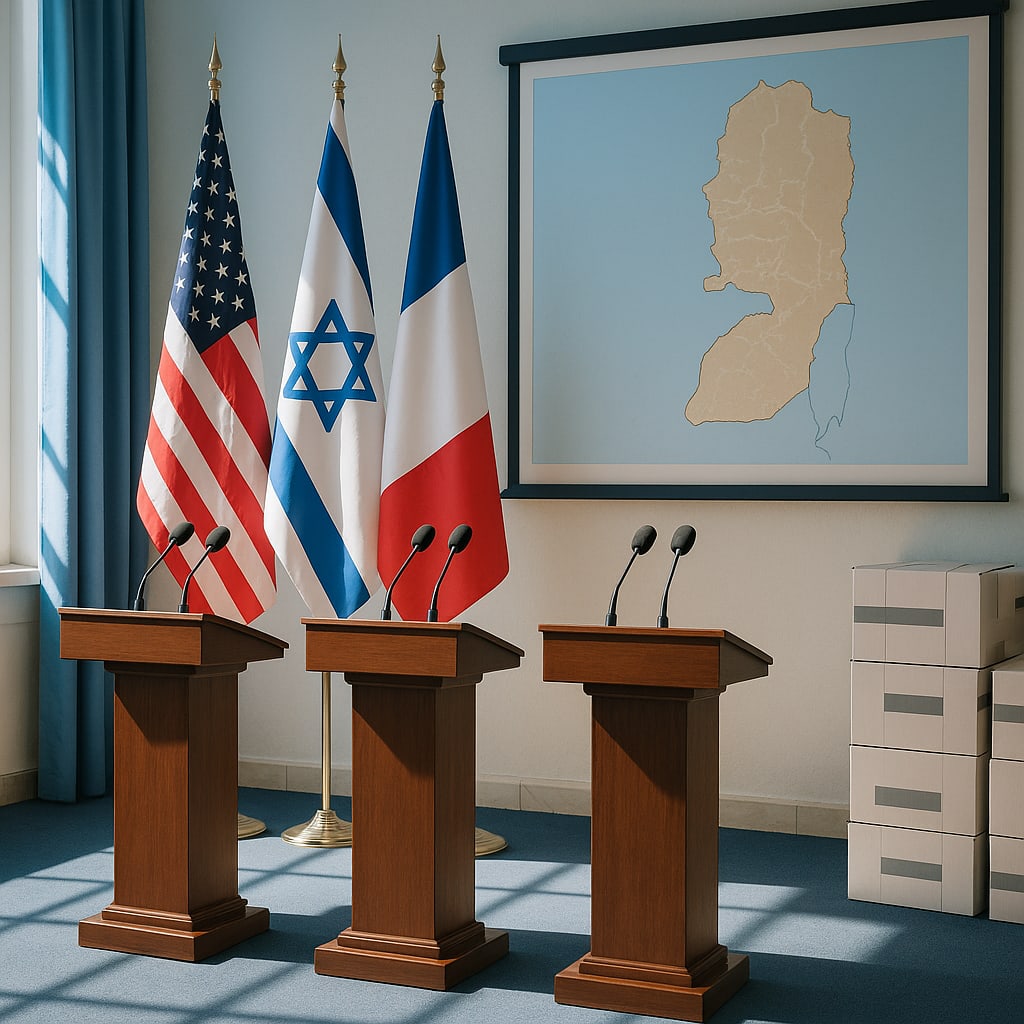
Israeli settlers besieged several Palestinian homes in the West Bank village of Qusra for days, including one owned by a Palestinian American, blocking access to food and other supplies. The United Nations was cited as saying the blockade began last Sunday and trapped roughly 15 people, including children, without electricity or water, with supplies running low. U.S. Ambassador to Israel Mike Huckabee publicly condemned the siege on Thursday, labeling the perpetrators “terrorists” and their actions a “horrific act of terror” and “thuggish,” and said the IDF and police deployed at the U.S. embassy’s request. Israeli forces moved against the settlers, dismantling illegal structures and dispersing some participants; one arrest was reported. However, multiple accounts said settlers remained on site and residents were still afraid to leave their homes. As settlers tried to re‑establish a presence by pitching a new tent, soldiers arrived and took it down. The United States urged Netanyahu to publicly condemn the siege, and France called for the settlers’ arrest and prosecution.
Why It Matters
The incident has rapidly become a test of responses to settler violence and of Israel’s handling of extremist elements at a moment of international scrutiny. Huckabee’s denunciation—characterized by several outlets as rare and unusually sharp given his past support for settlements—signals a tightening U.S. line and has been followed by direct U.S. pressure on Netanyahu to issue a public condemnation. France’s call for arrests and prosecutions adds a European legal accountability frame to the immediate humanitarian concern of trapped civilians. Rights advocates cast the siege as part of an accelerating pattern across the West Bank, while mainstream Israeli and U.S. reporting highlights the Israeli authorities’ partial interventions and an acknowledged enforcement challenge. With France24 linking the episode to electoral pressures on Netanyahu and one report noting a simultaneous inauguration of a major settlement elsewhere, the case sits at the intersection of domestic politics, settlement policy, and allied expectations on public order and due process.
Diverging Narratives
Accounts differ on both scale and state response. NBC News reported two Palestinian families trapped, while other outlets said three families or “several homes,” reflecting uncertainty about the exact number of households affected. On enforcement, Fox News described an IDF eviction of lawbreakers and at least one arrest, presenting the perpetrators as a small, extremist subset and a growing problem for Israeli authorities. The Times of Israel reported demolition of illegal structures and an IDF presence at the U.S. embassy’s request but noted that settler squatters stayed put and residents feared leaving their homes. France24’s early report said the army intervened after a U.S. request but failed to remove settlers. Middle East Eye relayed an Amnesty International official’s characterization of “state‑backed settler terror,” alleging that forces allowed settlers to remain and that ambulances were assaulted, framing the siege as part of a broader pattern. RT cited UN figures on those trapped and shortages of essentials, emphasizing the humanitarian dimension. Meanwhile, Haaretz’s editorial argued that Huckabee’s condemnation should be a springboard for further U.S. action, and Al Jazeera questioned whether Washington could push an end to the siege. Bangkok Post added a contrasting policy signal by noting the inauguration of a major settlement elsewhere in the West Bank during the standoff.
What Happens Next
Key decision points are now clear. First, whether Netanyahu issues a public condemnation, as urged by the United States; analysts should watch for a formal statement or its absence, which would indicate how the prime minister balances allied pressure against domestic political calculations highlighted by France24. Second, the scope of Israeli law enforcement: France has called for arrests and prosecutions, and one arrest has been reported. Indicators include additional detentions, charges, and the removal of remaining settlers, as well as prevention of renewed encampments after soldiers dismantled a new tent. Third, humanitarian access: reports of residents cut off from food, water, and medical services make restoration of access a concrete metric; any acknowledgment from the UN or relief actors would be salient. Finally, settlement policy signals matter: Bangkok Post’s note on a new settlement inauguration suggests continuity in expansion; further approvals or inaugurations amid this episode will shape international readings of Israel’s priorities relative to curbing settler violence.