
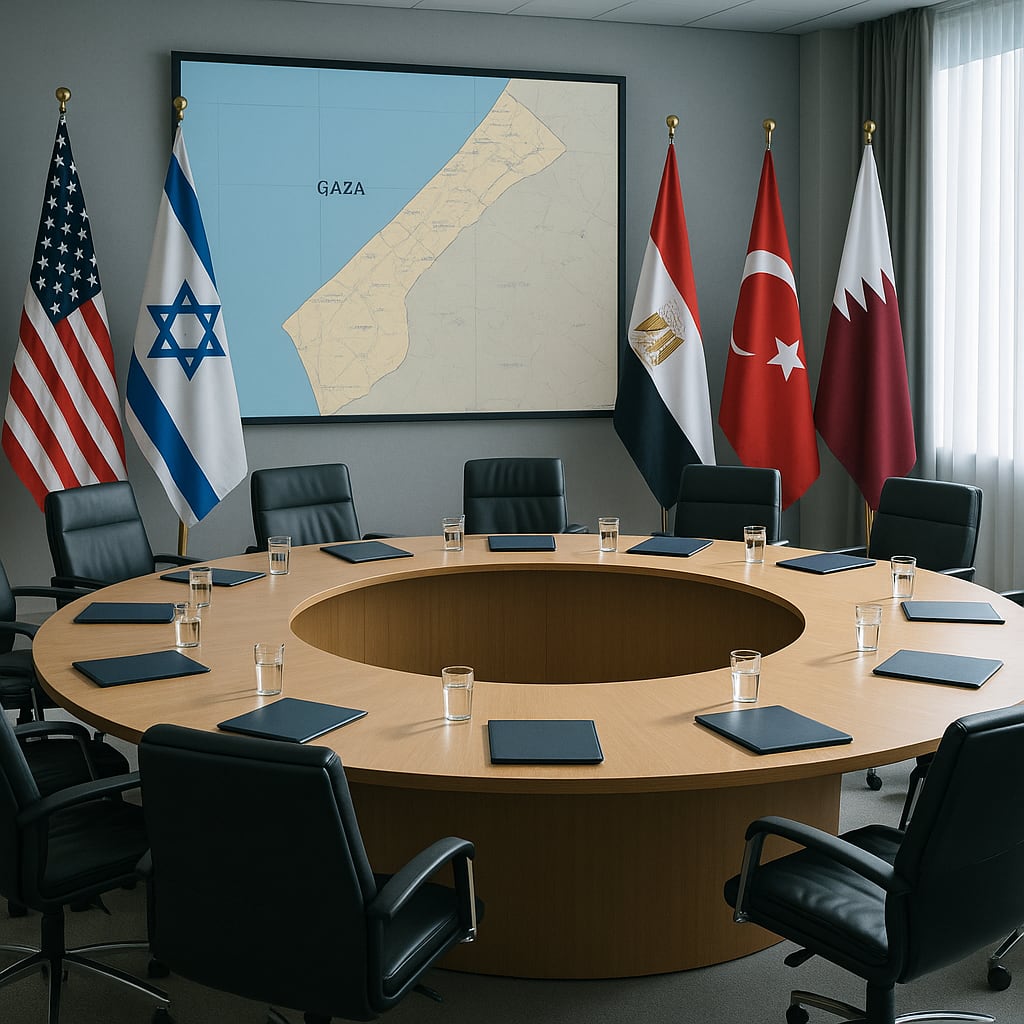
After Netanyahu rejects Trump’s Gaza plan, Kushner heads to Israel as regional mediators warn of ‘radical steps’
Narrative Snapshot
Across outlets there is consensus that Washington is trying to keep a diplomatic track alive despite Jerusalem’s public rejection. Middle East Eye and Al Jazeera frame Jared Kushner’s upcoming visit, alongside Board of Peace representative Nickolay Mladenov, as an effort to address Israeli objections while sustaining a process that began with an October 2025 ceasefire, even as Israeli strikes in Gaza continued on a near-daily basis according to Middle East Eye. Haaretz adds a Washington angle, reporting expectations the White House will press for restraint but noting Trump’s leverage appears to be waning, raising the prospect of “tough love.”
Regional mediators sharpen the pressure narrative. Turkey’s foreign minister Hakan Fidan says Ankara, Doha, and Cairo may take “radical steps” if the United States does not push Israel to comply, asserting the Palestinian side has met its commitments and that Israel has not advanced to a second phase. In a separate statement, he accuses Israel of aiming to expel Palestinians from Gaza and claims Turkey and Egypt joined the Board of Peace to help “stop the genocide… to a certain extent,” while Middle East Eye cites a death toll of 73,389 in Gaza.
Coverage diverges on causality and feasibility. Mail & Guardian highlights Netanyahu’s hard lines—no pullback without Hamas’ surrender and no Palestinian state under his tenure—while TASS underscores Israeli skepticism toward the U.S. plan and heightened political sensitivity ahead of October elections. Middle East Eye reports that Hamas agreed to hand over weapons to a new Palestinian governing committee, and a Board of Peace official says Washington and Israel agree on the end state of a demilitarized Hamas, underscoring a narrow area of stated convergence amid broader disagreement over steps and sequencing.
What Happened
A 15-point Gaza plan announced by Trump’s team envisaging Hamas’ disarmament and, per Al Jazeera, an Israeli withdrawal from Gaza was publicly rejected by Israeli Prime Minister Benjamin Netanyahu, who, according to Mail & Guardian, vowed no pullback until Hamas surrenders and ruled out a Palestinian state while in office. Middle East Eye says the plan was unveiled by Board of Peace representative Nickolay Mladenov and included Hamas handing weapons to a new Palestinian governing committee. In response, U.S. envoy Jared Kushner will travel to Israel and Egypt, Toronto Star and Al Jazeera report, to discuss Israeli objections. TASS notes the Israeli government’s skepticism and the political sensitivity ahead of October elections. Haaretz expects the White House to press for de-escalation, even as Turkey’s Hakan Fidan threatens “radical steps” absent U.S. pressure. Hamas leader Khalil al-Hayya is heading to Cairo for talks, Al Jazeera and The Hindu report.
Why It Matters
The episode tests U.S. leverage with a close ally and the capacity of a Trump-backed architecture—the Board of Peace—to convert a ceasefire declared in October 2025 into sequenced de-escalation despite continued Israeli strikes described by Middle East Eye. Haaretz’s assessment of waning presidential leverage highlights a structural constraint on Washington’s ability to impose costs or guarantees as talks move to implementation details such as disarmament modalities and territorial steps. It also spotlights regional mediation dynamics: Turkey, Qatar, and Egypt are positioned as collective enforcers, with Ankara explicitly threatening “radical steps” if compliance falters. Netanyahu’s categorical red lines reported by Mail & Guardian, and TASS’s note on election-driven sensitivities, point to domestic veto players that can stall or reshape external initiatives. The Board of Peace’s stated convergence with Israel on a demilitarized Hamas, cited by Middle East Eye, indicates a narrow policy overlap that could be operationalized if sequencing disputes are bridged.
Diverging Narratives
Israeli leadership presents a security-maximalist frame: Mail & Guardian quotes Netanyahu rejecting any pullback absent Hamas’ surrender and opposing a Palestinian state under his tenure, while TASS underscores institutional skepticism of the U.S. plan magnified by an October election calendar. The U.S. and its Board of Peace channel cast the initiative as a pragmatic pathway; Middle East Eye cites a Board official claiming U.S.-Israel agreement on the end state—Hamas demilitarization—and ambitions for “constructive conversations” to address concerns. Haaretz, however, tempers expectations by noting Washington’s diminishing leverage and the likelihood of “tough love.”
Regional mediators articulate a compliance-first view. Middle East Eye quotes Turkey’s Hakan Fidan asserting the Palestinian side has fulfilled commitments and warning of “radical steps” unless the U.S. pressures Israel to move to a second phase. In another Middle East Eye report, Fidan accuses Israel of aiming to expel Palestinians and claims joint efforts with Egypt helped “stop the genocide… to a certain extent,” alongside a reported Gaza death toll of 73,389. On the Palestinian side, Middle East Eye reports Hamas agreed to hand over weapons to a new governing committee, while The Hindu quotes Bassem Naim saying they await U.S. and mediator pressure to compel Israeli adherence to the roadmap. The scope and content of the “second phase,” the nature of any “radical steps,” and how Israeli domestic politics will shape room for compromise remain unresolved in the sources.
What Happens Next
The first hinge is whether Washington converts its stated intent to press for restraint, reported by Haaretz, into concrete asks during Kushner’s meetings. Analysts should watch for post-visit statements outlining de-escalation steps or timelines, signals on conditioning assistance, or reaffirmations of the “demilitarized Hamas” end state cited by Middle East Eye. A second decision point is Jerusalem’s posture under election pressure noted by TASS: indications to revisit elements of the plan, maintain current red lines, or tie movement to additional security guarantees will be revealing. Third, mediator escalation is on the table per Turkey’s warning; joint actions or communiqués by Turkey, Qatar, and Egypt would indicate whether “radical steps” are moving from rhetoric to policy. Finally, outcomes from Hamas-Egypt talks flagged by Al Jazeera and The Hindu—particularly references to a “second phase” or mechanisms for weapon handover to a governing committee—will signal whether the Palestinian track continues to align with the plan’s sequencing.