
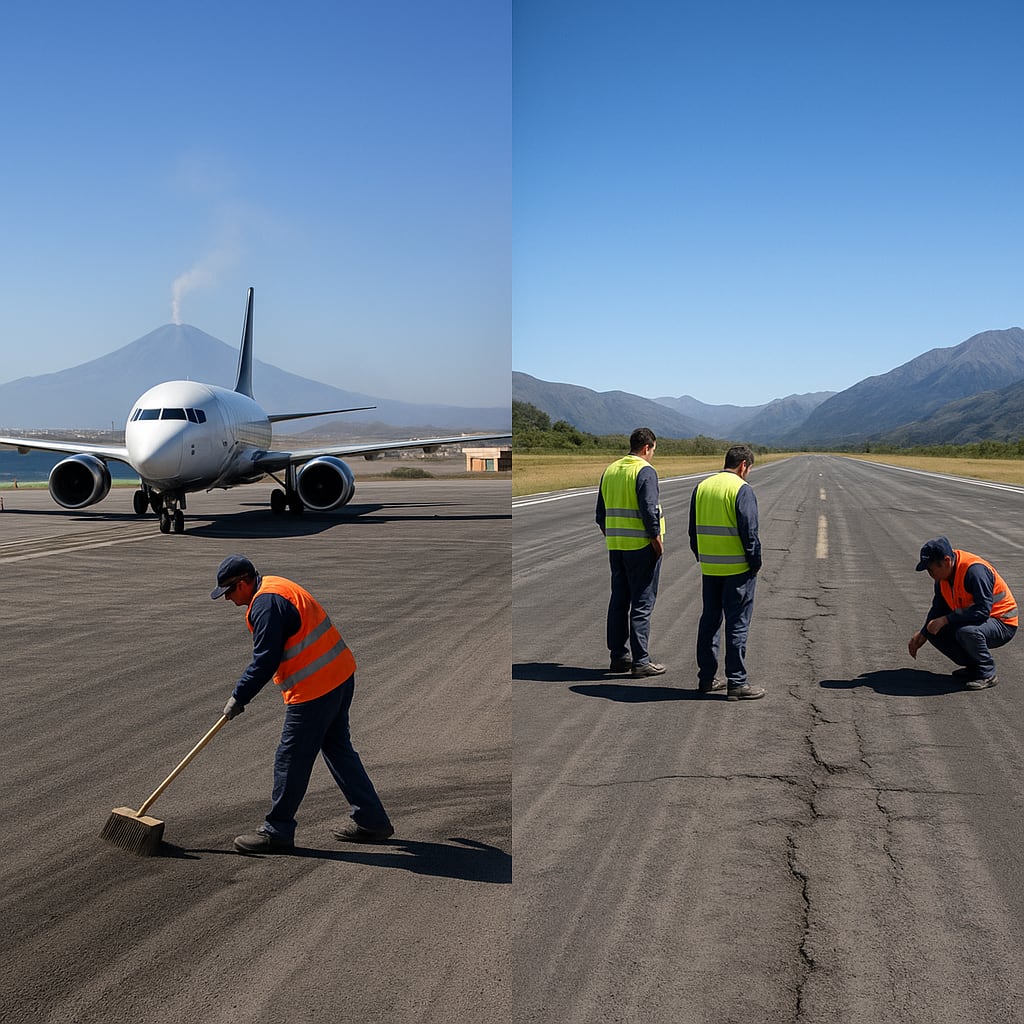
Etna’s ash shuts Catania for days at Europe’s summer peak; Colombia’s Puracé forces Popayán closure amid quake response
Narrative Snapshot
European outlets broadly align on the scale and rarity of the disruption in Sicily, but they quantify it differently and place distinct emphasis on its implications. French coverage highlights duration and magnitude unprecedented since 2002, with Le Monde citing more than 1,000 cancelled flights and tens of thousands of stranded travelers, while France24 underscores a fifth consecutive day of closure and the longest emergency since 2002. Anglophone reports from Sky News and the Toronto Star keep to “hundreds” of cancellations and stranded travelers, emphasizing rolling disruption rather than precise tallies. Argentine daily Clarín places the figure at 700 cancelled flights and thousands stranded.
Italian reporting adds operational and economic texture. La Repubblica points to the reopening of the secondary Comiso airport, rising alarm linked to lava fountains, and cancellations rippling through hotels in destinations like Taormina and Syracuse. ANSA brings the technical pivot that shapes near-term decisions: the aviation advisory moving from red to orange and a return of volcanic tremor to normal values, alongside a cautious airport statement that full normalization will take time.
Coverage also diverges in framing public behavior. The South China Morning Post documents a surge of tourists trying to approach the eruption, to the concern of local guides, even as air travel is curtailed. In parallel, Latin American outlets center a separate but thematically linked case in Colombia: Puracé’s ash-and-gas emissions under an orange alert forcing the temporary closure of Popayán’s airport. Clarín and TeleSUR set this within an earthquake response that has strained national communications and airport infrastructure, illustrating how ash hazards compound other crises.
What Happened
Mount Etna’s ash emissions prompted a rolling shutdown of Catania, Sicily’s main airport, through the peak holiday period. By August 14, the airport had been closed for a fifth consecutive day, with France24 calling it the longest emergency since 2002 and Le Monde reporting more than 1,000 cancelled flights and tens of thousands of stranded passengers. Sky News and the Toronto Star characterized the impact as hundreds of cancellations and stranded travelers; Clarín cited 700 cancelled flights. La Repubblica reported Catania’s closure through the afternoon of August 15 and the reopening of Comiso airport. Al Jazeera said flights would be suspended until at least Saturday afternoon. On August 15, ANSA reported the flight advisory shifted from red to orange and tremor returned to normal values, enabling a resumption of air activities, though the airport operator cautioned that full normalization would take time. Separately in Colombia, under an orange alert, Puracé emitted ash and gases, prompting Aerocivil to temporarily close Popayán’s airport amid nationwide earthquake response and damaged air facilities, according to Clarín and TeleSUR.
Why It Matters
The episode underscores how volcanic ash remains a recurring stress test for aviation systems and tourism economies. In Sicily, prolonged airport closure during the busiest travel week of the year amplified the stakes for carriers, airport operators, and regional businesses, with La Repubblica noting hotel cancellations and empty rooms in key destinations even as Comiso reopened to absorb some traffic. France24’s and Le Monde’s framing of the longest emergency since 2002 highlights the contingency planning challenge when prolonged ash plumes outlast standard disruption buffers.
Operationally, ANSA’s report of the aviation advisory stepping down from red to orange and tremor normalizing illustrates how technical thresholds govern airspace decisions and pace of recovery. The Colombian case extends the policy relevance: TeleSUR and Clarín link Puracé’s ash to a temporary airport closure during an earthquake emergency, complicating communications and logistics. Together, the cases spotlight the intersection of hazard monitoring, aviation safety protocols, and crisis management when natural events cascade across critical infrastructure.
Diverging Narratives
Outlets differ on scale, duration, and framing. Quantitatively, Le Monde’s “more than 1,000” cancelled flights and “tens of thousands” stranded contrasts with Sky News and the Toronto Star’s “hundreds,” and Clarín’s 700 cancellations. This reflects varied reporting windows and thresholds, but yields different impressions of magnitude. On duration, France24 stresses the longest emergency since 2002 and closure through early August 15, while Al Jazeera projects suspensions “until at least Saturday afternoon,” and ANSA, a day later, documents the advisory’s downgrade and a cautious restart, highlighting the fluidity of conditions and decision points.
The narrative emphasis also diverges. Italian coverage blends safety with local economic fallout and workarounds, citing hotel cancellations and the reopening of Comiso. The South China Morning Post spotlights a countercurrent of demand—tourists flocking to view the eruption to the concern of local guides—setting public behavior against official risk management. Latin American outlets surface a separate ash-related closure at Popayán tied to Puracé’s activity, contextualized by earthquake response and damaged aviation infrastructure, a frame absent from European coverage focused exclusively on Etna’s travel disruption.
What Happens Next
For Sicily, the key indicator is the hazard posture governing air operations. ANSA reports the flight advisory moving from red to orange and tremor returning to normal values, enabling a resumption of activity, but the airport operator warns normalization will take time. Analysts should watch INGV assessments and any re-escalation that could reverse the advisory downgrade, as well as airport notices on capacity recovery and diversion use of Comiso noted by La Repubblica. Le Monde’s warning that disruption could continue into the major departures weekend remains a benchmark if ash emissions persist.
In Colombia, TeleSUR and Clarín describe an orange alert at Puracé and a temporary closure of Popayán’s airport amid heightened seismic energy and gas emissions. The decisions to extend or lift closures rest with Aerocivil against ongoing monitoring. Signals to track include sustained changes in emission intensity, alert status adjustments, and how airport functionality aligns with broader earthquake response needs and damaged facilities.