
Powerful 7.7-magnitude earthquake off Indonesia’s Flores triggers evacuations and mounting casualty reports
Narrative Snapshot
Across outlets, the parameters of the event are consistent: a shallow magnitude 7.7 quake struck off Flores around dawn local time, with a tsunami warning issued, evacuations ordered along the coast, and then the alert lifted after monitoring (The Guardian; Al Jazeera English; Le Monde; Deutsche Welle). Reporting converges on aftershocks and widespread damage, but diverges sharply on casualties and the scale of impact as the situation evolved. Early tallies were low or absent in initial updates, while later reporting citing Indonesia’s disaster agencies detailed dozens of deaths, significant displacement, and damage to public facilities (CGTN; Telesur English, Aug 16).
Coverage emphasizes different aspects: some foreground immediate alerts, evacuations, and geophysical data (USGS/BMKG references in The Guardian, Le Monde, RT), while others prioritize human impact, access challenges, and operational status of critical infrastructure, including blocked roads, power outages, and an airport remaining open despite damage (France24; CGTN; Telesur English, Aug 15). Several outlets focus on national and consular angles—Italian media on stranded tourists and the presence of Italians on Flores (La Repubblica; ANSA)—and international political signals, such as Venezuela’s formal condolences (Telesur English, Aug 15).
What is most at stake in the reporting is Indonesia’s ability to execute a multi-day emergency response amid aftershocks, disrupted mobility, and information volatility: teams have yet to reach areas closest to the epicenter, and damage to schools, health facilities, and government offices raises service-continuity questions during a surge in humanitarian needs (CGTN; TASS via Jakarta Globe).
What Happened
A magnitude 7.7 earthquake struck just before 6 a.m. local time off Indonesia’s Flores Island at a depth of about 10 km, with the epicenter north-northwest of Ende (The Guardian; NBC News; Telesur English, Aug 15). Authorities issued a tsunami warning and ordered evacuations; the alert was subsequently lifted with continued monitoring of sea levels (Le Monde; Deutsche Welle). Multiple aftershocks followed, including at least one at magnitude 6.1 (Telesur English, Aug 15; France24, Aug 15; RT).
Casualty counts rose over the day as assessments expanded: initial reports cited at least two to five deaths (Al Jazeera English; NBC News; BBC News), then at least 20 and 38 (France24, Aug 15; TASS), and later 47 to 51, as attributed to Indonesia’s disaster agencies (Deutsche Welle; CGTN; Telesur English, Aug 15 and Aug 16; South China Morning Post). Damage includes homes and public facilities; roads were blocked by landslides, communications disrupted, and power outages reported in some regencies (CGTN). Komodo airport was affected but remained operational (Telesur English, Aug 15). Search-and-rescue teams faced access constraints, including to Nagekeo near the epicenter (CGTN).
Why It Matters
The event tests Indonesia’s disaster-management institutions across the alert-to-recovery cycle documented in the coverage. The issuance and lifting of a tsunami warning underscores the centrality of BMKG’s real-time risk communication, while the operational tempo shifts quickly to BNPB and local BPBDs for search, relief, and damage assessment (Le Monde; Deutsche Welle; CGTN; Telesur English, Aug 16). Reported damage to schools, health facilities, and government offices, alongside power and communications outages, elevates concerns about continuity of essential services precisely when needs surge (CGTN; TASS).
For decision-makers, the varying casualty figures across outlets reinforce the need to anchor planning to official Indonesian updates as access improves and counts are revised (Deutsche Welle; CGTN; Telesur English, Aug 16). Logistics profiles matter: landslide-blocked roads and affected ports/airports shape how relief moves, even where airports remain open (CGTN; Telesur English, Aug 15). The presence of foreign nationals and related consular monitoring, as well as diplomatic signaling via official condolences, indicates international exposure to operational and reputational risks inherent in early-stage disaster reporting (La Repubblica; ANSA; Telesur English, Aug 15).
Diverging Narratives
The starkest divergence lies in reported fatalities and damage tallies over roughly 24–48 hours. Early accounts noted no immediate casualties or “at least two” deaths (The Guardian; Al Jazeera English; NBC News), moved to five (BBC News; RT), then at least 20 and 38 (France24, Aug 15; TASS), and later 47, 48, and 51 as agencies updated figures and outlets relayed those revisions (Deutsche Welle; CGTN; South China Morning Post; Telesur English, Aug 16). Bangkok Post carried separate dispatches citing 20 and at least 40 dead on the same date, illustrating fluid assessments (Bangkok Post).
There is also a split on tsunami effects. Multiple outlets report that the tsunami warning was lifted after monitoring, without detailing waves (Le Monde; Deutsche Welle). RT, citing BMKG, reports tsunami waves up to 0.94 meters in several regions alongside aftershocks of 5.6–6.1 magnitude (RT). On aftershocks, some reports note two significant events including a 6.1 (Telesur English, Aug 15), while France24 highlights an aftershock during rescue operations and CGTN frames “several strong aftershocks” (France24; CGTN).
Damage characterization ranges from generalized building impacts and trapped residents (France24, Aug 15; TASS) to granular counts of destroyed or damaged homes and public facilities, and unassessed zones such as Nagekeo due to blocked roads and disrupted communications (CGTN). Human-impact storytelling adds texture—hospital evacuations and personal accounts—without altering the core casualty or damage baselines (South China Morning Post).
What Happens Next
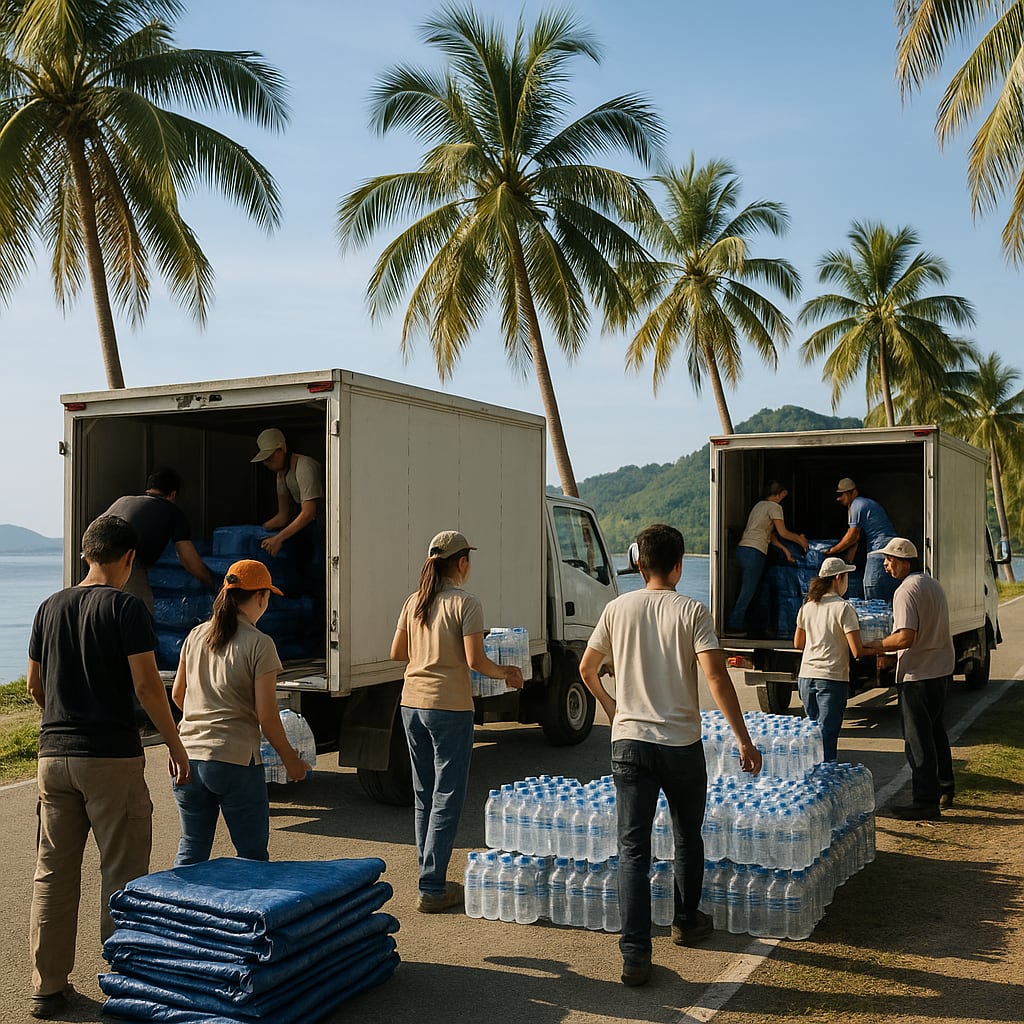
Two decision points are explicit. First, search-and-rescue access to the hardest-hit and still-inaccessible areas, notably Nagekeo. CGTN reports teams have not reached the region due to landslides and disrupted communications; progress here will determine whether casualty and damage figures shift further and what mobility corridors become viable for relief. Second, relief prioritization and logistics. Local BPBD officials cite immediate needs—tents, rice, medicines, blankets, drinking water, generators—and note thousands displaced, with assessments of hundreds to over 900 severely damaged homes depending on the reporting line (Telesur English, Aug 16; CGTN). Monitoring indicators include restoration of power and road access reported by BNPB/BPBD, any renewed sea-level advisories following aftershocks given authorities’ stated ongoing vigilance after lifting the alert (Le Monde), and the operational status of Komodo airport as a relief node (Telesur English, Aug 15). Consular updates, particularly concerning foreign nationals on Flores, will signal external risk assessments and potential movements (La Repubblica; ANSA).