
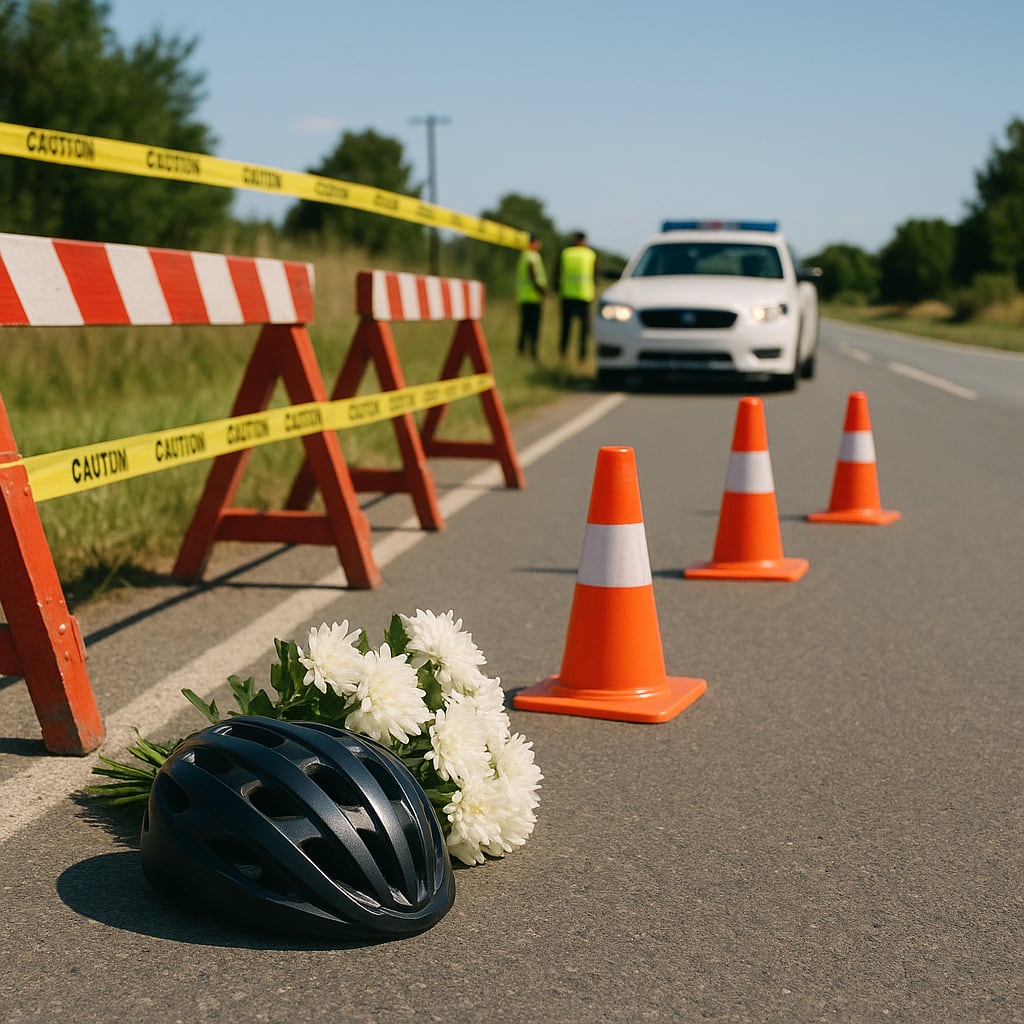
Finlay Tarling, 19, dies after crash during Volta a Portugal’s eighth stage; investigation announced and team withdraws
Narrative Snapshot
Across outlets, the core facts are consistent: a 19-year-old British rider, Finlay Tarling of the NSN Development team, died following a “serious accident” during the eighth stage of the Volta a Portugal, with organizers and his team confirming the news. International coverage largely draws on official statements and limited, early details.
Differences emerge in how cause and accountability are described. France24, Al Jazeera English, and Sky News repeat the organizers’ formulation without elaboration, while Le Monde, citing Portugal’s public broadcaster RTP, reports he was struck by a car traveling in the opposite direction slightly behind the peloton. Fox News similarly attributes to “local reports” that a driver missed stewards’ signs and entered the race route against traffic. Clarin emphasizes the moment the stage was neutralized after the field was informed.
Follow-on framing also varies. Le Monde and the Toronto Star highlight institutional responses, noting a Portuguese Republican National Guard investigation and NSN’s withdrawal from the remainder of the race. Fox News foregrounds official condolences and the team’s statement, and notes uncertainty over whether other riders were involved. The stakes across coverage center on road-race traffic control, event governance, and the adequacy of safety protocols when public roads are only partially closed and reliant on stewarding.
What Happened
During Friday’s eighth stage of the Volta a Portugal between Melgaço and Fafe in northern Portugal, 19-year-old British cyclist Finlay Tarling of the NSN Development team died after what organizers called a “serious accident.” Organizers and his team announced the news, and Tarling received immediate medical attention, according to Fox News. Le Monde, citing Portugal’s RTP, reported he was struck by a car traveling in the opposite direction while slightly behind the peloton. Fox News, referencing local reports, said the driver missed stewards’ signs and entered the road against the race’s flow. Clarin reported that the stage was neutralized after competitors were informed. On Saturday, NSN withdrew its development squad from the remainder of the race, reported the Toronto Star and Le Monde. A spokesperson for the Portuguese Republican National Guard said an investigation into the collision with a light vehicle would be opened, Le Monde reported.
Why It Matters
This incident concentrates attention on the governance of road cycling events that depend on layered traffic controls, stewarding, and coordination with public authorities. Organizers and the Portuguese Cycling Federation issued public condolences, as reported by Fox News, underscoring institutional involvement beyond the race promoter. The Republican National Guard’s announcement of an investigation, reported by Le Monde, signals a formal public-safety and legal review that could scrutinize road-closure protocols, steward procedures, and driver compliance at mass-participation events on open roads.
Because the rider was British/Welsh and the race is in Portugal, the case sits at the intersection of national federations, international teams, and host-country authorities. NSN’s withdrawal from the event, noted by the Toronto Star and Le Monde, highlights how teams may reassess participation and duty-of-care expectations after serious incidents. For decision-makers, the episode tests whether existing operational frameworks in stage racing adequately prevent vehicle intrusions and whether oversight mechanisms adapt when failures are alleged.
Diverging Narratives
Outlets align on the outcome and timing but diverge on causal specificity and emphasis. France24, Al Jazeera English, and Sky News mirror organizers’ language—“serious accident”—and do not specify a cause. Le Monde attributes to RTP that a vehicle traveling the wrong way struck Tarling behind the peloton, introducing direction-of-travel detail and positioning relative to the bunch. Fox News also cites “local reports” that a driver ignored or missed steward instructions and entered the course in the opposite direction, but notes it was unclear if other riders were involved. Clarin titles its piece with the claim that he was run over by a car and highlights the stage’s neutralization, a management action not foregrounded elsewhere.
Subsequent framing further separates coverage lines. The Toronto Star and Le Monde emphasize structural aftermath—NSN’s team withdrawal and the opening of a law-enforcement investigation—while Fox News centers public statements of condolence by organizers and the national federation, and the team’s tribute. These differences reflect varying editorial choices between immediate operational fallout, attribution of cause via local media, and institutional responses pending official findings. All accounts, however, indicate that key facts—precise circumstances, accountability, and whether others were affected—remain subject to the Guard’s investigation.
What Happens Next
The principal decision point is the Portuguese Republican National Guard’s investigation, announced by spokesperson Tiago Machado and reported by Le Monde. Analysts should watch for its scope and findings: confirmation of the vehicle’s trajectory relative to the race flow, stewarding measures in place, driver compliance with road controls, and any determinations of responsibility.
Operationally, organizers and the Portuguese Cycling Federation, both of whom issued condolences per Fox News, may communicate whether any immediate procedural adjustments are implemented for remaining or future stages; Clarin’s account of stage neutralization underscores that on-the-day race control decisions are already in play. Team-level responses have begun with NSN’s withdrawal, reported by the Toronto Star and Le Monde; further statements from teams or the race organization would signal how stakeholders interpret risk and governance adequacy. Continued media references to RTP or other official channels will be indicators of how swiftly and transparently cause is established.