
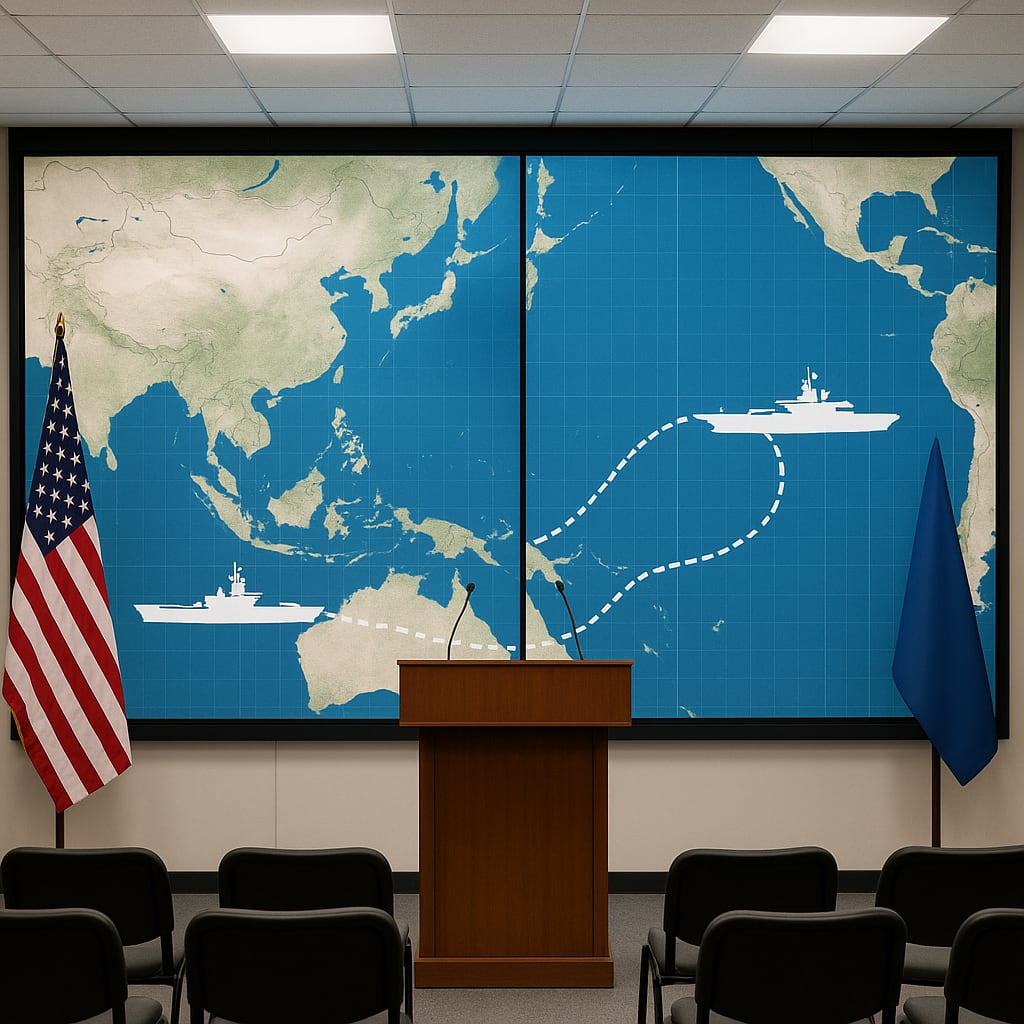
US readies USS George Washington to relieve USS Abraham Lincoln after record deployment, amid contested claims over onboard conditions and global force posture
Narrative Snapshot
Across outlets, there is broad agreement that the USS Abraham Lincoln has remained at sea unusually long, with multiple reports citing more than 240–260 days without a port call, and that the USS George Washington is transiting west to relieve it (BBC News, South China Morning Post, France24, Toronto Star, Telesur English). Coverage converges on reports of degraded living conditions and mental health strain, including food shortages, broken plumbing, and incidents of sailors attempting to jump overboard (BBC News; South China Morning Post; Al Jazeera English; Middle East Eye; TASS citing Military Times). Officials, however, consistently emphasize mitigation steps and relative normalcy: Admiral Brad Cooper praised the crew, acknowledged fatigue, and said mental health issues were lower than on other vessels; an interim Navy leader described cases as few with no fatalities (New York Times; TASS; ANSA).
Where outlets diverge is in emphasis and strategic framing. Some foreground the personnel and welfare crisis at sea; others stress operational continuity and command responsiveness. Several reports link the relief plan to broader risk in the Indo-Pacific as the United States shifts carrier presence to the Middle East during the Iran conflict, with analysts warning of exposure in the western Pacific as China probes for advantage (The Times of Israel; Toronto Star; Clarin). Political accountability also features unevenly: U.S. and international outlets note congressional scrutiny, while Middle East Eye highlights calls to fire the defense secretary over the carrier’s handling (Bangkok Post; Middle East Eye).
What Happened
U.S. and international outlets report that the USS Abraham Lincoln’s deployment in support of operations against Iran has stretched past eight months, with more than 240–260 days at sea and no port call (BBC News; CBC News; South China Morning Post). Reports describe food shortages, broken plumbing, and other quality‑of‑life issues, alongside accounts of sailors attempting to jump overboard (BBC News; South China Morning Post; Al Jazeera English; Middle East Eye; TASS citing Military Times). President Donald Trump publicly dismissed concerns over conditions and duration, while confirming the carrier would rotate out (Sky News; The Hindu; Al Jazeera English; TASS). The USS George Washington has been observed moving west through the Singapore Strait and Strait of Malacca to relieve the Lincoln (South China Morning Post; France24; Telesur English; Toronto Star). Admiral Brad Cooper visited the ship, praised the crew, acknowledged hardships, and said earlier issues had been addressed; he assessed mental health cases as comparatively lower than on other vessels (New York Times; TASS; Al Jazeera English; South China Morning Post). An interim Navy official characterized mental health cases as few with no fatalities and said the mission had been extended for Middle East operational needs (ANSA). U.S. lawmakers have sought inquiries into the reported conditions (Bangkok Post; BBC News).
Why It Matters
The episode underscores the strain extended, combat-adjacent carrier deployments can place on personnel and sustainment systems, with mental health and basic services emerging as operational readiness variables rather than solely welfare concerns (BBC News; South China Morning Post; Al Jazeera English). It also illuminates trade-offs in U.S. global force management as Washington prioritizes the Iran fight and blockade enforcement around the Strait of Hormuz, prompting a westward shift of a Pacific-based carrier and reported gaps in the western Pacific that concern allies and invite Chinese opportunism (South China Morning Post; The Times of Israel; Toronto Star; Clarin). For decision-makers, the case tests the elasticity of carrier surge capacity, the credibility of deployment length norms, and the robustness of congressional oversight mechanisms when frontline conditions deteriorate (Bangkok Post). It highlights communication challenges: official reassurance coexists with documented grievances and incidents, affecting domestic support and alliance perceptions (New York Times; ANSA; Al Jazeera English).
Diverging Narratives
Officials emphasize continuity and control. Admiral Brad Cooper lauded the Lincoln’s crew, acknowledged fatigue and hardship, and said earlier complaints about food, hot water, and related issues had been addressed and resolved; he also framed mental health cases as lower than on other vessels (New York Times; TASS). ANSA quotes an interim Navy leader calling mental health cases “esiguo” with no fatalities and attributing the extended mission to operational needs in the Middle East. President Trump repeatedly downplayed concerns, rejecting claims the deployment was too long while confirming rotation (Sky News; TASS; Al Jazeera English; The Hindu).
By contrast, multiple outlets center on deteriorating conditions and acute risk. BBC News, South China Morning Post, and Telesur English cite shortages of basic supplies, broken plumbing, water contamination, and other failures. Al Jazeera English and Middle East Eye report incidents of sailors attempting to jump overboard; TASS, citing Military Times, reports several suicide attempts. Political framing also diverges. Bangkok Post highlights congressional Democrats’ demands for an inquiry. Middle East Eye features Senator Chuck Schumer’s call to fire Defense Secretary Pete Hegseth over the carrier’s handling. Strategic assessments split as well: while ANSA underscores Middle East operational imperatives, The Times of Israel, Toronto Star, and Clarin warn that relieving the Lincoln with a Pacific-based carrier leaves the western Pacific without a key U.S. warship as China “waits in the wings.”
What Happens Next
Two decision points will shape outcomes. First is the handover timeline and scope of relief. Multiple outlets report the USS George Washington moving west to replace the Lincoln; confirmation of arrival, any interim port call for the Lincoln, and official disclosures on crew support will indicate how quickly leadership intends to reset personnel and maintenance cycles (South China Morning Post; France24; Telesur English; Toronto Star). Second is accountability and mitigation. Congressional demands for inquiry signal potential hearings or formal reviews; watch for Navy or CENTCOM reporting on corrective actions, mental health resources, and infrastructure fixes aboard carriers (Bangkok Post; TASS; New York Times).
A related posture decision concerns Indo‑Pacific coverage. Reports that the Pacific is left without a carrier elevate questions about backfill or alternative deployments; statements from the Pentagon or Indo‑Pacific Command on maritime presence will signal how Washington balances Middle East requirements and deterrence vis‑à‑vis China (The Times of Israel; Toronto Star; Clarin).