
Indonesia’s Flores hit by magnitude-7.7 quake: death toll passes 50 as aftershocks, landslides and cut roads leave over 12,000 displaced
Narrative Snapshot
Across outlets there is broad alignment on the core parameters: a powerful offshore earthquake struck near Flores early on Saturday local time, with the United States Geological Survey placing the epicenter north-northwest of Ende at shallow depth, a tsunami warning initially issued and later lifted, and extensive aftershocks reported. Initial dispatches emphasized limited information and precautionary alerts, while subsequent coverage converged on heavy damage, landslides and a rising toll as rescue access improved (The Guardian; CBC News; Deutsche Welle; Japan Times; Clarin).
Figures diverge by publication time and sourcing. Some outlets reported at least 47 fatalities as search operations intensified (Japan Times; Deutsche Welle; Toronto Star; CGTN), others 48 and 51 (CGTN; Al Jazeera English; The Hindu; France24; Le Monde), and by Sunday–Monday several placed the toll at 53 (Folha de S.Paulo; BBC News; South China Morning Post). Displacement estimates moved from about 5,000 over the weekend (Al Jazeera English; Folha de S.Paulo; Telesur English) to more than 12,000 by Monday, with local authorities citing 12,800 unable to return home (ANSA; France24; Bangkok Post). Outlets repeatedly linked the uncertainty to landslides, damaged roads, and disrupted communications in affected regencies (France24; The Hindu; CGTN; The Times of Israel).
Emphases also differ. Several Asian and European outlets anchor their reporting in official tallies and operational constraints—blocked access to Nagekeo, power outages, and logistics bottlenecks (CGTN; The Hindu; France24). Others foreground immediate humanitarian needs—shelter, food, medicines, water and generators—based on local disaster management briefings (Telesur English; Le Monde). Human-impact pieces recount chaotic evacuations and hospital disruptions, including patients treated in tents after facility damage (South China Morning Post; Al Jazeera English). Italian coverage adds a consular lens, noting hundreds of Italian nationals on Flores, the absence of foreign tourist fatalities in Labuan Bajo, and confirmation that flights remained regular—relevant both for outbound travelers and inbound relief (La Repubblica; Corriere della Sera).
What Happened
A magnitude-7.7 earthquake struck off Indonesia’s Flores island early Saturday, with the epicenter roughly 62–68 kilometers north-northwest of Ende at about 10 kilometers’ depth, prompting a tsunami warning that was later lifted (The Guardian; Telesur English; Clarin; Deutsche Welle). Aftershocks numbered in the dozens through the weekend, with reports of hundreds in total, and further quakes on Monday measured at magnitude 5.6 and 5.9 without new tsunami alerts (Japan Times; The Hindu; ANSA; South China Morning Post). Casualty counts rose as search teams reached cut-off areas: initial reports cited at least two dead, later revised to at least 47, then 51, and by late Sunday–Monday to 53 (NBC News; TASS; Japan Times; CGTN; Al Jazeera English; Folha de S.Paulo; BBC News; South China Morning Post). Authorities documented damage to homes and public facilities and distributed relief, with fatalities recorded across multiple regencies including Manggarai and East Manggarai (CGTN; Telesur English).
Why It Matters
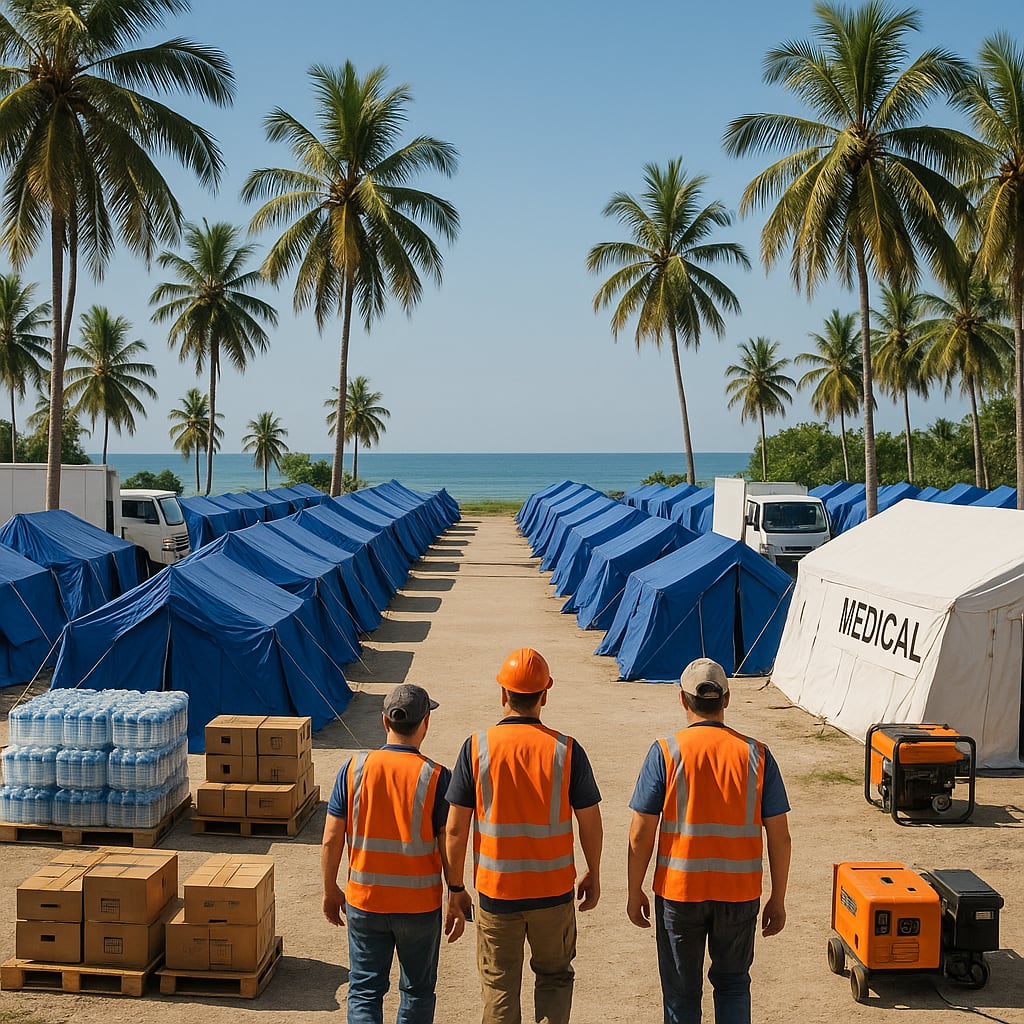
The event tests Indonesia’s disaster response in an island setting where landslides, road cuts, power outages, and damaged health facilities complicate rapid aid delivery, a pattern reflected in reports of blocked access to Nagekeo, communications disruptions, and patients treated in tents (CGTN; The Hindu; Al Jazeera English). Documented needs for tents, food, medicines, potable water and generators underscore the logistics and energy constraints responders must bridge to stabilize dispersed communities (Telesur English; Le Monde). With several outlets calling this Indonesia’s deadliest quake since 2022, the episode highlights recurring resilience challenges in building standards, critical infrastructure hardening, and emergency communications under aftershock conditions (The Hindu). Tourism and transit nodes remain salient: despite damage, Komodo’s airport was reported operational and flights from Flores were “regular,” sustaining lifelines for relief and evacuation while consular services tracked foreign nationals on the island (Telesur English; Corriere della Sera; La Repubblica).
Diverging Narratives
Discrepancies in core metrics stem largely from timing and source selection. Seismological parameters vary between agencies, with most outlets using USGS’s magnitude 7.7 while others cited 7.6 from the European-Mediterranean Seismological Center (The Guardian; TASS). Early pieces noted no casualties, then “at least two,” before later updates cited 47, 48, 51, and 53 deaths as teams gained access to isolated regencies and updated BNPB and BPBD figures filtered to the media (CBC News; NBC News; Japan Times; CGTN; Al Jazeera English; Folha de S.Paulo; BBC News; South China Morning Post). Similarly, damage estimates range from hundreds of houses affected in early tallies to over 1,300 homes damaged in later accounts, and from 5,000 people displaced over the weekend to more than 12,000 unable to return home by Monday, reflecting expansion of assessments beyond initial districts (CGTN; Al Jazeera English; Telesur English; ANSA; France24; Bangkok Post). Hazard framing also differs: some reports focus on the temporary tsunami warning and its lift, while one outlet highlights a small tsunami, a detail absent elsewhere, illustrating variation in what local authorities and reporters emphasized as information evolved (The Guardian; Deutsche Welle; The Times of Israel).
What Happens Next
Two operational inflection points will shape outcomes reported this week. First is physical access: authorities have struggled to reach worst-hit areas such as Nagekeo due to landslides and damaged roads, attempting ferries when overland routes failed; monitoring road clearance, ferry operations, and communications restoration will indicate whether casualty and displacement figures stabilize or continue to rise (CGTN; The Hindu; France24). Second is relief throughput to shelters at schools, police stations, and government offices, where shortages and fears of starvation have been reported; watch for BPBD/BNPB updates on deliveries of tents, food, medicines, potable water and generators against stated needs (Bangkok Post; BBC News; Telesur English; Le Monde). Additional decision points include sustaining hospital care in temporary facilities and maintaining air links—Komodo airport operations and regular flights have been cited as intact—both of which affect surge capacity for medical evacuation and aid (Al Jazeera English; Corriere della Sera; Telesur English). Aftershock activity, including Monday’s M5.6–5.9 events without new tsunami warnings, will continue to condition field operations (ANSA; South China Morning Post; Deutsche Welle).