
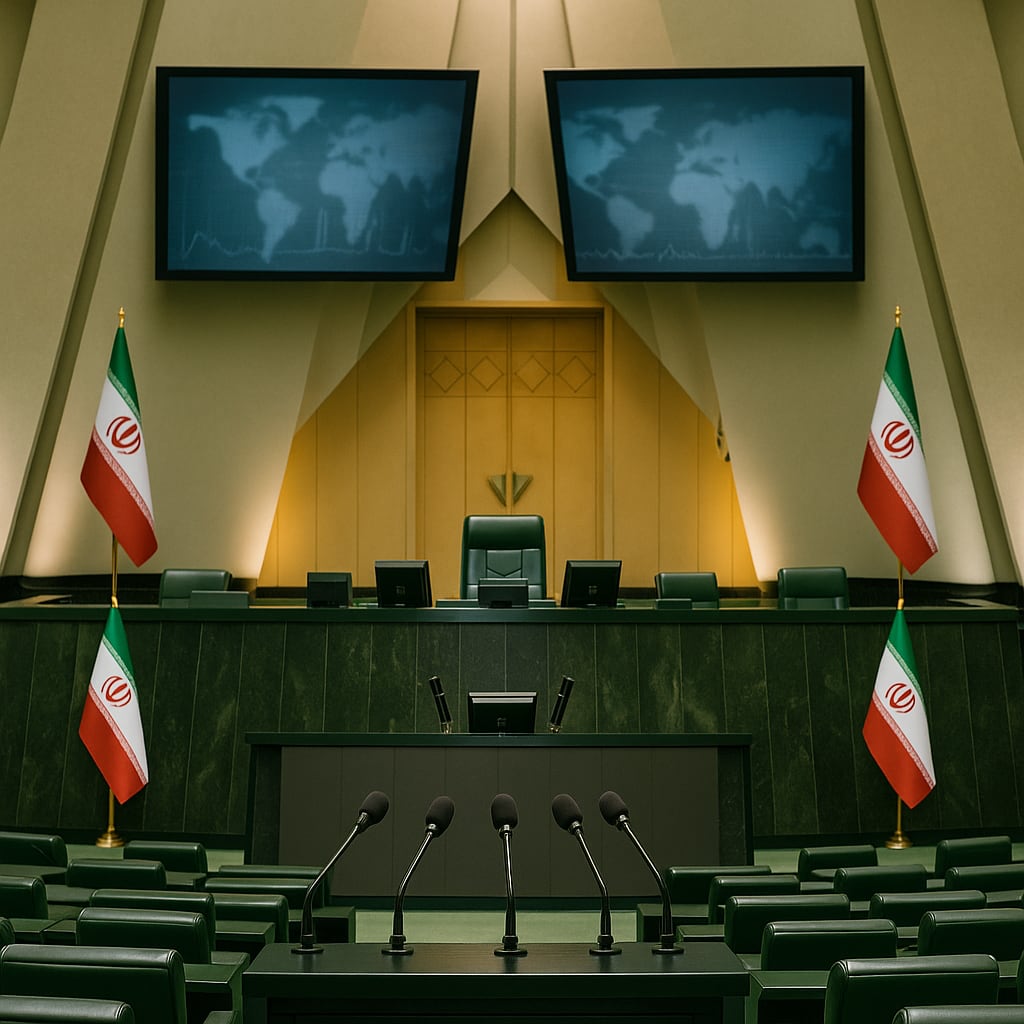
Iran’s parliament advances bill to criminalize contact with ‘hostile’ foreign media
Narrative Snapshot
Across outlets, there is clear agreement that Iran’s parliament moved a bill forward that would criminalize interviews and other communications with media deemed hostile, naming US- and Israeli-funded outlets in particular. Several sources align on penalties ranging from six months to two years in prison and on parallel administrative controls requiring notification to the intelligence ministry for interactions with other foreign media.
Where they diverge is on finality, scope, and framing. Middle East Eye, citing Shargh and Mizan, stresses that only the bill’s general principles were approved and that individual provisions remain unsettled. Telesur, citing IRNA, reports a recorded vote count and details extending the ban to transmitting data to non-Iranian media or to people engaged in journalism abroad, while noting Guardian Council review is still required. The Times of Israel emphasizes consequences for journalists amid a broader crackdown, whereas Japan Times foregrounds the notification requirement as part of a regulatory apparatus around foreign press engagement. Middle East Eye also highlights prospective controls on contact with foreign embassies and organizations, indicating a reach beyond media to a wider set of foreign-facing interactions.
What Happened
Iran’s parliament approved the general principles of a bill aimed at countering foreign intelligence influence, moving toward criminalizing interviews and other communications with media deemed hostile to the Islamic Republic, including US or Israeli outlets and those financed by either country, according to Shargh via Middle East Eye. Telesur, citing the official IRNA agency, reported 183 votes in favor and penalties of six months to two years’ imprisonment for violations, adding that the prohibition would also extend to sending videos, photographs, audio, and other data to non-Iranian media or to people engaged in journalism abroad. Both Middle East Eye and Japan Times note that interviews with other foreign media would require notification to Iran’s intelligence ministry. Middle East Eye adds that contact with foreign embassies and foreign organizations without notification and written permission from the foreign ministry would be punishable. Telesur underscores that the bill still requires Guardian Council review before becoming law.
Why It Matters
The measure formalizes and extends state control over cross-border information flows by criminalizing contact with designated “hostile” media and placing notification or permission requirements on other foreign-facing interactions. As described by Middle East Eye and Telesur, the bill’s architecture links media engagement to national security by positioning it within a framework to counter foreign intelligence infiltration and by assigning procedural roles to Iran’s intelligence and foreign ministries. This legal codification has implications for journalists, civil society actors, and ordinary citizens who communicate with non-Iranian outlets or foreign institutions, and for foreign media ecosystems—especially those financed by the United States or Israel. The Times of Israel situates the development within an ongoing domestic crackdown on journalists, while Fox News reports a recent sentencing in an expression-related case, illustrating the enforcement climate that could shape how any new law is applied. For multilateral rights bodies and governments, the bill signals potential additional constraints on access, reporting, and diplomatic outreach within Iran.
Diverging Narratives
Outlets differ on how settled the provisions are and how broadly the prohibitions would reach. Middle East Eye, citing MP Osman Salari, emphasizes that only the bill’s general principles have been approved and cautions that reports about detailed provisions should not be treated as final. Telesur, attributing specifics to IRNA, presents more granular elements, including the 183-vote tally, the six-month to two-year penalty range, and the extension to transmitting data to non-Iranian media or to individuals engaged in journalistic activity abroad, while also noting the pending Guardian Council review. Japan Times and Middle East Eye agree on a notification requirement to the intelligence ministry for interviews with foreign media not deemed hostile, and Middle East Eye further notes that contact with foreign embassies and organizations would require prior notification and written permission from the foreign ministry, with violations punishable; the precise sanction is not specified in that report. The Times of Israel centers the journalist-specific impact and links it to a broader crackdown narrative. Unresolved within the reported material are the mechanisms for designating outlets as “hostile” and the final text of penalties and administrative procedures, which Middle East Eye says remain subject to parliamentary debate and approval.
What Happens Next
Two institutional checkpoints will shape outcomes. First, as Middle East Eye reports, parliament must still debate and approve the bill’s individual provisions; the scope of prohibited conduct, definitions of “hostile” media, and the breadth of data-transmission bans referenced by Telesur are potential areas of revision. Second, Telesur notes that the Guardian Council must review the bill before it can become law; its decisions could confirm, narrow, or return articles for amendment. Analysts should watch for official language on designation criteria for “hostile” outlets; implementing rules by the intelligence and foreign ministries governing notification and permission; and whether Middle East Eye’s reported embassy and foreign-organization contact provisions remain intact. The enforcement climate will also be relevant: Fox News’ report of a recent sentencing in a speech-related case provides context for how new legal tools might be operationalized once final texts and implementing regulations are in place.