
Brazil’s presidential race opens as Lula relaunches a security-and-social agenda and Flávio Bolsonaro carries the right into October
Narrative Snapshot
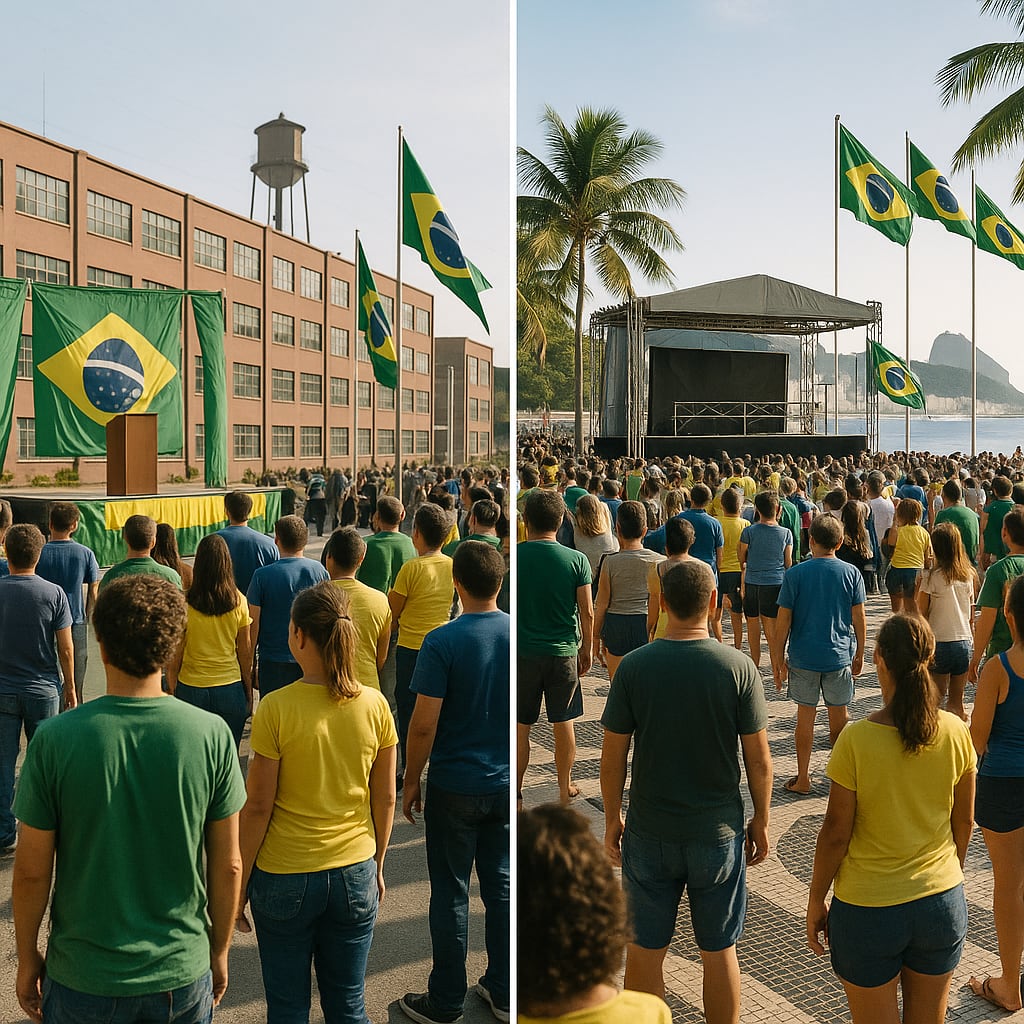
Across Latin American and European outlets, coverage converges on a familiar two‑camp contest and the symbolism of the opening rallies. Brazilian and regional sources detail Lula’s São Bernardo do Campo kickoff anchored in security and social policy themes, while noting Flávio Bolsonaro’s Copacabana launch that visually and rhetorically taps the nationalist brand built by his father. Folha de S.Paulo adds a digital layer, reporting that Lula initially led attention on WhatsApp, TikTok, and Instagram during the opening period monitored by the analytics firm Palver.
Where they diverge is in the framing of stakes. France24 situates Lula’s message within “sovereignty” and notes tensions with Washington, while tying Flávio Bolsonaro to Donald Trump and the continuity of a far‑right network. Telesur English and Clarín foreground Lula’s promises on combating gender violence and organized crime alongside expanded social programs and jobs claims. The Bangkok Post underscores voter fatigue, capturing a domestic mood less about ideology than repetition.
U.S. conservative media this same week is focused inward. Fox News devotes sustained attention to Democratic Party infighting, elevating voices who say the party has been “overtaken” by the far left, tracking contentious primaries in Michigan and Wisconsin, and spotlighting the role of progressive influencer Hasan Piker. The juxtaposition is less a direct contrast on Brazil than an indicator of divergent media priorities: Brazil’s electoral dynamics dominate in Latin America and Europe, while Fox’s U.S. coverage treats domestic factional battles as the salient political story.
What Happened
Brazil’s official campaign period began Sunday with President Luiz Inácio Lula da Silva and Flávio Bolsonaro launching their bids. Lula returned to the Vila Euclides stadium in São Bernardo do Campo—site of his historic labor strikes—promising a fourth term built around combating gender violence and organized crime and continuing social programs; he cited the creation of 10 million formal jobs over three and a half years (Telesur English, Clarín, Folha de S.Paulo). Flávio Bolsonaro, stepping in for his imprisoned father, opened in Rio’s Copacabana wearing a green‑and‑yellow jacket reading “my party is Brazil” (France24, Folha de S.Paulo). France24 reports the frontrunners are running close in polls, while Telesur English cites a survey with Lula at 38 percent. France24 also highlights Lula’s sovereignty rhetoric amid tensions with Washington and notes Flávio Bolsonaro’s reliance on his family’s far‑right base and ties to Donald Trump.
Why It Matters
The opening frames anchor two policy pathways with external implications. Lula’s emphasis on security and social spending signals continuity of a redistributive domestic agenda, while his sovereignty message—reported alongside tensions with Washington—positions Brasília to assert greater autonomy in U.S.–Brazil interactions (France24, Telesur English, Clarín). The Bolsonaro camp’s handoff to Flávio preserves organizational continuity for Brazil’s right and, per France24, maintains linkages to Trump‑aligned networks in the United States—an international political channel that could shape cross‑border signaling even before policy enters formal diplomacy.
Simultaneously, Fox News’ focus on U.S. Democratic fractures foregrounds control of the Senate, with Michigan’s race presented as pivotal; its poll shows Republican Mike Rogers narrowly leading Abdul El‑Sayed, whom Democrats “must” defend to regain the majority (Fox News, 15 Aug). That operationalizes how domestic party cohesion—or its absence—conditions U.S. policy bandwidth during Brazil’s election cycle, especially where sovereignty, security cooperation, and trade are implicated.
Diverging Narratives
Within coverage of Brazil, the stakes are cast through different lenses. France24 centers geopolitical positioning—sovereignty and Washington—while tying Flávio Bolsonaro to Trump and the far right’s transnational brand. Telesur English and Clarín concentrate on Lula’s social portfolio and public security commitments, grounding his appeal in tangible programs and labor‑movement symbolism. Folha de S.Paulo emphasizes campaign theater and early social‑media traction, noting Lula led online attention as monitored by Palver, while the Bangkok Post captures citizen weariness with a repeated matchup.
The polling picture is framed differently across outlets: France24 characterizes the race as close, while Telesur English cites a poll placing Lula at 38 percent alongside a note that the Bolsonaro challenge is “gaining ground.” Absent consistent methodological detail, the takeaway is less a contradiction than an early snapshot of a competitive field with varied baselines.
Fox News constructs a separate narrative arc around U.S. Democrats: party figures and former operatives describe a “civil war” and an activist left that has “overtaken” the party (Fox News, 10, 15 Aug). That framing is paired with reported outcomes suggesting vulnerability for progressive candidates—Francesca Hong’s narrow primary loss in Wisconsin and a post‑primary poll showing El‑Sayed trailing in Michigan—while also noting attempts at party consolidation, such as Rep. Haley Stevens endorsing El‑Sayed even as she condemns Hasan Piker (Fox News, 13, 15 Aug). The result is a portrait of an ascendant left contested by electoral setbacks and establishment resistance.
What Happens Next
In Brazil, watch how Lula operationalizes his dual emphasis on public security and social programs—specific proposals and budget signals will indicate whether the campaign rhetoric translates into actionable priorities (Telesur English, Clarín). Monitor whether he sustains sovereignty framing vis‑à‑vis Washington and how, if at all, U.S. responses feature in speeches or policy outlines (France24). On the right, indicators include how effectively Flávio Bolsonaro mobilizes his father’s base, the visibility of Trump‑aligned surrogates, and whether Copacabana‑style nationalist imagery broadens beyond core supporters (France24, Folha de S.Paulo). Social‑media analytics like those cited by Folha’s Palver snapshot are an early barometer of message diffusion.
In the United States, Fox News’ reporting points to two inflection points: whether Democrats unify behind El‑Sayed in Michigan to close a reported GOP unity gap, and how candidates handle ties to figures like Hasan Piker amid establishment pushback (Fox News, 13–15 Aug). Polling movement and endorsements will show which faction’s frame—ascendant left or establishment rebound—sets the tone heading into November.