
Deadly wildfires sweep Greece, Belgium and Spain amid Europe’s record heat and evacuations
Narrative Snapshot
Across outlets, the throughline is continental scale amplified by extreme heat, with agreement that Greece, Belgium and Spain are among the hardest hit. Al Jazeera frames the moment in macro terms, citing roughly 500,000 hectares burned across Europe and “thousands” displaced, while European and North American outlets concentrate on discrete flashpoints: fatalities and dual fronts on Salamina/Salamis in Greece, a record-scale blaze in eastern Belgium, and a major fire in Spain.
Emphasis diverges between incident detail and structural drivers. BBC and CGTN focus on firefighting tactics and numbers on Salamina, while The Guardian and CBC highlight Belgium’s exceptional severity and evacuations near the German border. ANSA and Clarin anchor Spain in the picture with burned area, evacuations and a reported firefighter fatality. The Times of Israel introduces the enforcement dimension, reporting an arrest in Crete under an islandwide burn ban, underscoring that human negligence and heat-driven conditions are operating together. What is most at stake, across these prisms, is life safety, pressure on protected areas, and the implications of cross-border risk in a historically hot summer.
What Happened
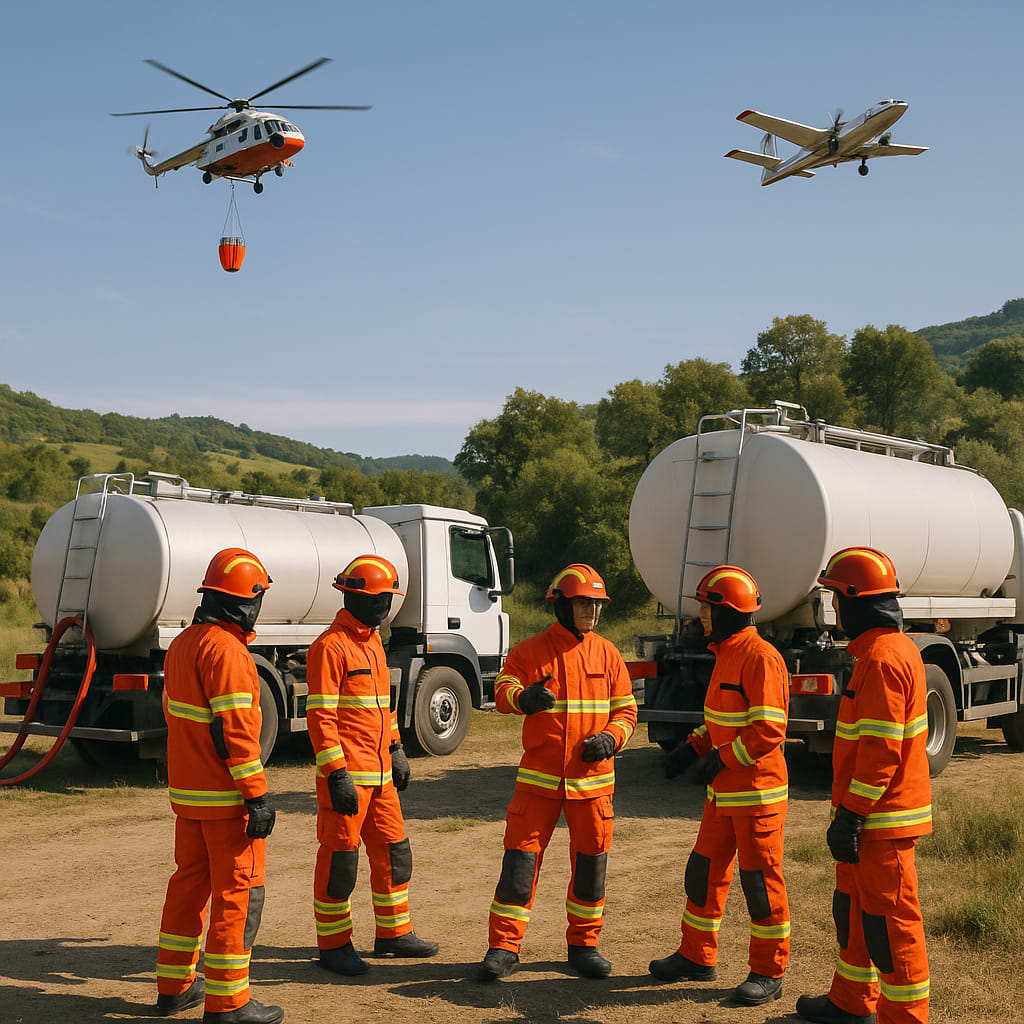
Media in multiple countries report lethal wildfires amid high temperatures and tinder-dry conditions. In Greece, two people died after two fires broke out on the island of Salamina (Salamis), with Greek media reporting nearly 200 firefighters working to keep the blazes apart and CGTN citing 146 firefighters, volunteers, four water‑dropping aircraft and six helicopters deployed, sea evacuations of at least 90 people, injuries and home damage near Peristeria and Kaki Vigla. Belgium is tackling what The Guardian calls its biggest fire in more than a century in the east near the German border, with about 600 people told to evacuate; CBC notes the burned area includes a nature reserve. In Spain, ANSA reports 15,000 hectares burned and over 1,000 residents evacuated, while CGTN says a soldier died fighting a major wildfire in Aragon. Al Jazeera situates these episodes within roughly 500,000 hectares burned across Europe and mass displacement.
Why It Matters
Coverage consistently ties these events to a historically hot, tinder-dry European summer and record heat, a structural stressor that magnifies wildfire risk and the scale of evacuations. The incidents test operational capacity across jurisdictions: concentrated aerial assets in Greece, evacuations and reserve protection in Belgium, and large burned areas and casualties in Spain. With fires approaching international borders, as in eastern Belgium near Germany reported by The Guardian and CBC, cross-border spillover and coordination needs intensify even absent explicit institutional references in reporting. The Times of Israel’s account of an arrest under an islandwide burn ban in Crete highlights governance and enforcement as a parallel lever to climate and weather mitigation. For decision-makers, the signals are concurrent: escalating baseline risk tied to extreme heat, growing exposure of protected ecosystems, and the need for rapid evacuation and incident management systems that can scale across multiple simultaneous theaters.
Diverging Narratives
Outlets converge on the facts of fatalities in Greece and a record-scale fire in Belgium but differ in emphasis and metrics. On Greece’s Salamina, BBC cites nearly 200 firefighters, whereas CGTN specifies 146 personnel plus aircraft and helicopters; both agree on dual fire fronts and the need to keep them apart. Casualty reporting is uneven across geographies: CGTN and Clarin note a soldier’s death in Spain’s Aragon, while several UK-focused pieces concentrate on Greece and Belgium without detailing Spain’s fatality. Scale is described variably: Al Jazeera reports around 500,000 hectares burned Europe-wide and “thousands” displaced, while national outlets provide localized figures, such as ANSA’s 15,000 hectares in Spain and Clarin’s estimate of nearly 3,000 hectares burned in a Belgian natural park—characterized by The Guardian as the country’s biggest fire in more than a century. Causation frames also diverge in emphasis: most accounts foreground heat and tinder-dry conditions; The Times of Israel surfaces negligent ignition under a burn ban, indicating parallel human and climatic drivers.
What Happens Next
Operational choices will hinge on weather and access. In Greece, authorities’ stated priority of preventing the two Salamina fires from merging, reported by BBC, will drive deployment of ground crews and aircraft; CGTN’s account suggests aerial capacity is already significant, and further adjustments would signal shifting risk. In Belgium, the record blaze’s proximity to the German border, as highlighted by The Guardian and CBC, makes evacuation posture and containment lines the key indicators; additional evacuation orders or reports of spread into protected areas would mark a worsening scenario. In Spain, ANSA’s burned-area and evacuation figures, alongside CGTN’s reported firefighter death, point to continued high-risk operations; updates on containment and evacuations will indicate trajectory. Enforcement signals also matter: The Times of Israel’s report on a Crete arrest under a burn ban suggests authorities may intensify restrictions and penalties where conditions remain tinder-dry. Weather updates on heat and wind—central across Bangkok Post and other outlets—remain the primary trigger for escalation or stabilization.