
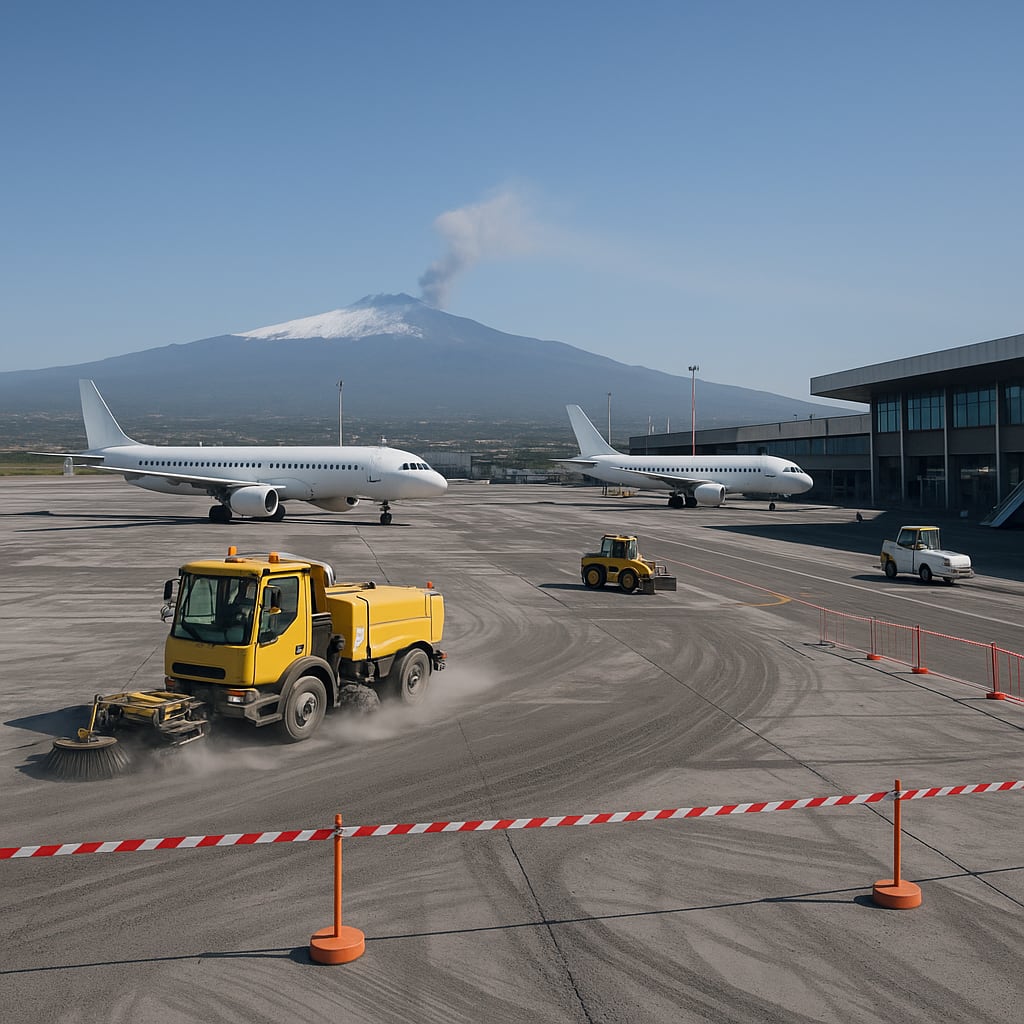
Etna ash shutters Catania for days, with operations resuming under curbs as activity stays high
Narrative Snapshot
Across outlets, the consensus is that ash from Mount Etna forced an exceptional, multiday shutdown of Catania’s airport in the heart of the summer rush, with knock-on effects for travelers and the regional economy. International coverage largely framed the episode through the scale of disruption, while Italian reporting added operational and volcanological detail. French outlets stressed the episode’s rarity, describing the closure as the longest emergency since 2002, and potentially extending into a major travel weekend, whereas English-language reports emphasized “hundreds” of cancellations and stranded travelers.
Italian sources concentrated on the volcano’s current state and the mechanics of reopening. ANSA highlighted very high volcanic tremor from Etna’s Voragine crater and confirmed an orange flight alert, while La Repubblica reported the closure of two airport sectors, an increase in ash aloft, and an arrivals cap, all while departures proceeded. In contrast, Sky News, Al Jazeera, and the AP (via the Toronto Star) focused on traveler impact and the duration of the shutdown.
Quantification of the disruption varies by outlet. Clarin cited 700 cancelled flights and thousands stranded, Le Monde reported more than 1,000 cancellations and tens of thousands of travelers blocked, while several English-language outlets kept figures at “hundreds.” A parallel case in Colombia underscores the aviation risks ash poses: TeleSUR reported that emissions from the Purace volcano, also under orange alert, prompted a temporary airport closure in Popayán amid heightened seismic and gas activity.
What Happened
Ash emissions from Mount Etna led to the closure of Catania’s airport for several consecutive days during peak holiday travel. By August 14, the AP (via the Toronto Star) and France24 reported the shutdown had reached a fifth straight day, with France24 adding that the closure would continue until early August 15 and describing the episode as the longest emergency since 2002. Al Jazeera said flights would be suspended until at least Saturday afternoon. Disruption tallies differed: Sky News noted “hundreds” of cancellations over the week; Clarin reported 700 cancellations and a closed airport; and Le Monde cited more than 1,000 cancellations with tens of thousands stranded. On August 13, La Repubblica said Catania would remain closed until 15:00 on August 15 and that Comiso had reopened, with local tourism showing empty rooms in Taormina and Syracuse. As activity persisted, ANSA on August 16 reported very high tremor from the Voragine crater and an orange flight alert. By August 17, La Repubblica described departures operating, two terminal sectors shut, and arrivals capped at five per hour, while ANSA the same day said there were no restrictions on departures and arrivals “every five hours.” Separately, on August 10, TeleSUR reported that Colombia’s Purace volcano, also on orange alert, emitted ash and gases, prompting Aerocivil to close Popayán’s airport due to risks to air navigation.
Why It Matters
The episode illustrates how volcanic ash can rapidly stress aviation systems and tourism-dependent economies, especially during peak travel periods. France24 and Le Monde characterize the Catania shutdown as the most prolonged since 2002, underscoring the challenge of sustaining air connectivity when frequent but usually short-lived disruptions become extended. Le Monde directly links ash to flight safety, noting that it made flying dangerous, framing closures as necessary risk mitigation rather than discretionary restrictions. Italian coverage shows the operational levers available to authorities—partial terminal closures, differential treatment of arrivals and departures, and reliance on alternative airports like Comiso—to manage throughput under constraint. The Colombian case reported by TeleSUR, where Aerocivil closed Popayán airport as ash and gas emissions intensified, points to consistent institutional reliance on color-coded alerts and preemptive airport suspensions to protect air navigation. For decision-makers, prolonged orange-alert operations test crisis communications, slot management, and contingency planning in regional air networks and tourism sectors.
Diverging Narratives
Outlets diverge on the scale and framing of disruption. Clarin reported 700 flight cancellations and thousands of stranded tourists, while Le Monde reported more than 1,000 cancellations and tens of thousands blocked; English-language sources like Sky News, the AP (via the Toronto Star), France24, and Al Jazeera generally describe “hundreds” of cancellations and stranded travelers. French outlets emphasize historic rarity—France24 calls it the longest emergency since 2002 and Le Monde terms it unprecedented since 2002—whereas other sources stress immediate travel impacts without historical context.
There are also differences in reported timelines and operational status. France24 stated the airport would remain closed until early August 15; Al Jazeera said suspensions would last until at least Saturday afternoon; and La Repubblica on August 13 specified closure until 15:00 on August 15 with Comiso reopened. By August 17, local Italian reporting pointed to a partial reopening with ongoing constraints, but accounts of arrivals capacity conflict: La Repubblica reported arrivals limited to five per hour with no issues for departures, while ANSA reported no departure restrictions and arrivals “every five hours.” ANSA alone foregrounded volcanological detail—very high tremor at the Voragine crater and an orange flight alert—elements largely absent from international reports that focused on traveler disruption.
What Happens Next
Two decision points are clear from the reporting. First is whether Catania can normalize operations under the current orange alert. ANSA’s account of very high tremor and ongoing orange status, alongside La Repubblica’s description of sector closures and arrivals caps, suggests authorities are calibrating capacity to ash conditions. If ash concentrations decrease, sectors could reopen and arrival limits ease; if emissions persist or intensify, constraints may hold or tighten. Analysts should watch for airport authority notices and Italian civil protection updates indicating changes to sector status, arrival rates, and alert levels.
Second is the use of network alternatives. La Repubblica noted Comiso’s reopening while Catania remained shut, implying reliance on secondary capacity. Monitoring shifts in scheduled traffic to Comiso or other Sicilian airports will indicate the durability of rerouting. In Colombia, TeleSUR reported that Aerocivil closed Popayán as Purace’s emissions strengthened; subsequent decisions will hinge on observed seismic energy and gas temperatures. Official advisories on ash and airport status in both cases will determine whether partial operations expand or new closures are imposed.