
Record rains near Tokyo kill at least 10 and strand thousands at Narita
Narrative Snapshot
Across outlets, the core picture is consistent: exceptionally heavy rainfall near Tokyo triggered flooding that disrupted transport and power and caused fatalities, with Narita Airport becoming a choke point for stranded travelers. International wires converged on Narita as the operational epicenter, while domestic reporting advanced the casualty count and added cause-of-death detail. The sharpest split lies in casualty and “missing” figures as the situation evolved, alongside differences in framing—some outlets foreground immediate disruptions; others place the event within climate and regional weather patterns.
European and North American coverage emphasized the scale of airport disruption and power loss, treating Narita access and restoration of services as primary concerns. French and Brazilian outlets also amplified the climate and housing-damage angles. Japanese reporting pushed the timeline forward with a higher confirmed death toll and a specific indirect fatality from generator use. An Italian wire notably diverged with a high number of people reported missing, an outlier not corroborated elsewhere.
What Happened
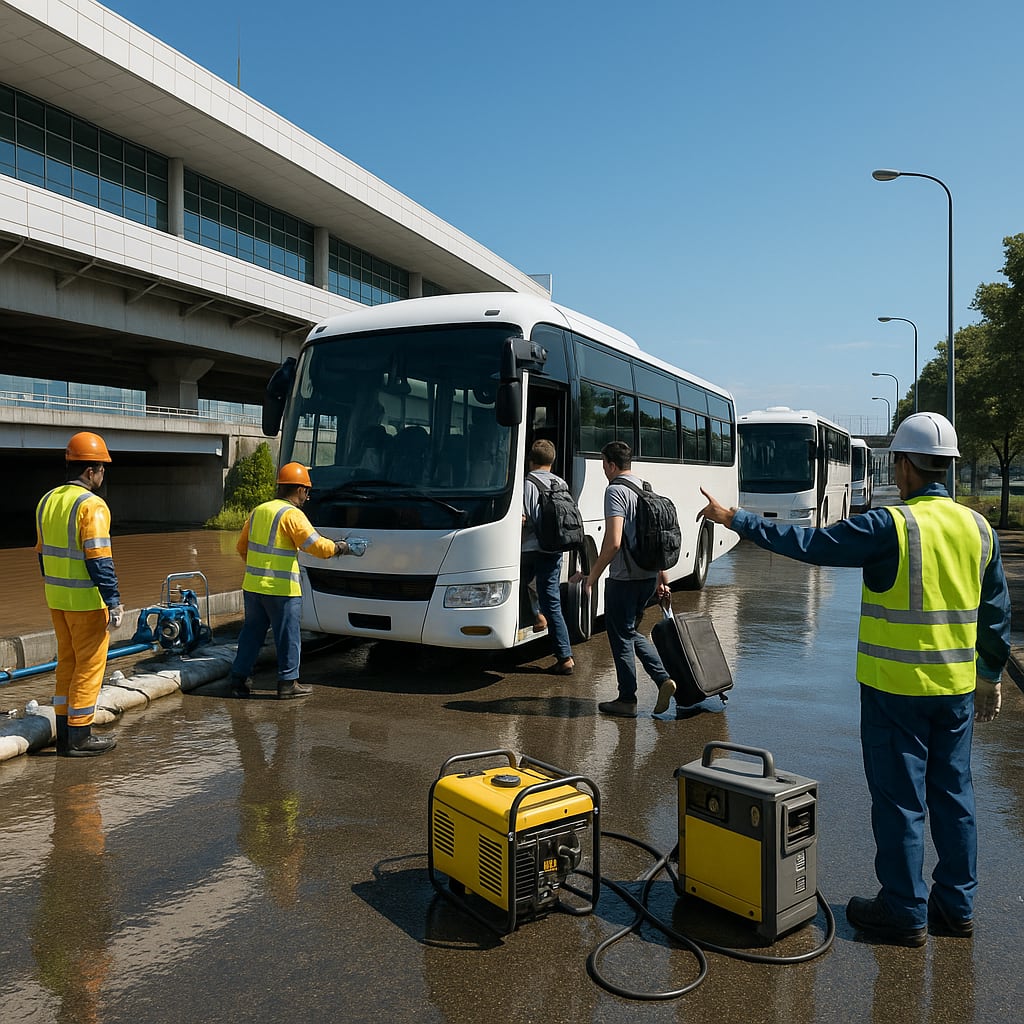
Record-breaking rainfall inundated areas east of Tokyo, especially Chiba Prefecture, leading to floods that disrupted transport and knocked out electricity. Thousands of travelers were stranded at Narita Airport during the Obon holiday period as numerous train services to and from the airport were canceled; one Italian daily put the overnight stranded at more than 7,000. A Canadian outlet reported power outages affecting 20,000 homes. A Brazilian newspaper cited over a thousand houses flooded and broader impacts on highways and rail.
Fatalities mounted over several days: initial reports cited at least four deaths with one missing, then at least eight, then nine. By August 17, a Japanese daily reported 10 dead, with one person still missing. It added that the 10th victim died from carbon monoxide poisoning while using an electric generator during a power outage.
Why It Matters
Multiple outlets describe an event that exposed vulnerabilities in critical urban infrastructure during a peak travel period. The concentration of stranded passengers at Narita and the cancellation of rail links underscore airport-access dependencies that can ripple through national mobility networks. Power outages and a generator-related fatality highlight risks that extend beyond floodwaters to emergency energy use during grid disruptions.
French coverage connects the episode to a broader climate trend, citing government data that Chiba’s precipitation exceeded triple a typical August and scientific assessments that human-driven climate change increases the frequency, duration, and intensity of such extremes. Regionally, reporting from Latin America on concurrent monsoon and cyclone impacts across Asia situates Japan’s experience within a month of severe weather affecting millions, amplifying the relevance for regional disaster risk management. For decision-makers, the episode intersects with climate adaptation, transport redundancy, public safety communications, and cross-sector coordination under compound stresses.
Diverging Narratives
Casualty figures diverge across time and outlets. Early international reporting cited at least four deaths and one missing, while other outlets on the same day reported eight. By August 16, French and Brazilian sources referenced at least nine fatalities. An Italian wire also reported nine but added “still 460 missing” and “one missing in searches at Chiba,” a formulation not echoed elsewhere and at odds with the Japanese daily the next day, which reported 10 dead with one person still missing. The outlier scale of “missing” in the Italian wire is a key unresolved discrepancy in the record presented here.
Emphases differ. Canadian and French outlets stressed Narita’s disruption and the Obon context of large traveler flows, while an Italian daily quantified the stranded at more than 7,000 due to rail cancellations. Brazilian coverage detailed housing and transport damage nationally. French reporting foregrounded climate attribution and exceptional rainfall metrics in Chiba. The Japanese daily advanced the narrative with the latest toll and the indirect generator poisoning death, shifting some attention from immediate flood impacts to secondary risks during power outages.
What Happens Next
Two decision points emerge from the reporting. First is the consolidation of casualty and missing-persons data. Figures evolved rapidly and conflict on “missing” counts; subsequent official tallies will clarify whether the lower, Japan-based estimate of one person missing holds or whether higher figures in foreign reporting reflect a broader or different accounting. Analysts should watch for reconciled numbers and their sources.
Second is restoration and resilience of lifelines. Rail links to Narita were canceled and thousands stranded; the speed and scope of service normalization, alongside power restoration in areas that saw 20,000 outages, will indicate operational capacity and emergency coordination effectiveness. The indirect death tied to generator use raises a public-safety communication question; tracking whether authorities issue guidance or updates on safe emergency power use will be instructive. Coverage that, like the French reporting, ties rainfall extremes to climate trends may signal whether resilience planning becomes a more explicit frame in official communications.