
Morocco intercepts migrants near Ceuta as Spain and Rabat tighten border following online calls for mass crossing
Narrative Snapshot
Across outlets, there is broad agreement that Moroccan and Spanish authorities tightened security around Ceuta after renewed calls on social media for collective crossings. Canadian and UK reports emphasize the core arrest figure of 111 people detained by Moroccan police near the border (CBC News; Sky News). German and French coverage situates the measures in the immediate aftermath of a late-July surge, with Deutsche Welle and France24 underscoring the scale of prior entries and the role of online rumors in drawing people toward the frontier. Chinese state media adds operational texture, citing at least 294 people intercepted and clashes in the hills near Fnideq, with police using tear gas to disperse groups (CGTN).
Where the numbers vary, so do the emphases. Reuters-based accounts stress nationality breakdowns and locations—109 people from sub-Saharan Africa and two Moroccans detained in or around Fnideq, opposite Ceuta (The Hindu). AP copy carried by the Toronto Star reports “nearly 300” arrests alongside tightened border security. Spanish and Moroccan force postures figure prominently in Fox News and CGTN pieces, which detail Spanish soldiers guarding key sites in Ceuta and Moroccan patrols along Fnideq’s beaches. Latin American and Russian state-linked outlets extend the frame beyond enforcement: Telesur highlights Ceuta’s demand to repatriate roughly 10,000 people who remain in the enclave and Spain’s foreign minister’s pledge that all who entered in late July will return to Morocco; RT foregrounds EU-level political fallout and public health strains.
What is most at stake in this coverage is not a single tally but the governance choices it implies: how Spain and Morocco coordinate returns after an unprecedented surge; how social media-driven mobilizations complicate deterrence; how local health systems and public services in Ceuta adapt; and how EU partners interpret Spain’s broader migration posture amid intra-EU debates on border control and regularization.
What Happened
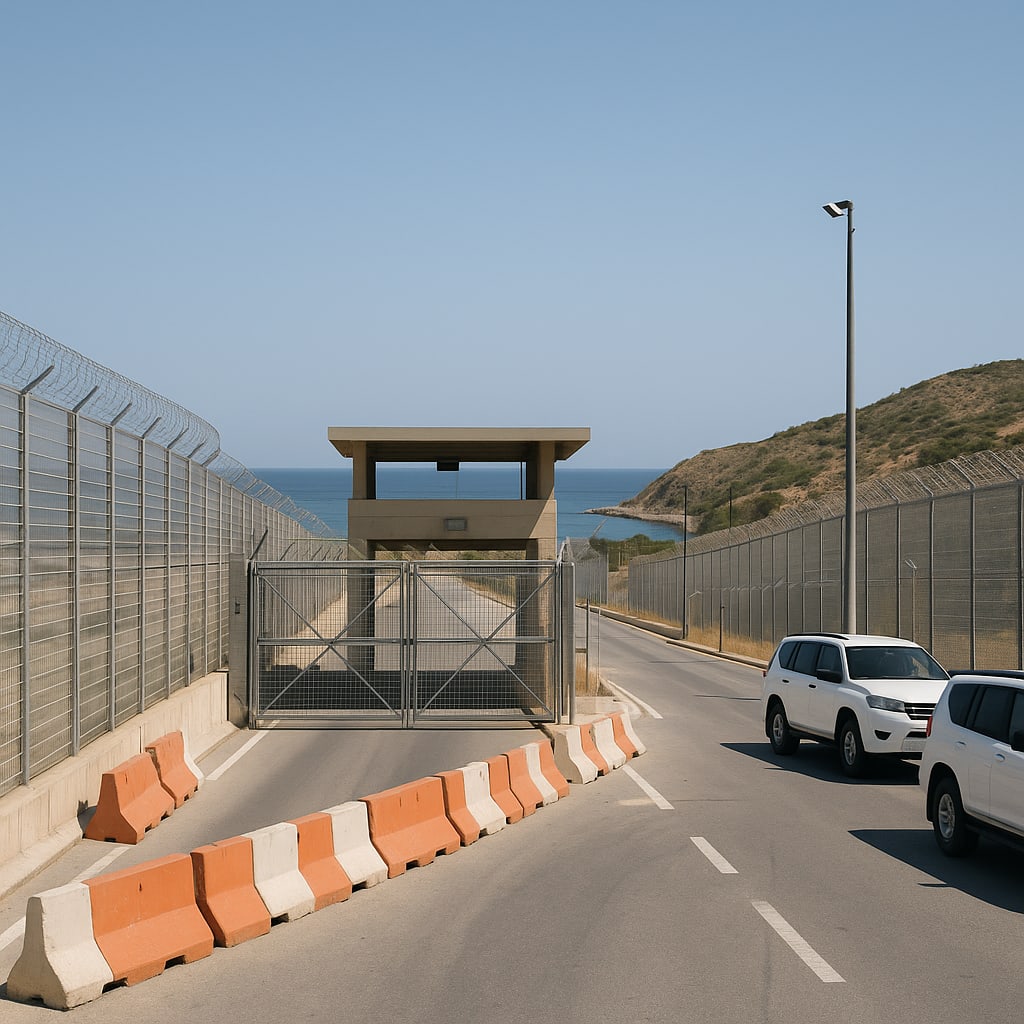
Morocco intensified controls around Fnideq, opposite Spain’s enclave of Ceuta, after online calls for another collective border attempt. Authorities arrested at least 111 people trying to enter Ceuta, including 109 from sub-Saharan Africa and two Moroccan citizens detained in or around Fnideq, according to Reuters-cited Interior Ministry sources (CBC News; Sky News; The Hindu). Other accounts cite a higher total: at least 294 people intercepted in operations that saw clashes in the hills near Fnideq and the use of tear gas by Moroccan police (CGTN; Toronto Star). Spain reinforced security inside Ceuta, with soldiers patrolling commercial and government buildings and an enhanced police presence, while Moroccan personnel patrolled Fnideq’s beaches (Fox News). France24 reports heavy security and gatherings triggered by false social media rumors that the border would open. These moves follow a late-July surge, estimated at more than 70,000–72,000 entries into Ceuta from Morocco (Deutsche Welle; CGTN; Fox News).
Why It Matters
Ceuta is an external EU frontier. The late-July mass entry and the subsequent security sweep have fed tensions within the European Union and energized far-right rhetoric, according to Chinese state media (CGTN). They also sharpen immediate governance choices: Ceuta’s leader has demanded the Spanish government repatriate roughly 10,000 people still in the enclave, rejecting regularization, while Spain’s foreign minister has said all who entered will return to Morocco (Telesur English, Aug. 11 and 12). That stance hinges on sustained Spain–Morocco coordination, which Rabat has signaled by large-scale deployments and preemptive interdictions around Fnideq and Nador (Telesur English, Aug. 11; Toronto Star, Aug. 12).
The episode intersects with EU-wide policy debates. RT reports Swedish Prime Minister Ulf Kristersson criticized Madrid’s reported regularization initiative and that a group of EU states urged tighter external border controls. Public service capacity is another pressure point. Ceuta has rolled out a nine-point public health plan—tuberculosis surveillance, water monitoring, intensified cleaning—while Spain’s health minister is set to assess local services (CGTN). Disease reports have emerged, though Spain’s health authority rejected claims of systemic collapse and a suspected tuberculosis case tested negative (RT).
Diverging Narratives
Discrepancies in figures shape competing interpretations. Some outlets, drawing on Reuters, report 111 arrests tied to attempted entries near Fnideq (CBC News; Sky News; The Hindu). Others cite at least 294 people intercepted, including clashes and the use of tear gas in the hills above the border (CGTN), or “nearly 300” arrests as security was tightened on land and sea (Toronto Star/AP). Accounts of fatalities from the late-July surge also diverge: CGTN cites at least 96 deaths; Telesur relays that Ceuta’s president told EU lawmakers about roughly 100 deaths and that a Moroccan rights group later raised the toll to 141 (Telesur English, Aug. 11 and 12).
Outlets frame causation and response differently. France24 highlights false rumors about an opening border as a mobilizer, while Fox News amplifies interior ministry warnings about social media incitement and details Spanish soldiers’ deployment in Ceuta and Moroccan patrols at Fnideq’s beaches. Clarin reports some detainees carried picks and tools allegedly to scale fences. On policy endpoints, Telesur centers Ceuta’s demand for immediate repatriations and Madrid’s commitment to returns, whereas RT highlights EU-level criticism of Spain’s broader regularization agenda. Public health coverage also splits: CGTN emphasizes Ceuta’s preventive plan and central-government engagement; RT reports outbreaks of gastroenteritis, scabies, and impetigo, alongside Spain’s health authority’s rejection of collapse and denial of a tuberculosis outbreak.
What Happens Next
Three decision points emerge. First, Spain’s handling of the thousands who remain in Ceuta: the foreign minister’s stated intent that all will return to Morocco (Telesur English, Aug. 12) aligns with Ceuta’s demand for expedited repatriations (Telesur English, Aug. 11). Analysts should watch for formal return arrangements and joint Spain–Morocco implementation signals. Second, the durability and scope of security postures: Morocco’s deployments and checkpoint operations in Fnideq and Nador (Telesur English, Aug. 11; CGTN) and Spain’s military-police presence in Ceuta (Fox News) will indicate whether authorities maintain surge capacity as social media calls persist (France24; Fox News). Third, system resilience in Ceuta: the nine-point health plan and the health minister’s visit (CGTN), alongside Spain’s health authority’s communications on outbreaks (RT), will show whether public services can stabilize under sustained pressure. EU political responses reported by RT bear watching as a barometer of external support or scrutiny of Madrid’s migration posture.