
Hurricane Lala skirts Hawaii, weakens to tropical storm as flooding and outages persist
Narrative Snapshot
Across outlets, the basic contours align: the storm did not make landfall, yet brought dangerous rain, wind and flooding that disrupted power and travel. European and Asian coverage concentrated on official risk messaging—Germany’s Deutsche Welle stressed “life‑threatening” flooding and a state of emergency, while Italy’s ANSA relayed the U.S. National Hurricane Center’s warning about deadly landslides, and Japan Times focused on the single confirmed fatality near South Point. North American reporting combined track details with impacts: Canada’s CBC and Toronto Star emphasized the close pass south of the Big Island and the subsequent weakening, while also noting widespread outages and extreme rainfall on windward slopes.
Anglophone outlets varied in operational specificity. The Guardian quantified damage and disruption with numbers on households without power, roofs lost, and postponed flights, while France24 foregrounded public-safety posture, highlighting shelter‑in‑place guidance as conditions remained hazardous while the storm moved west. Al Jazeera underscored that flooding persisted even after the system weakened.
Two outliers reframed context. Telesur paired impact reporting—including power losses at three hospitals mitigated by generators—with a regional political note about Cuba’s criticism of U.S. post‑hurricane aid. The New York Times pivoted to seasonal dynamics, contrasting Lala’s Pacific strike with a relatively calm Atlantic outlook under El Niño conditions, emphasizing a stabilizing effect heading into fall rather than event‑level impacts.
What Happened
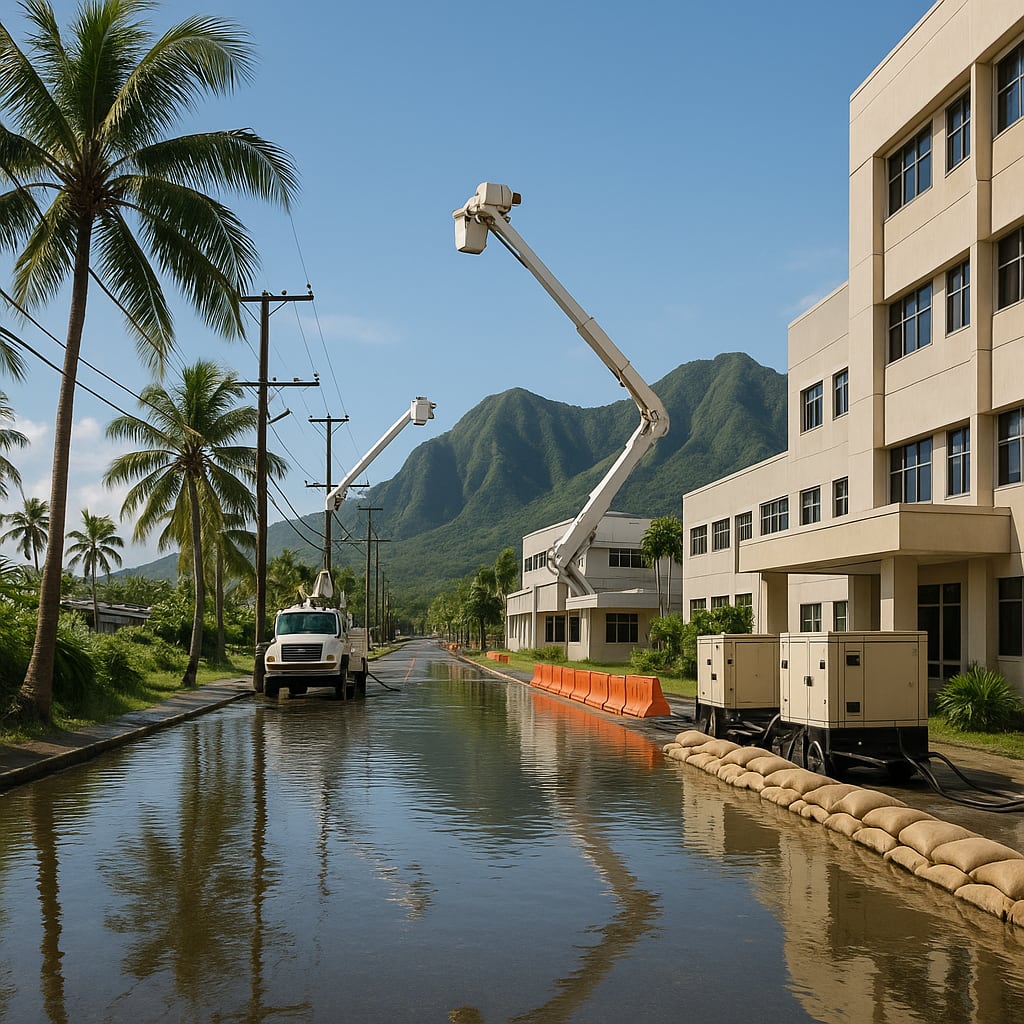
After a rare hurricane warning for Hawaii’s Big Island, Lala intensified to a Category 1 system with sustained winds around 75 mph, then tracked just south of the island without making landfall near South Point. Authorities declared a state of emergency and urged residents to shelter in place as strong winds and torrential rain flooded roads and swelled rivers. Power failures hit tens of thousands of customers, peaking around 60,000 households, and three hospitals switched to generators. The governor reported at least one weather‑related death in a car accident, with additional damage including 19 lost roofs and 190 postponed flights. The National Hurricane Center warned of flooding, mudslides and deadly landslides. As the storm moved west, it gradually weakened to a tropical storm on Sunday, though forecasters and local reports still anticipated intense rainfall, including near three feet on higher windward slopes.
Why It Matters
Lala tested Hawaii’s emergency‑management architecture under rare hurricane conditions, activating state authorities, public‑safety advisories, and health‑care continuity plans. The combination of widespread outages and hospital generator reliance highlights critical‑infrastructure vulnerabilities during high‑rainfall, wind‑driven events. Early warnings and protective measures—rare hurricane warnings, state of emergency, shelter‑in‑place guidance, and NHC hazard bulletins—will be a focal point for evaluating hazard communication and interagency coordination. Internationally, the coverage situates a Pacific impact amid a quiet Atlantic outlook that the New York Times ties to El Niño, a reminder that resource allocation and disaster‑response readiness in the United States must account for basin‑to‑basin variability within a single season. For multilateral and national disaster agencies, the event underscores the continued salience of landslide risk in mountainous island terrain and the operational challenge of sustaining essential services during prolonged power disruptions.
Diverging Narratives
Outlets largely agree on the storm’s track, non‑landfall status, and hazardous conditions, but differ in emphasis and quantification. Forecasted and observed rainfall figures vary by terrain and timing: Deutsche Welle cited up to 25 inches, while the Toronto Star reported projections near three feet on higher windward slopes, and Telesur relayed the governor’s figure of up to 33 centimeters in affected areas. Impact accounting is most granular in the Guardian’s report on 60,000 households losing power, 19 roofs lost, and 190 flight postponements, whereas CBC and The Hindu framed impacts more generally as “thousands” without power under “life‑threatening” conditions. France24 centered on public guidance—shelter in place as the storm moved west—while Al Jazeera highlighted that flooding persisted post‑weakening. Telesur uniquely embedded a geopolitical angle by juxtaposing Hawaii updates with Cuba’s critique of U.S. post‑hurricane aid narratives, a framing absent elsewhere. The New York Times stood apart by shifting scale to the Atlantic seasonal outlook under El Niño rather than cataloging local damage.
What Happens Next
With Lala weakening and moving west, immediate decisions turn on maintaining or lifting shelter‑in‑place guidance as rain bands and flood risks evolve, per France24. Power restoration pace will shape the return to normal operations, including hospitals currently running on generators as reported by Telesur, and the resumption of commercial air traffic after postponements noted by the Guardian. Analysts should watch NHC advisories on residual rainfall and landslide potential, which ANSA flagged as potentially deadly, and track state updates following the emergency declaration referenced by Deutsche Welle. Rainfall realizations against the higher‑end projections cited by the Toronto Star, and verification of outage and damage tallies reported by the Guardian, will indicate the scale of recovery operations. Monitoring whether additional fatalities or infrastructure losses emerge, as well as the timing of reclassification and final storm track, will clarify when hazard posture can safely be downgraded.