
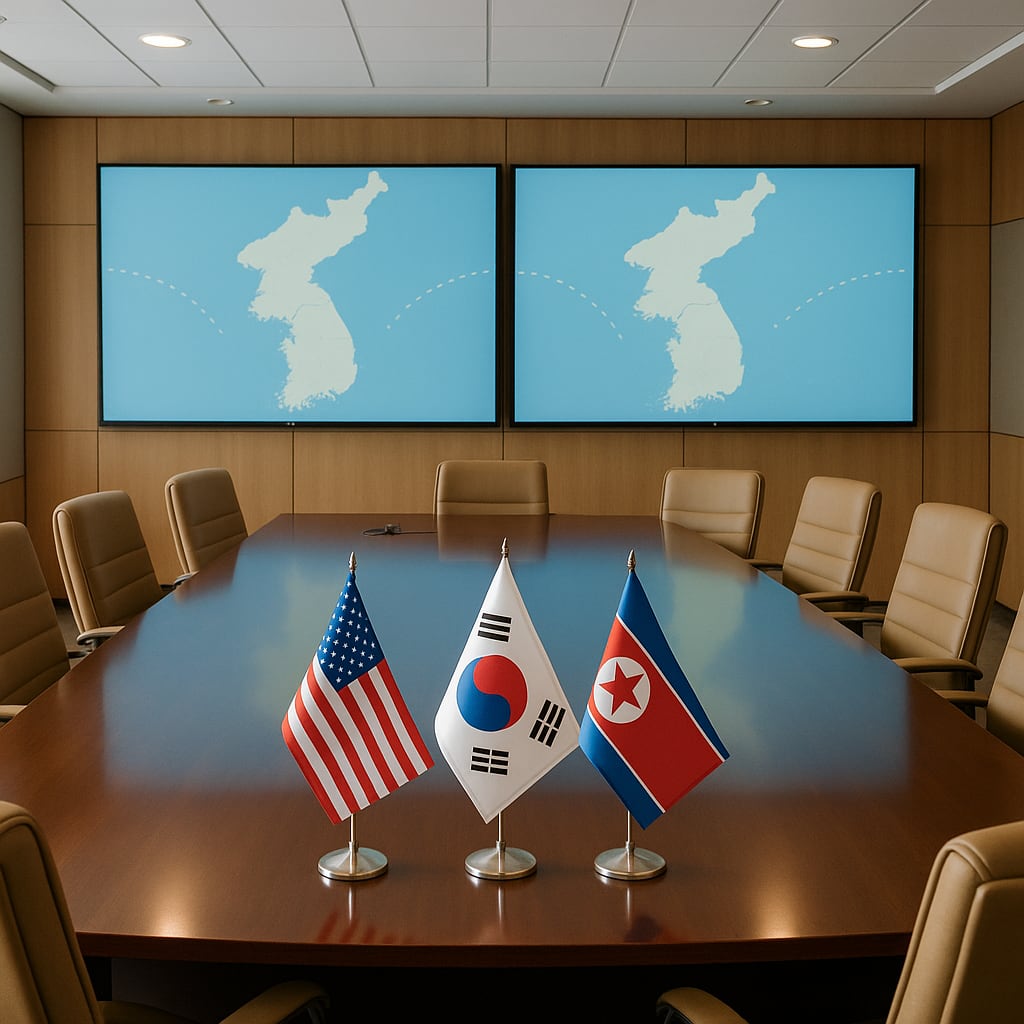
Trump scales back US–South Korea drills, cites ties with Kim; Seoul and Tokyo press alliance cohesion
Narrative Snapshot
Across outlets, there is broad agreement that the order to cut back the Ulchi Freedom Shield exercise was last‑minute and justified by President Donald Trump on cost grounds and as a corrective to what he termed a “hostile” signal toward Pyongyang. Where coverage diverges is over consequences and intent. U.S. and European sources emphasize alliance strain and precedent risks, with the New York Times highlighting North Korea’s increased belligerence toward the South and The Diplomat warning that alliance readiness is being turned into a bargaining chip. French and Italian outlets frame the move as mistreatment of Seoul or a “gift” to Kim Jong Un.
A second fault line concerns whether Pyongyang is actually engaging. Trump called Kim’s response to his outreach “very positive,” but Japan Times noted North Korea has not publicly acknowledged any contact, while France24 framed the moment as edging back toward direct communication without confirming it.
Regional responses cluster around damage control and hedging. South Korean leaders stressed the alliance and insisted drills are defensive, even as the Guardian reported President Lee’s renewed push for wartime operational control to return to Seoul and for faster progress on nuclear‑powered submarines. Japan underscored that trilateral cooperation with the United States and South Korea is “critical,” per the Bangkok Post and The Hindu, signaling concern about deterrence cohesion.
Several outlets connect the move to broader transactional linkages. Times of Israel and CGTN reported Trump tied the exercise cuts to Seoul’s refusal to join U.S. actions against Iran, while Folha de S.Paulo framed a risk that such diplomacy could push South Korea toward reconsidering its own nuclear options.
What Happened
On the eve of the annual Ulchi Freedom Shield drill, President Donald Trump ordered a “substantial” reduction in U.S.–South Korea exercises, citing expense and the message they send to North Korea as “inappropriate and hostile,” according to Fox News, Sky News, and Deutsche Welle. He linked the decision to his “very good relationship” with Kim Jong Un and described North Korea as “unthreatening and respectful” during his presidency, as reported by CGTN and Fox. Le Monde and RT said Trump stated he had instructed Defense Secretary Pete Hegseth to implement the cuts. The following day, Trump said Kim had responded to his outreach and called it “very positive,” though North Korea has not publicly acknowledged any contact, per Japan Times and CGTN. Seoul expressed hope for renewed U.S.–North Korea diplomacy while reaffirming the U.S. alliance and clarifying the drills are defensive, as reported by the Associated Press via the Toronto Star and by ANSA. Japan emphasized the “critical” nature of trilateral cooperation, according to the Bangkok Post.
Why It Matters
Allied press and policy outlets warn the decision sets a precedent of politicizing routine readiness as a negotiating lever, a concern The Diplomat foregrounded even while judging the immediate military impact limited. The move surfaces structural strains in the U.S.–ROK alliance that New York Times and France24 say are widening as Washington courts Pyongyang while downscaling joint activity with Seoul. It also complicates the emerging U.S.–Japan–South Korea security framework that Tokyo called “critical,” potentially weakening trilateral signaling just as Fox News and the New York Times point to ongoing North Korean missile activity and belligerence.
Trump’s linkage of exercise cuts to South Korea’s stance on Iran, reported by CGTN and Times of Israel, underscores a transactional approach that crosses theaters and may pressure allies on non‑peninsular issues. Domestically in South Korea, the Guardian’s reporting on pushes for wartime operational control and nuclear‑powered submarines, and Folha de S.Paulo’s framing of nuclearization risks, signal potential recalibrations in Seoul’s defense posture if alliance guarantees appear contingent.
Diverging Narratives
Trump’s core claim is that his personal rapport with Kim is making the situation “much safer,” and that scaling back drills reduces unnecessary hostility and costs, a framing echoed by CGTN, RT, Sky News, and Deutsche Welle. In contrast, the New York Times stresses that under Kim, North Korea has been increasingly belligerent toward the South, and Fox News situates the order against a backdrop of stepped‑up North Korean missile tests, portraying exercises as part of necessary deterrence.
Whether Pyongyang is engaging remains contested. Trump told reporters Kim had “responded” positively, but Japan Times noted no public acknowledgment from North Korea; France24 cautiously suggested the sides could be edging back toward direct communication. European and Italian coverage, including Le Monde and La Repubblica, cast the cut as damaging to Seoul and advantageous to Kim, while South Korean and AP reporting carried by the Toronto Star balances alliance reassurance with a stated hope for renewed talks. Seoul’s messaging also spans dual tracks: ANSA cites President Lee’s clarification that drills are defensive and aimed at preserving peace, while the Guardian reports his push for greater military independence and advanced naval capabilities. The Diplomat crystallizes a broader concern among alliance analysts that making readiness a bargaining chip inflicts longer‑term costs that outweigh any short‑term diplomatic opening.
What Happens Next
Two decision points will define the trajectory. First is whether U.S.–North Korea communication materializes beyond presidential claims; analysts should watch for any public acknowledgment or follow‑on statements from Pyongyang (Japan Times) and whether Washington details channels or agendas (France24). Second is the implementation scope of the reductions to Ulchi Freedom Shield: transparency on which elements are curtailed will indicate whether this is a symbolic gesture or a meaningful shift in readiness, a distinction The Diplomat flagged as strategically consequential.
Regionally, Seoul’s policy calibration bears close watching. Concrete steps on wartime operational control transfer and acquisition pathways for nuclear‑powered submarines, as reported by the Guardian, would signal hedging against alliance volatility, even as officials continue to reaffirm the alliance and the defensive nature of drills (Toronto Star/AP; ANSA). Japan’s calls for “critical” trilateral cooperation (Bangkok Post; The Hindu) set a benchmark for future joint signaling. Finally, North Korean testing patterns during or after the downsized drills (Fox News; New York Times) will serve as a real‑world test of the deterrence effects of the cutback.