
Morocco blocks renewed push toward Ceuta as Spain expands emergency reception; protests and political rifts intensify after July’s mass crossing
Narrative Snapshot
Across outlets, there is strong convergence that Moroccan authorities concentrated forces around Fnideq to pre-empt a widely rumored second border rush, and carried out arrests in the hills near the enclave. BBC, Al Jazeera, France 24, ANSA, Corriere della Sera, CGTN, and The Hindu all report stepped-up deployments, with arrests ranging from “dozens” to at least 294 people in coordinated operations that included the use of tear gas, and an additional 61 alleged facilitators detained, according to Al Jazeera and CGTN citing Spanish and Moroccan security sources.
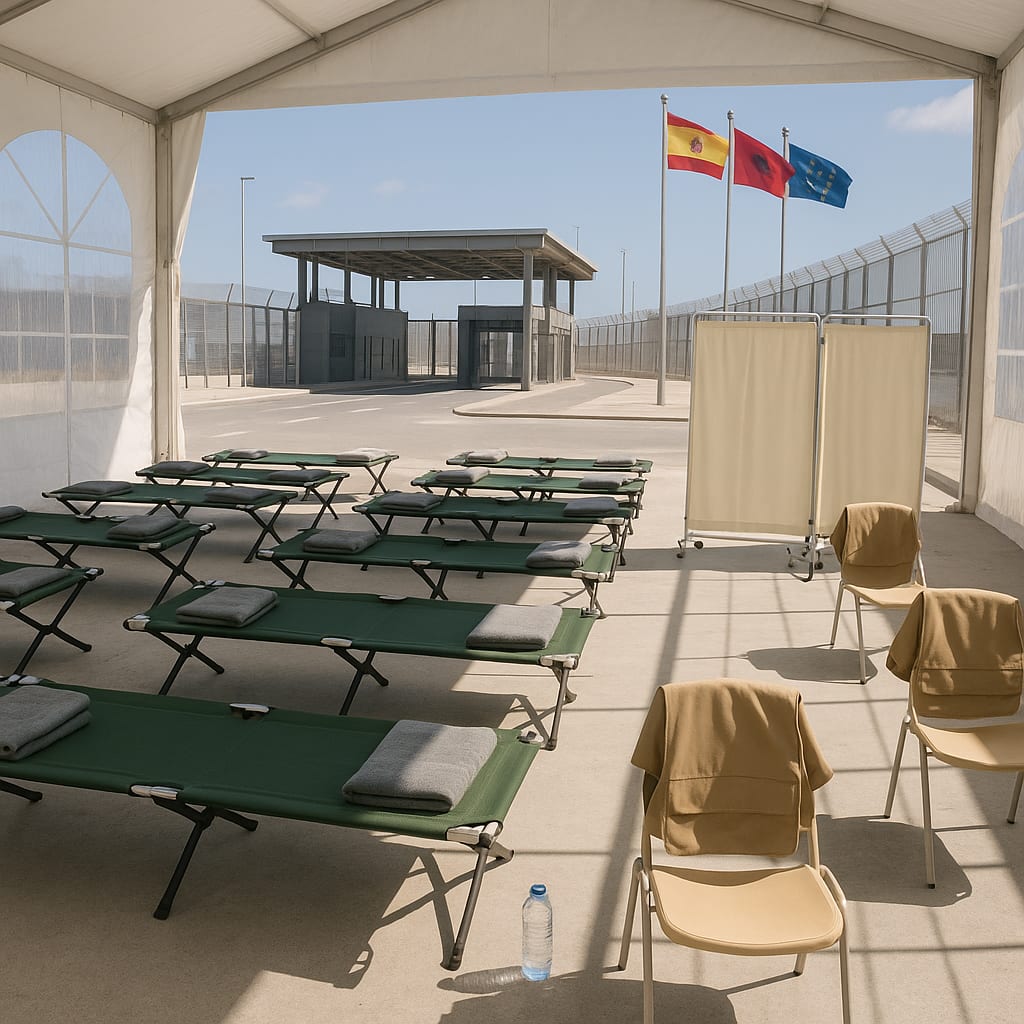
Coverage from Spain and Italy emphasizes emergency management inside Ceuta. Fox News and Telesur describe soldiers on patrol and more than 500 additional Spanish police flown in, while ANSA notes Prime Minister Pedro Sánchez convened cross-government coordination. Corriere della Sera reports agreement on four reception areas as Telesur details 1,500 new places and €6.5 million for the Red Cross to sustain roughly 4,000 daily food kits.
Humanitarian and public-order frames diverge. La Repubblica and Al Jazeera highlight sit-ins, hunger strikes, and asylum demands by Moroccan youths still in Ceuta. RT juxtaposes similar protest scenes with claims of deteriorating security, citing Spanish media and law enforcement on alleged rapes and unaccompanied minors lacking shelter. Bangkok Post adds socioeconomic texture, arguing many participants in the July surge were not fleeing destitution or conflict.
The regional spillover features prominently in Telesur and Fox News: reciprocal border checks between Italy and Spain have reappeared and fed a broader debate about Schengen free movement. La Repubblica and Telesur center Spanish domestic contention, with Ceuta’s leader pressing for mass returns and threatening legal action, while Madrid balances deterrence with humanitarian provisioning.
What Happened
Following a late-July influx that multiple outlets put at around 72,000 crossings into Ceuta, social media calls circulated for a second collective attempt on August 15. Morocco surged forces around Fnideq, with France 24 calling the posts that drew crowds “false rumours,” and BBC and Al Jazeera reporting reinforced patrols and arrests. The Hindu, citing Reuters, reported 111 arrests in or around Fnideq; CGTN, citing EFE and Reuters, put interceptions at least at 294, mostly sub-Saharan nationals, with clashes in the hills and tear gas used. Spain bolstered Ceuta with more than 500 extra police, taking law enforcement to about 1,600 and placing roughly 2,000 troops on standby, according to Telesur; Fox News described soldiers patrolling key sites. Madrid announced three urban reception sites and 1,500 places with Red Cross support, per Telesur and Corriere. Meanwhile, migrants staged sit-ins and hunger strikes demanding asylum, La Repubblica and Al Jazeera reported.
Why It Matters
The episode tests the Spain–Morocco border-management bargain and the EU’s capacity to absorb acute, social-media-driven surges at its external perimeter. Telesur quotes Spain’s foreign minister saying those who entered would return to Morocco, while Ceuta’s president rejects regularization and demands immediate repatriations—positions that, if enforced at scale, would hinge on sustained Moroccan cooperation and operational throughput at the border. Internally, Spain is balancing deterrence and reception: the interior minister’s hard line reported by RT coexists with new reception sites and expanded Red Cross roles reported by Corriere and Telesur, underscoring a dual-track response under political and judicial scrutiny. Regionally, reciprocal border checks between Italy and Spain, highlighted by Fox News and Telesur, reopen Schengen debates on temporary controls during third-country migration shocks. CGTN notes the crisis is amplifying far-right rhetoric globally, signaling that frontline decisions in Ceuta carry outsized political resonance across the EU.
Diverging Narratives
Sources diverge on scale, security, and legal treatment. Estimates of how many remain in Ceuta range by date and outlet: Telesur cites the interior ministry at around 5,000 two-plus weeks after the surge, while earlier statements relayed by Telesur put the figure at roughly 10,000; RT mentions 7,000–9,000 and emphasizes unaccompanied minors lacking shelter. On public safety, RT, citing El Mundo and Spain’s Civil Guard, foregrounds alleged rapes amid strained infrastructure, a focus largely absent from BBC, Al Jazeera, France 24, and Italian dailies, which concentrate on enforcement operations and humanitarian provisioning. Legal framings also split: Ceuta’s leader calls the mass arrival a violation of territorial integrity and seeks blanket repatriations (Telesur), while La Repubblica and Al Jazeera cover asylum claims and protests; RT reports the interior minister wants irregular arrivals denied status except in rare vulnerability cases and notes judicial pushback. Even fatality counts vary modestly by source and attribution, from at least 96 (CGTN) to about 100 (Telesur, citing Ceuta’s president). Finally, France 24 stresses that the August 15 trigger was misinformation about an opening border, versus Fox News and Spain’s interior ministry emphasis on broad online incitement to collective crossings.
What Happens Next
Three decision points will shape the trajectory. First, Spain’s adjudication-versus-repatriation balance: the foreign minister’s stated intent that all who entered will return (Telesur) and Ceuta’s 30-day ultimatum with threatened legal action (Telesur) point to near-term tests in courts and administrative practice; watch for formal return arrangements with Morocco and any judicial orders constraining blanket denials of status referenced by RT. Second, capacity and containment in Ceuta: Madrid’s agreement on four reception areas (Corriere) and 1,500 new places with Red Cross support (Telesur) will either stabilize the situation or prove insufficient; indicators include additional site openings or emergency health and security directives. Third, perimeter and intra-EU controls: Morocco’s forward deployments, arrests, and a reported four-meter barrier near Fnideq (TASS, CGTN, The Hindu) and the Spain–Italy reciprocal checks (Fox News, Telesur) will signal whether deterrence hardens or relaxes; watch for sustained Moroccan operations around August “call” dates and any extension or rollback of intra-Schengen checks.