
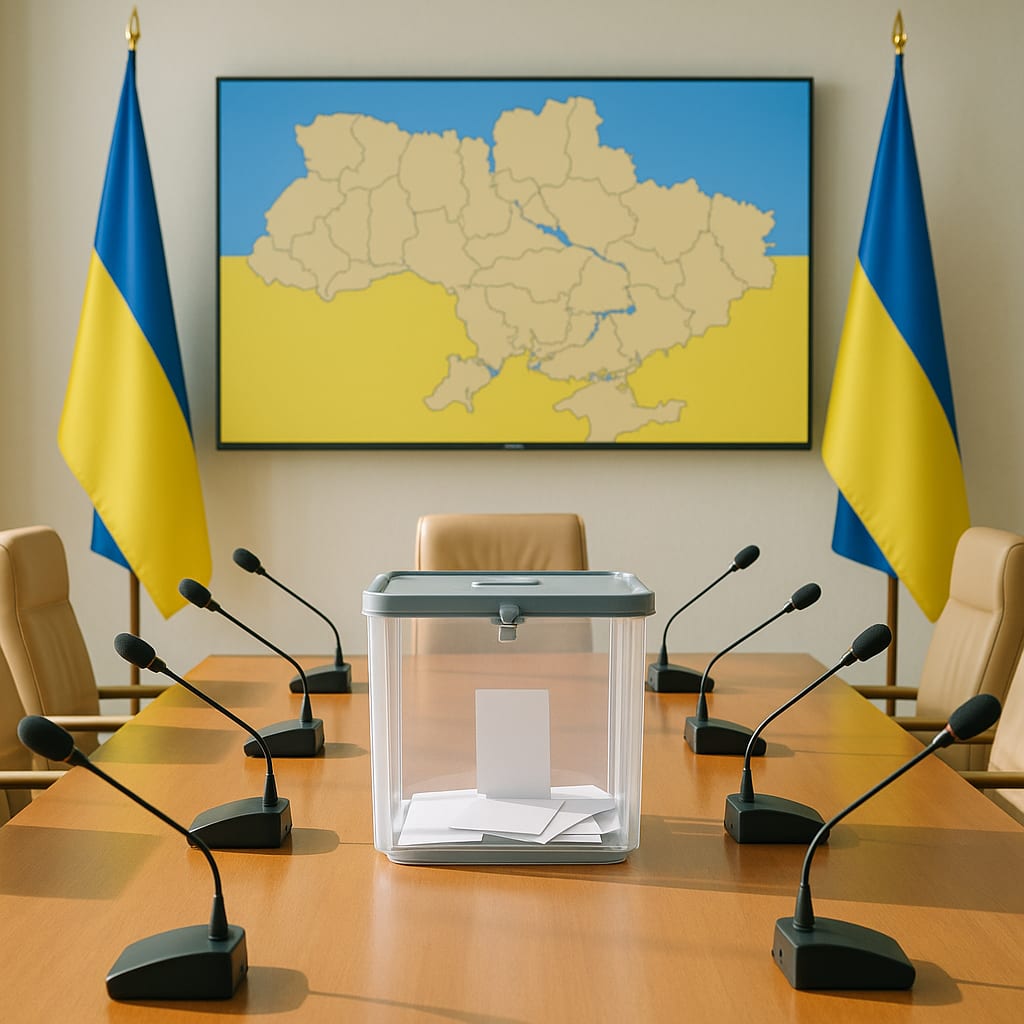
Ukraine’s ousted defense minister urges elections despite wartime ban, pressing for a legal path
Narrative Snapshot
Across outlets, there is broad agreement that Mykhailo Fedorov’s appeal represents an unusually direct political challenge within wartime Ukraine. European and U.S. coverage emphasize scale and stakes: Deutsche Welle describes it as the biggest challenge to President Volodymyr Zelenskyy since Russia’s full-scale invasion, while the New York Times highlights Fedorov’s sovereignty framing that Russia should not dictate when Ukrainians vote. Indian and Italian reporting foreground his call for a “legal, safe, and realistic” mechanism to enable voting, underscoring process over confrontation.
Ukrainian and British outlets add texture on domestic reception and political fallout. The Guardian and Al Jazeera report visible street support in Kyiv and Fedorov’s emergence as a potent opponent following his dismissal, even as parliament approved Yevhen Khmara as his successor. The Kyiv Independent surfaces divergent domestic views: skeptical frontline soldiers, an editorial warning against political ambition driving the debate, and indications that Fedorov is exploring a U.S. visit. French coverage notes that he linked the issue to corruption, widening the critique beyond procedure to governance.
Repeated emphasis on legal constraints anchors the international framing. France24 and Clarin stress that martial law, imposed at the start of Russia’s invasion, suspends elections; BBC News underscores that Fedorov did not address how wartime elections would be conducted, casting the debate as one not only of principle but implementation.
What Happened
In a video address posted on Aug. 18, former Ukrainian defense minister Mykhailo Fedorov urged holding elections during the war, arguing that democracy should not be hostage to Russia and calling for a legal, secure, and realistic way to restore the electoral process. Multiple outlets describe him as a popular figure whose removal last month triggered political backlash. As he spoke out, Ukraine’s parliament approved Yevhen Khmara as the new defense minister, cementing Fedorov’s exit from government and prompting protests in Kyiv backing his stance, with thousands reported by the Guardian.
Legal obstacles remain central: France24 notes that martial law, in place since Feb. 24, 2022, prohibits elections. BBC News points out that Fedorov did not detail how voting could occur under wartime conditions. The Kyiv Independent reports he is considering a U.S. visit amid his increasingly outspoken criticism of Ukraine’s wartime political system.
Why It Matters
Fedorov’s intervention forces a collision between wartime exigency and democratic continuity under Ukraine’s martial law framework. France24 and Clarin underline that elections are presently barred, so any shift would require legal innovation or policy change—tests of institutional capacity under fire. Framed by Fedorov and the New York Times as a sovereignty issue—refusing to let Russia define Ukraine’s democratic calendar—the debate also touches Ukraine’s legitimacy narrative with allies whose support hinges on governance performance.
Domestic governance concerns add layers. The Toronto Star (AP) reports Fedorov warning of a governance crisis; Le Monde highlights that he linked the issue to corruption. The Guardian describes grassroots mobilization and a consolidating opposition profile after the Rada approved a successor. Together, these threads point to a stress test for executive‑legislative coordination, civil‑military cohesion, and the credibility of reform commitments that Kyiv presents to partners and multilateral backers during a prolonged war.
Diverging Narratives
Supporters of Fedorov’s position foreground democratic resilience. The New York Times quotes his argument that Russia must not dictate when Ukrainians vote, while The Hindu and Corriere della Sera spotlight his insistence on finding a legal, safe, and realistic mechanism—positioning the call as institution‑affirming rather than destabilizing. DW frames the move as the most significant political challenge to Zelenskyy since the invasion, conveying its weight within Ukraine’s wartime politics.
Skeptics stress feasibility and timing. France24 reiterates the hard legal bar under martial law; BBC News notes Fedorov did not address practicalities of conducting secure and inclusive elections while fighting continues. The Kyiv Independent reports soldiers’ skepticism, revealing operational and morale concerns from those bearing wartime risks. Its editorial cautions that political ambition should not drive the debate, even while accepting that Putin should not set Ukraine’s electoral clock. Le Monde’s reference to Fedorov denouncing corruption broadens the critique but also risks conflating election timing with a larger governance indictment. Meanwhile, the Guardian and Al Jazeera’s coverage of Kyiv protests underscores visible public support, but Bangkok Post’s account of a divisive reshuffle and the Rada’s confirmation of a new minister indicates that institutional actors are proceeding without Fedorov, suggesting parallel tracks of street pressure and governmental consolidation.
What Happens Next
Key decisions turn on law and logistics. Because martial law suspends elections, any move toward voting requires a legally defined pathway; Fedorov’s own formulation calls for a mechanism that is legal, safe, and realistic. Analysts should watch for concrete proposals from the presidency or Rada to alter or interpret wartime rules, or for public statements acknowledging or rejecting such changes, as flagged by France24’s explanation of the current ban.
Domestic political dynamics will be visible through mobilization and elite signaling. Continued protests in Kyiv reported by the Guardian and Al Jazeera, and reactions from security personnel captured by the Kyiv Independent, are indicators of whether support expands beyond activist cores. The Guardian’s account of Zelenskyy declining to reinstate Fedorov, and the Rada’s approval of Yevhen Khmara, set a baseline of government consolidation; shifts in this stance would be significant. Internationally, the Kyiv Independent’s reporting that Fedorov may visit the U.S. provides a marker for whether the debate acquires an external dimension via outreach to partners.