
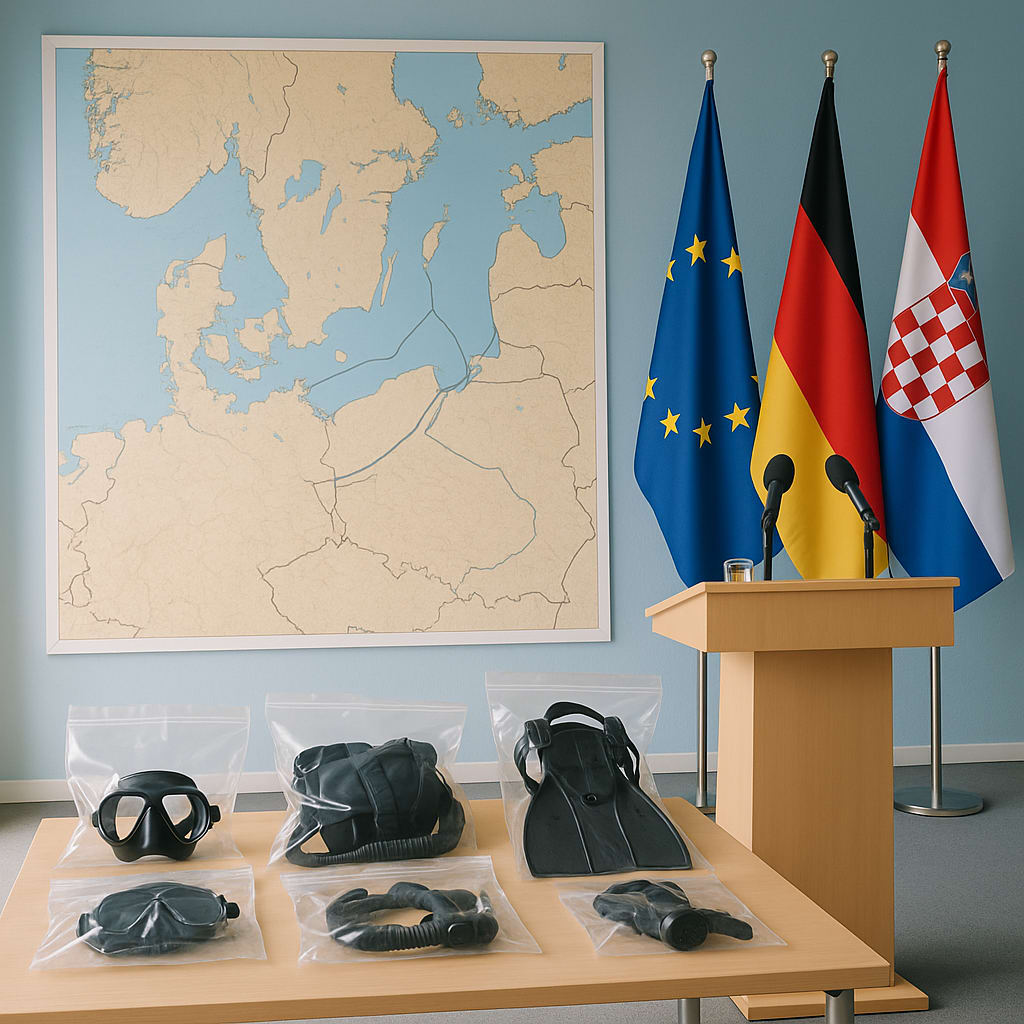
Croatia arrests second Ukrainian suspect in 2022 Nord Stream explosions; Germany seeks extradition
Narrative Snapshot
Across outlets, there is broad agreement on the core development: German federal prosecutors say a Ukrainian national has been arrested in Croatia in connection with the 2022 Nord Stream pipeline blasts, with Berlin moving to bring him to trial in Germany. Most European and North American reports emphasise procedural steps and the alleged operational role, describing the suspect as a trained diver (Kyiv Independent; BBC; Deutsche Welle; CBC; Toronto Star; Sky News; Guardian).
Coverage diverges on attribution and detail. La Repubblica cites the German federal prosecutor as asserting the attack was an “operation by the apparatus of Kiev,” and names the suspect as Volodymyr Zhuravlov, portrayed as an “experienced diver,” while most outlets refer to him only as “Vladimir Z.” as per German practice (La Repubblica; Kyiv Independent). Russian and Latin American outlets add more specifics about legal posture and logistics: TASS and the Guardian highlight extradition steps; Telesur lists alleged offenses and the date of a European arrest warrant; RT reprises prior investigative claims about a small Ukrainian group using forged documents and a rented yacht to deploy explosives near Bornholm (TASS; Guardian; Telesur; RT; BBC).
What is most at stake in the coverage is whether the case remains focused on individual culpability tied to a small group, or evolves toward assertions of state-level responsibility. Only La Repubblica attributes a direct claim of Ukrainian state involvement to the German prosecutor; others keep the focus on the suspect’s alleged diver role and the cross-border legal process.
What Happened
Germany’s federal prosecutor announced the arrest in Croatia of a Ukrainian national suspected in the September 2022 undersea explosions that damaged the Nord Stream pipelines between Russia and Germany (Deutsche Welle; Toronto Star; CBC). German authorities identify him as “Vladimir Z.,” described as a trained diver who “participated in the necessary dives,” and the BBC reports he is alleged to have been among the scuba divers who planted the explosives (Kyiv Independent; BBC). Telesur and RT say Croatian police detained him in Pula pursuant to a European arrest warrant issued on June 3, 2024, and list alleged offenses including causing an explosion with explosives, sabotage, and destruction of structures (Telesur; RT). Germany intends to seek extradition, and Russian and UK outlets report he is expected to be transferred to Germany to appear before an investigating judge (Guardian; TASS; RT). Several outlets characterise him as the second Ukrainian suspect arrested in the case; Al Jazeera notes a prior arrest of an ex-army officer transferred to Germany a year earlier (Deutsche Welle; Sky News; Al Jazeera). The 2022 blasts damaged three of the four gas lines (Guardian).
Why It Matters
The case sits at the intersection of cross-border criminal accountability and the security of critical energy infrastructure. The pipelines, built to carry Russian gas to Germany, were physically damaged in 2022, and this arrest advances a multinational legal effort spanning Germany and Croatia under a European arrest warrant framework (Guardian; RT; Telesur; TASS). Extradition proceedings and any subsequent German trial will test coordination among European authorities and the evidentiary basis for complex, transnational sabotage allegations.
Beyond procedure, the investigation informs competing narratives about responsibility for an attack that disrupted a high-profile conduit between Russia and Germany. Several outlets frame the suspect as part of a small, Ukrainians-linked team, while one Italian report attributes to German prosecutors a stronger claim of Ukrainian state orchestration (RT; La Repubblica). How prosecutors ultimately characterise the conspiracy in court filings could shape governmental and public assessments of actor attribution and the policy responses that follow.
Diverging Narratives
Most outlets foreground the incremental legal step—an arrest in Croatia tied to a German investigation—and the alleged operational role as a diver, using the anonymised “Vladimir Z.” designation common in German practice (Deutsche Welle; CBC; Toronto Star; BBC; Kyiv Independent). Russian state media and some international outlets stress extradition and procedural momentum, noting expectations of transfer to Germany and an appearance before an investigating judge (TASS; RT; Guardian). They also reprise previously reported logistics, attributing to German investigators the view that a small Ukrainian group rented a yacht with forged documents and deployed explosives near the Danish island of Bornholm (RT; BBC).
By contrast, La Repubblica attributes to the German federal prosecutor a claim that the operation was conducted by the “apparatus of Kiev,” with an accusation formalised in July, and names the suspect as Volodymyr Zhuravlov (La Repubblica). Telesur echoes strong charge language and adds that prosecutors have not clarified whether the detainee is the same person once arrested and released in Poland for jurisdictional reasons, underscoring lingering procedural ambiguities (Telesur). The result is a split between accounts that confine the case to alleged actions by a small group and a single report pointing toward possible state-level attribution.
What Happens Next
The immediate decision point is extradition from Croatia to Germany. Berlin intends to seek transfer; Russian and UK outlets say extradition is expected, after which the suspect would appear before an investigating judge (Guardian; TASS; RT). Analysts should watch Croatian court rulings on the European arrest warrant cited by Telesur, and any defense challenges that could slow or condition surrender (Telesur).
In Germany, the scope of charges and the narrative of the conspiracy will be clarified in prosecutorial filings and court proceedings. Kyiv Independent’s and BBC’s focus on the suspect’s diver role, La Repubblica’s report of state-level attribution, and RT’s account of operational logistics define the range of potential framings that may surface in court (Kyiv Independent; BBC; La Repubblica; RT). A second arrest, noted by multiple outlets and contextualised by Al Jazeera’s reference to a prior ex-army officer transfer, raises the question of how prosecutors connect individual cases; formal indictments and any linked proceedings will be the indicators to track (Deutsche Welle; Sky News; Al Jazeera).