
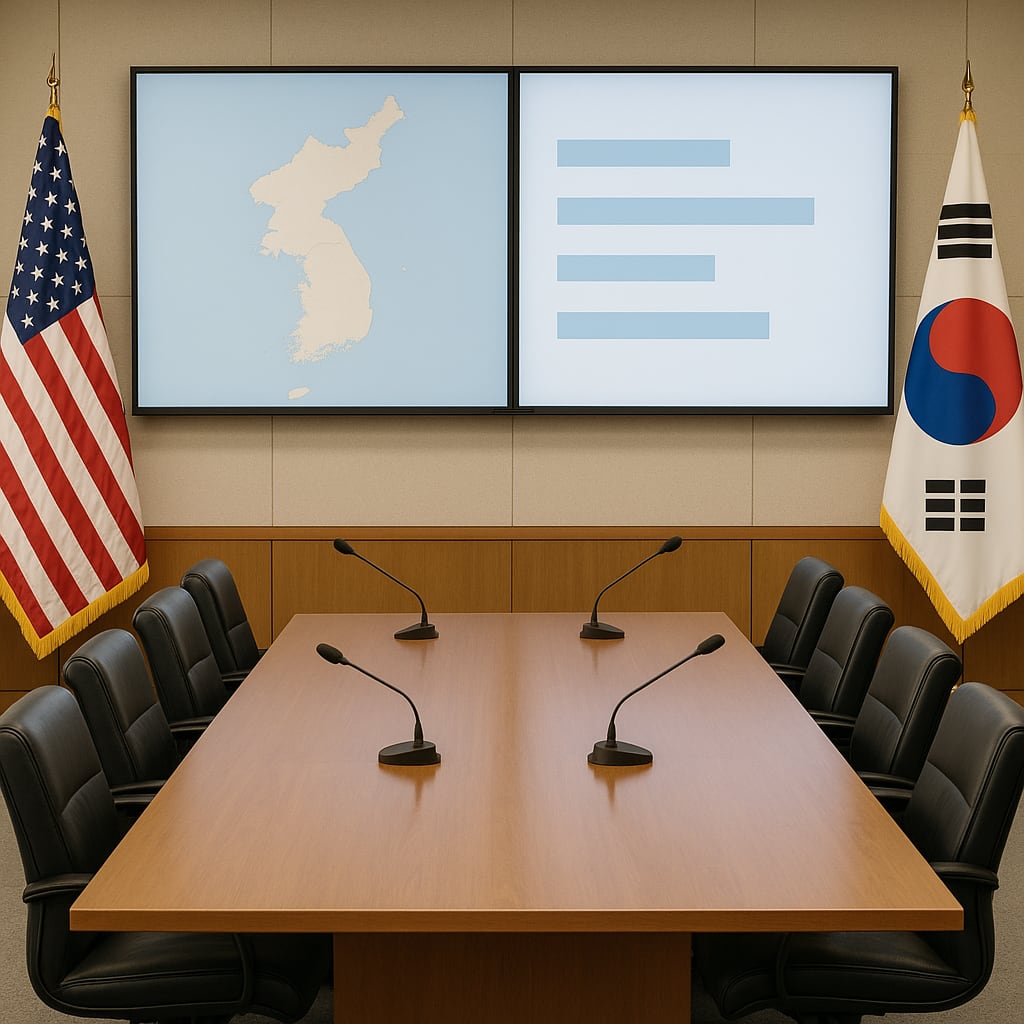
Trump orders cut to U.S.–South Korea drills; Seoul shortens Ulchi Freedom Shield amid contested outreach to Pyongyang
Narrative Snapshot
Across outlets, there is broad agreement that Washington’s late directive translated quickly into operational change on the ground. Seoul confirmed the flagship Ulchi Freedom Shield exercise was cut roughly in half and some field training dropped, and officials said they were not briefed in advance, having learned of the order from the U.S. president’s social media posts (France24, NBC News, Bangkok Post, CGTN). South Korean leaders publicly reiterated the drills’ defensive purpose even as they moved to accelerate self‑reliance and high‑end capabilities, such as nuclear‑powered submarines, and to regain wartime operational control—areas analysts say could be set back by the truncated exercise (Fox News; ANSA; The Guardian; South China Morning Post).
Where coverage diverges is over motive and consequence. U.S. and European outlets largely frame the move as an overture to Pyongyang that strains allied cohesion and erodes deterrence, with The Diplomat warning that turning readiness into a bargaining chip sets a costly precedent (Deutsche Welle; New York Times; The Diplomat). Several Asia‑based analyses emphasize opportunity and risk for Seoul: a jolt to diversify security options and press alliance reforms, but also a blow to plans to validate wartime command transfer through rigorous combined scenarios (South China Morning Post; Japan Times).
A distinct thread from Middle East and Indian outlets highlights linkage to the Iran conflict. South Korea’s foreign minister said the U.S. decision appeared to pressure Seoul to support American operations against Iran, and The Hindu reported the president cited South Korea’s refusal to join that war alongside his professed rapport with Kim Jong Un (Middle East Eye; Tehran Times; The Hindu). Chinese state media pair support for resumed U.S.–DPRK talks with calls for Washington to drop “hostile” policies toward Pyongyang, positioning Beijing as a backer of inter‑Korean reconciliation (CGTN; South China Morning Post).
What Happened
On August 16, the U.S. president announced he had instructed the Pentagon to substantially reduce joint exercises with South Korea, arguing they were costly and sent an “inappropriate and hostile” signal to North Korea and citing his “very good” relationship with Kim Jong Un (BBC News; Le Monde). Seoul then confirmed the ongoing Ulchi Freedom Shield would be shortened from 11 to 5 days, with some field training scaled back and the drills ending about a week early (France24; Bangkok Post; NBC News). South Korea’s foreign minister said Seoul had no prior notice and learned of the order via social media (CGTN). President Lee Jae Myung stressed the alliance and the defensive nature of the drills while urging stronger independent capabilities, including nuclear‑powered submarines and renewed pursuit of wartime command transfer (Fox News; ANSA; The Guardian). The U.S. president claimed Kim had responded to his outreach, but Kim Yo‑jong said she was unaware of any communication and dismissed the drill cuts (New York Times; Japan Times; Al Jazeera English; Fox News).
Why It Matters
Regular combined exercises underpin U.S.–ROK interoperability and deterrence; cutting UFS and scrapping advanced scenarios, including simulated counteroffensives, risks slowing South Korea’s plan to regain wartime operational control and weakening signaling at a sensitive moment of heightened North Korean missile activity (South China Morning Post; Toronto Star/AP; Fox News). The Diplomat highlights a durable cost: setting a precedent that alliance readiness can be traded in broader bargaining, complicating future force posture decisions and burden‑sharing talks (The Diplomat; Fox News). Process also matters. Seoul’s claim of no prior notification underscores frayed alliance management norms, elevating mistrust at the political level even as militaries adapt operationally (CGTN; Deutsche Welle).
Regionally, Chinese officials are encouraging a pivot from pressure to dialogue, aligning with Beijing’s call for Washington to abandon “hostile” policies and potentially reinforcing North Korea’s strategic breathing room (South China Morning Post; CGTN). The Iran link flagged by South Korea’s foreign minister suggests cross‑theater coercion may be intersecting with alliance dynamics in Northeast Asia, a concern for partners evaluating U.S. demands across multiple crises (Middle East Eye; The Hindu; Tehran Times).
Diverging Narratives
The U.S. president frames the reduction as de‑escalatory and fiscally prudent, enabled by a personal rapport with Kim; European and U.S. reporting counter that North Korea has grown more belligerent toward the South, and Kim Yo‑jong publicly contradicted claims of renewed contact (Le Monde; BBC News; New York Times). Japan Times and France24 describe the cut as an attempt to lure Kim back to negotiations, while Al Jazeera questions whether such inducements will pry Pyongyang from Beijing’s orbit (Japan Times; France24; Al Jazeera English).
Seoul’s official line emphasizes continuity—drills are defensive and the alliance remains central—yet senior leaders simultaneously signal accelerated pursuit of autonomous capabilities, including nuclear‑powered submarines and the return of wartime command, moves that South China Morning Post reports could be hampered by canceling key validation scenarios (Fox News; The Guardian; South China Morning Post). Analysts quoted by Fox News suggest a dual‑track U.S. intent: leveraging drills to press Seoul on investment and cost‑sharing while dangling incentives to reopen talks with Kim, whereas South Korea’s foreign minister interprets the timing as pressure to support U.S. operations in the Iran war (Fox News; Middle East Eye; The Hindu; Tehran Times). Chinese state media and officials welcome prospective U.S.–DPRK talks and urge a shift in U.S. policy, a stance at odds with allied concerns that scaling back readiness erodes deterrence (CGTN; South China Morning Post; The Diplomat; Deutsche Welle).
What Happens Next
Three decision points will determine trajectory. First, whether U.S.–DPRK engagement materializes: watch for formal acknowledgments from Pyongyang beyond Kim Yo‑jong’s denial, any scheduling signals after the U.S. president floated a meeting “later this year,” and whether Seoul moves to dispatch a “special peace envoy” as its unification ministry suggested (Fox News; New York Times; CGTN). Second, alliance management and readiness: indicators include the scope and content of the next combined drills, restoration of high‑end scenarios tied to wartime OPCON certification, and movement on burden‑sharing or investment frameworks noted as pressure points (South China Morning Post; The Diplomat; Fox News). Third, cross‑theater linkage with Iran policy: monitor whether Washington reiterates demands on Seoul regarding the Iran war and whether Seoul’s stated reluctance shifts, given the foreign minister’s claim of U.S. pressure (Middle East Eye; The Hindu; Tehran Times). China’s diplomacy—calls to change “hostile policy”—will shape the external environment for any talks (South China Morning Post).