
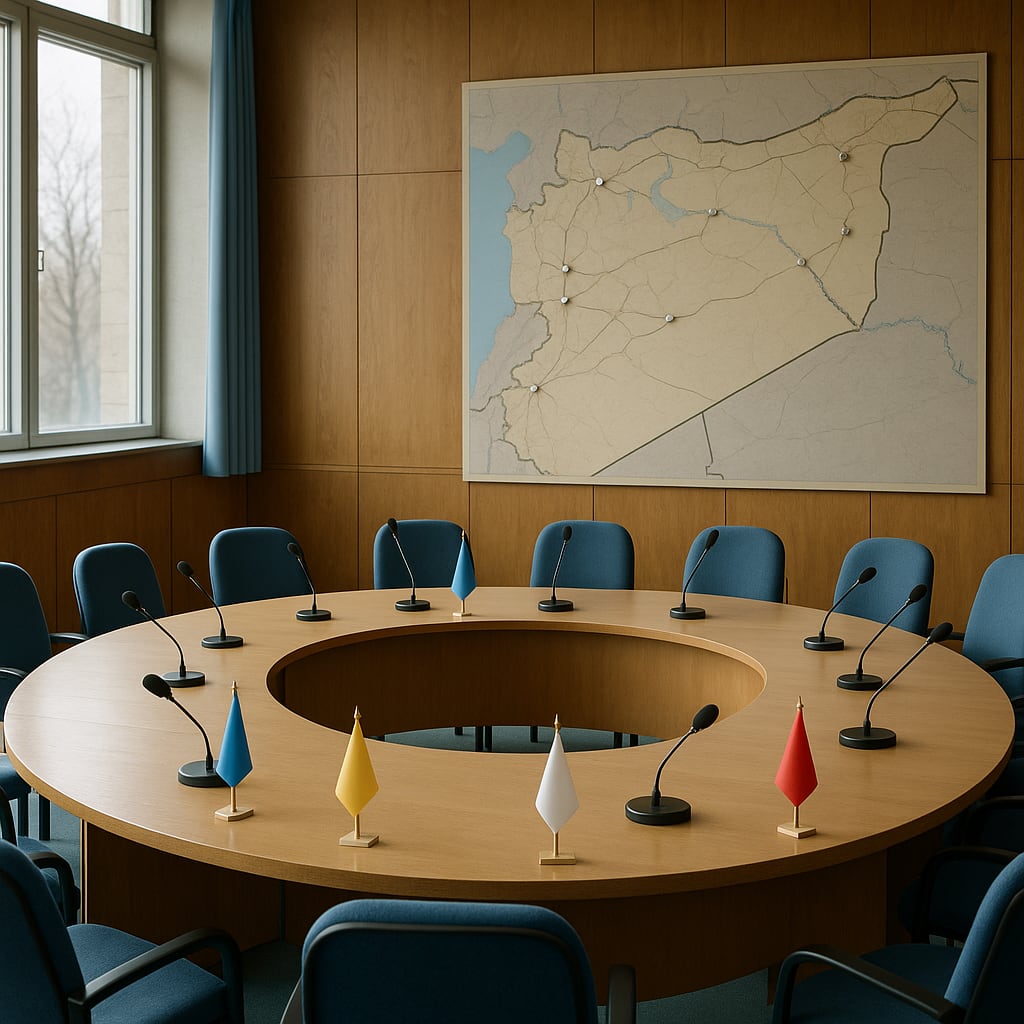
Israel’s strike on Syria’s Abu al-Duhur airbase spotlights contested Turkish role and US warnings of escalation
Narrative Snapshot
Across outlets, there is broad agreement on the basic facts: Israel struck Syria’s Abu al-Duhur airbase; Jerusalem linked the action to a purported Turkish deployment; Ankara rejected the premise; and a US envoy warned the move risked a wider clash. Where coverage diverges is over intent, timing, and the evidentiary basis for Israeli claims. Israeli outlets emphasize official justifications and subsequent warnings to Turkey, while also noting admissions from Damascus that a Turkish delegation had inspected the base. Turkish and several international outlets foreground Ankara’s denial and argue the strike fits a political pattern tied to Israeli elections.
The framing stakes are high because they touch multiple relationships at once. Reporting from Israel highlights efforts to establish a deconfliction mechanism and indicates active US diplomacy to avert a direct confrontation. Turkish-focused coverage portrays the episode as a test of Ankara’s emerging security posture, including in light of the Mecca defense agreement with Saudi Arabia and planned engagement with Damascus. European and Indian reporting concentrates on the US description of the strike as an “unnecessary escalation,” situating the episode within broader concerns about sovereignty and regional stability.
What Happened
Israel conducted airstrikes on Syria’s Abu al-Duhur airbase in northern Syria on August 18, later confirming the operation and asserting that Syria had been repeatedly warned that accepting Turkish troops at the site would threaten Israel’s security, according to statements carried by Israeli and Russian outlets. Turkey publicly rejected the allegations as “untenable,” saying they were intended to legitimize unlawful strikes and accusing Prime Minister Benjamin Netanyahu of pursuing “expansionist and destabilizing policies” ahead of Israeli elections, as reported by Turkish, US, and European media. A US envoy, Tom Barrack, told reporters the attack risked rapid escalation into a direct confrontation with Turkey and Syria, noting Turkish forces received no warning; he described the move as an unnecessary escalation and said no casualties occurred. Israeli media added that Washington is working to establish a deconfliction mechanism, and separately reported Syrian officials confirmed a Turkish delegation had reviewed the site. Israel’s defense minister later warned Ankara over its Syria involvement, while Haaretz reported Turkey vowed continued military support for Damascus.
Why It Matters
The episode straddles several evolving regional architectures. Reporting links the strike to Ankara’s growing role in Syria and to the newly signed Mecca defense agreement between Turkey and Saudi Arabia, underscoring how Turkish-Syrian normalization and Turkey–Gulf defense ties intersect with Israel’s red lines. Israeli coverage of US efforts to build a deconfliction channel with Turkey and Syria signals concern over crisis-management capacity; the US envoy’s warning about absent communication underscores the risk of inadvertent escalation. European and Indian reporting highlighting “unnecessary escalation” frames the strike as another stress test for norms around Syrian sovereignty and cross-border use of force. Haaretz’s depiction of Ankara’s intent to continue backing Damascus, alongside Israeli officials’ warnings against a Turkish presence in Syria, suggests a structural friction point: a potential, sustained contest over who sets the security terms in northern Syria and how third-party deployments are interpreted under regional deterrence frameworks.
Diverging Narratives
Israeli officials assert a clear security rationale: that Damascus’ readiness to accept Turkish troops at Abu al-Duhur constituted a threat, preceded by repeated Israeli warnings. This account, relayed by Israeli and Russian outlets, is paired with indications of US-led deconfliction efforts and corroborating detail from Israeli reporting that Syrian officials acknowledged a Turkish delegation’s site visit. Ankara’s counter-narrative, featured in Turkish, US, and European coverage, rejects any threatening intent, calls Israel’s allegations “untenable,” and frames the strike as an unlawful attempt to justify force and to serve Netanyahu’s domestic political objectives. Middle East Eye further reports Ankara insiders view the timing as an election stunt intended to undermine the Mecca defense pact and precede a planned Erdogan visit to Damascus.
Washington’s vantage point, cited across multiple outlets, does not validate either party’s core claim; it focuses on process risks, calling the strike an unnecessary escalation that could have triggered a direct confrontation, compounded by absent warning and poor communication. Within Israel, opposition figures quoted by Middle East Eye criticize the operation as politically driven and strategically harmful. Meanwhile, Israel’s defense minister issued a veiled warning to Ankara, and Haaretz reports Turkey vowed continued military support for Damascus—signals that each side is hardening its public posture even as facts on the ground, such as the extent of any Turkish presence at the base, remain contested.
What Happens Next
Three decision points emerge from the sources. First, whether a deconfliction mechanism materializes between Israel, Turkey, and Syria. Israeli reporting says Washington is working on it; the US envoy highlighted the lack of communication as a core risk. Progress would likely reduce miscalculation risk; failure would preserve the conditions that the envoy said could have led to direct confrontation. Second, Ankara’s and Damascus’ choices about any military footprint at Abu al-Duhur. Middle East Eye reports both reject claims of a buildup, while Israeli officials frame any Turkish presence as a red line. Confirmation of further Turkish site activity or Syrian facilitation would signal continued friction; visible pullback would ease immediate pressures. Third, public signaling by senior Israeli and Turkish officials. Israel’s defense minister warned Ankara not to “test” Israel; Haaretz reports Turkey vows continued military support to Damascus. Analysts should watch for follow-on Israeli strikes, verified Turkish movements or inspections at the base, and concrete US steps to broker operational deconfliction.