
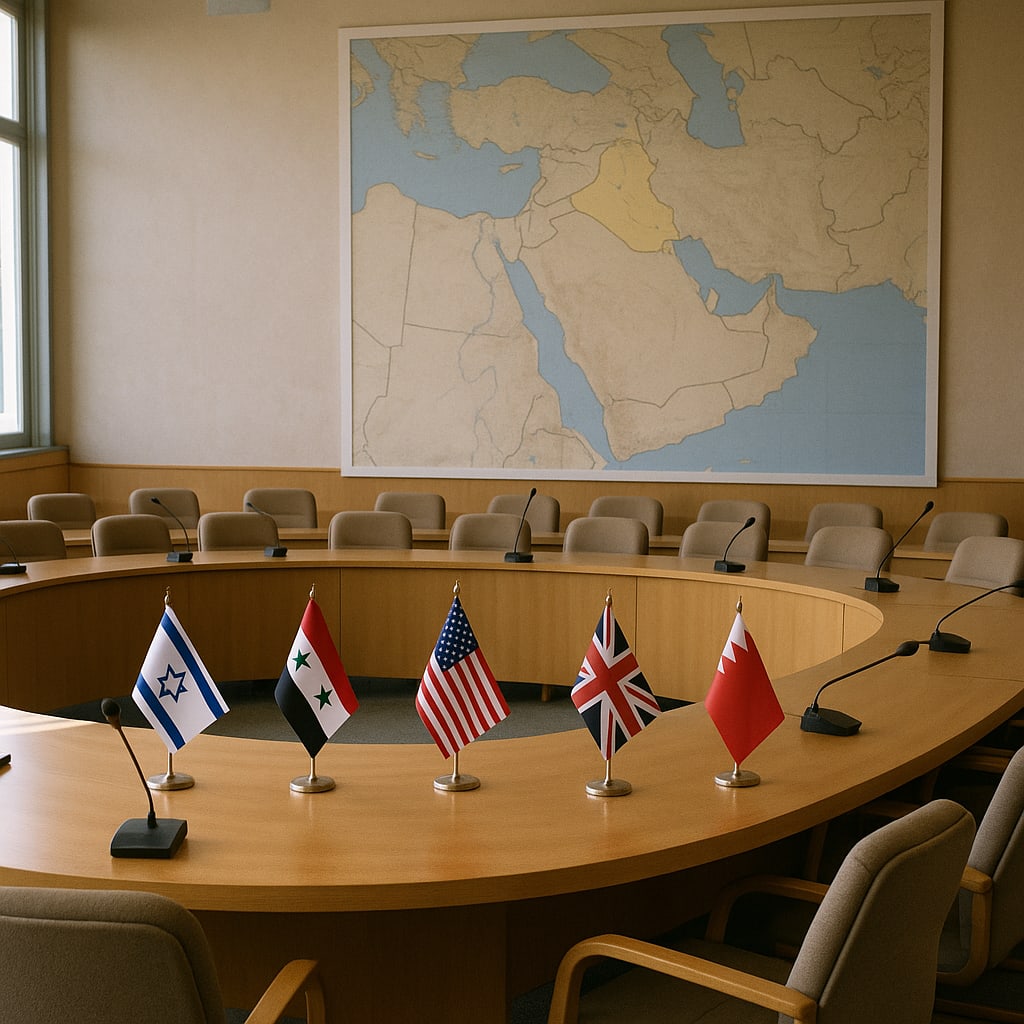
Israeli strikes hit Syria’s Abu al-Duhur airbase; condemnation from Damascus, Washington, London, and Manama as Ankara rejects Israeli claims
Narrative Snapshot
Across outlets, there is broad agreement that multiple Israeli airstrikes hit the Abu al-Duhur airbase in Syria’s Idlib province, causing infrastructure damage but no reported casualties. Israel has not formally claimed responsibility. Coverage consistently highlights diplomatic pushback: Syria denounced the action as aggression; the United States labeled it an unnecessary escalation; the United Kingdom and Bahrain framed it in terms of sovereignty and international law.
Where the emphasis diverges is over motive and regional signaling. Several regional outlets link the timing or intent to Turkey: a monitor cited by the Bangkok Post tied the strikes to a Turkish delegation’s prior inspection of the site; Al-Quds News and the Tehran Times interpret the operation as messaging about Turkish influence. Middle East Eye reports Ankara’s categorical denial of Israeli claims that Turkish troops might be stationed there, casting the allegation as a pretext for the strikes. A separate Middle East Eye report cites a Syrian diplomatic source denying any security arrangement with Israel and asserting that Israel had been informed there were no foreign forces at the base—an explicit attempt to undercut any operational justification.
For Western outlets, the policy salient point is the U.S. reaction. Deutsche Welle and the BBC underscore Washington’s rebuke, which the New York Times situates within a recent pattern of American criticism of Israeli actions. The UK’s call for respect for Syrian sovereignty and for a return to negotiations, and Bahrain’s explicit invocation of the UN Charter and international law, place the incident squarely in ongoing debates about cross-border use of force and regional stability.
What Happened
Syrian state media reported that Israeli airstrikes hit the Abu al-Duhur military airbase in Idlib province on August 18, causing material damage and no casualties. Al Jazeera cited a military source specifying eight strikes, while Al-Quds News reported nine. The Associated Press, via the Toronto Star, also noted runway damage without casualties. Israel has not officially claimed the operation, Deutsche Welle reported. Damascus called the attack unjustified aggression that risked regional security, as covered by TASS and the BBC.
Reaction extended beyond Syria. Deutsche Welle quoted U.S. envoy Tom Barrack calling the strikes an unnecessary escalation, a stance the New York Times described as part of a recent series of American rebukes. Middle East Eye reported the UK’s special representative for Syria as deeply concerned and urging respect for Syrian sovereignty and a return to negotiations. Bahrain’s Foreign Ministry condemned the strikes as violating international law and the UN Charter, Middle East Eye added. The Bangkok Post relayed a monitor’s account that the strikes followed a Turkish delegation’s inspection of the site. Separately, Middle East Eye reported a Syrian diplomatic source denying any security arrangement with Israel and saying Israel had been told no foreign forces were present. Another Middle East Eye piece carried Turkey’s denial of Israeli claims that it planned to send troops to the base.
Why It Matters
The episode sits at the intersection of sovereignty norms, regional deterrence signaling, and shifting diplomatic postures. Multiple governments anchored their responses in international law and sovereignty—Damascus decried aggression; Bahrain cited the UN Charter; the UK urged respect for Syrian territory—while the United States termed the operation an unnecessary escalation, marking continued American scrutiny of recent Israeli actions. For policy actors, these reactions indicate a tightening diplomatic environment around cross-border strikes in Syria.
The Idlib location, roughly 70 kilometers from the Turkish border per Deutsche Welle, and reporting on a prior Turkish delegation visit (Bangkok Post) pull Ankara into focus. Regional outlets’ framing of the strikes as messaging toward Turkey (Al-Quds News, Tehran Times), juxtaposed with Turkey’s denial of any troop plans and its charge that Israeli claims were justificatory (Middle East Eye), highlights a contested narrative space with direct implications for Turkish-Syrian dynamics. The UK’s call for a return to negotiations and Syria’s denial of any security arrangement with Israel (Middle East Eye) underscore how military incidents reverberate into diplomatic tracks, raising stakes for any prospective de-escalation mechanisms in and around northern Syria.
Diverging Narratives
The factual core—multiple strikes, runway and facility damage, no casualties—is broadly consistent across Al Jazeera, the Toronto Star (AP), and regional outlets, though counts vary between eight and nine strikes (Al Jazeera, Al-Quds News). The strategic rationale is contested. Syrian statements portrayed the attack as unjustified aggression aimed at provoking escalation and undermining stability (TASS; BBC). Bahrain framed it as a breach of international law and the UN Charter (Middle East Eye), while the UK emphasized risks of destabilization and urged a return to negotiations and respect for sovereignty (Middle East Eye). The United States labeled it an unnecessary escalation (Deutsche Welle; BBC), with the New York Times situating this within a recent pattern of U.S. rebukes.
A separate line of contention concerns Turkey. The Bangkok Post relayed a monitor’s claim that the strikes followed a Turkish delegation’s inspection of the airbase. Al-Quds News and the Tehran Times cast the operation as carrying a message about Turkish influence or warning Ankara. Middle East Eye reported Ankara’s denial of Israeli claims that Turkish troops would be accepted at the base, asserting those claims were advanced to legitimize the strikes. Simultaneously, Middle East Eye cited a Syrian diplomatic source denying any security arrangement with Israel and asserting Israel had been told no foreign forces were present, challenging any premise of an imminent foreign deployment at the site. There is also variance in how the airbase is characterized: the Bangkok Post called it disused, while the Tehran Times described runway cratering and destroyed storage facilities.
What Happens Next
Two decision points emerge from reported positions. First, Israel has not officially claimed the operation; any subsequent Israeli statement clarifying intent—particularly regarding alleged Turkish deployments—would shape diplomatic responses. Analysts should watch for references to Turkish activity at Abu al-Duhur, given Ankara’s firm denial carried by Middle East Eye, and for corroboration or contradiction from Damascus, which has denied any security arrangement and said no foreign forces were present at the site, also per Middle East Eye.
Second, external reactions could evolve into formal diplomatic steps. The U.S. labeling of unnecessary escalation (Deutsche Welle; BBC) and the UK’s call to respect sovereignty and return to negotiations (Middle East Eye) set a baseline; additional U.S./UK statements, potential UN discussions, or allied regional positions—Bahrain already cited international law (Middle East Eye)—would indicate whether this crystallizes into a broader diplomatic front. Finally, given the New York Times’ reporting that this follows a series of Israeli interventions, any repeat strikes in Syria and the tenor of ensuing U.S. responses will be key indicators of whether current censure remains rhetorical or translates into policy constraints.