
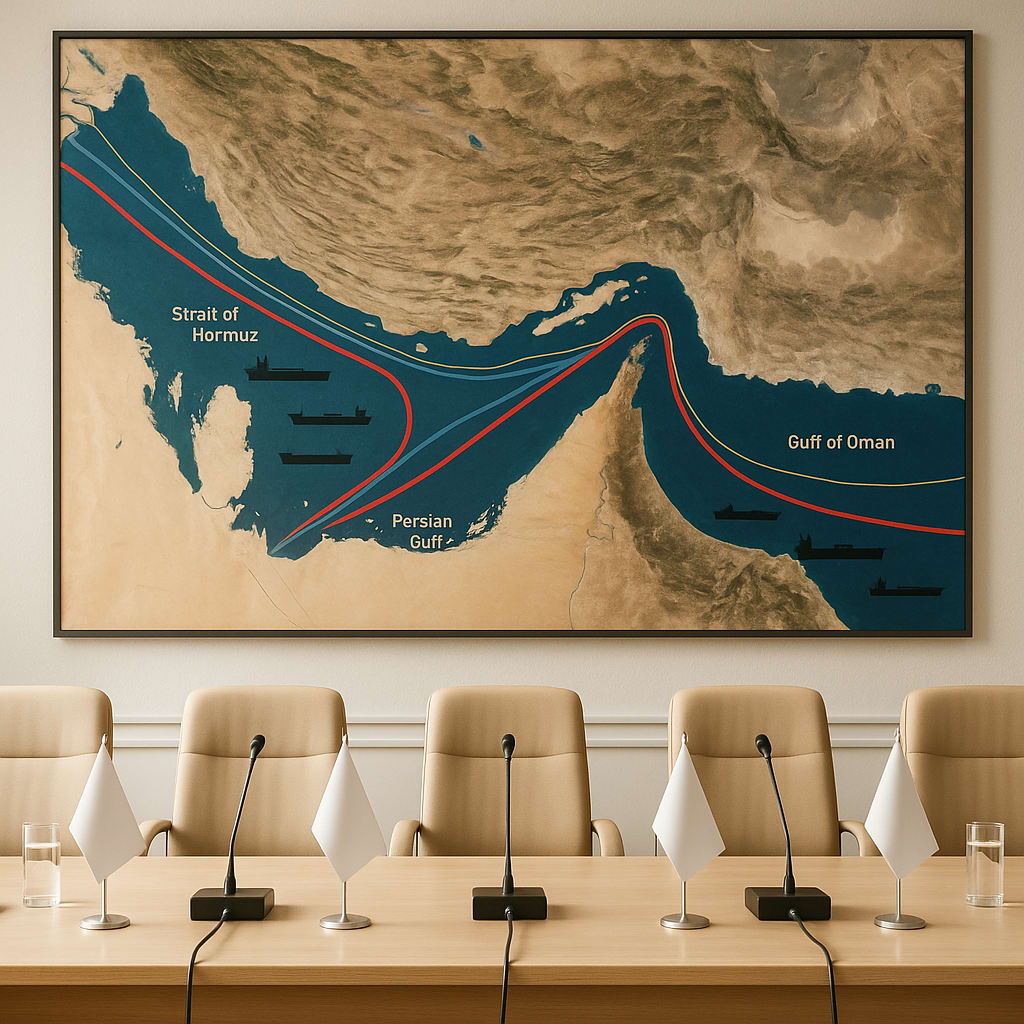
Trump claims the Strait of Hormuz as “new US territory,” threatens Oman; Iran conditions reopening on lifting blockade and sanctions
Narrative Snapshot
Across outlets, there is broad agreement that President Donald Trump escalated his position by posting a map labeling the Strait of Hormuz “New US Territory” and by asserting no talks with Iran are underway. Multiple sources present Tehran’s counter: the strait remains closed until Washington implements commitments in a memorandum of understanding, including lifting the naval blockade, oil sanctions, and releasing frozen assets. Where accounts diverge is on the strait’s current status and the credibility of US claims of control. Some reports carry Trump’s insistence that Hormuz is open and de‑mined, while Iranian and regional outlets emphasize continuing closure and disrupted traffic.
Coverage also splits on the role of intermediaries. Several outlets foreground Oman’s and Qatar’s efforts around a Hormuz arrangement, even as Trump threatens to bomb Oman if it “gets in the way.” Others introduce an Israel dimension, with Iran portrayed as blaming Israeli influence for obstructing talks. A domestic US layer is present: reporting on Democrats preparing a war powers move over the Oman threat and on frictions inside the Trump camp over energy prices and shipping priorities. Finally, some state media and European coverage link Trump’s rhetoric to larger claims about reducing Hormuz’s relevance via pipelines, while UN-focused reporting stresses the expiration of the 60‑day negotiation window and urges a diplomatic reset.
What Happened
Trump said he would declare the Strait of Hormuz US territory during an August 15 rally, coupled with claims of enforcing a blockade in which “no ships get through unless we want them.” Iran rejected the remarks as delusional and vowed the strait “will remain Iranian.” On August 17, Trump threatened to “bomb” Oman if it impeded a deal, while BBC reported he told Fox News of a direct IRGC backchannel, which the IRGC denies. On August 18, he posted a map marking Hormuz as “New US Territory,” stated no talks were “going on or scheduled,” and claimed the strait was open, de‑mined, and under blockade. Iranian negotiator and parliament speaker Mohammad Bagher Ghalibaf said Hormuz would stay closed until the US lifted its blockade, oil sanctions, and released frozen assets; CGTN reported the US‑Iran MoU’s 60‑day window expired August 17 without agreement. RT reported Democrats plan a war powers resolution to bar action against Oman. TASS quoted Trump saying pipelines can reduce Hormuz’s importance and later that the blockade was “successful” and the strait “is open.”
Why It Matters
The dispute centers on control and status of one of the world’s most consequential energy chokepoints, with implications for maritime security and sanctions enforcement. Several outlets report an expired US‑Iran memorandum intended to halt hostilities and reopen Hormuz, and the UN’s call to resume diplomacy, underscoring institutional efforts struggling to contain a conflict now near six months old. US threats against Oman complicate a long-standing regional mediation architecture, even as Iranian and Omani officials work on maritime arrangements and Qatar argues a Hormuz deal is essential to restart talks. Reporting on Democrats’ war powers move signals potential congressional constraints on unilateral escalation. Divergent claims about whether Hormuz is “open,” “closed,” or partially operating carry direct consequences for oil flows and insurance—while Trump’s argument, cited by Russian state media, that pipelines can reduce Hormuz’s relevance points to a policy push to mitigate chokepoint risk rather than resolve the underlying coercive standoff.
Diverging Narratives
Accounts conflict on the operational status of Hormuz. Trump asserts the strait is “open and operating,” de‑mined, and under an effective blockade, later calling the blockade “successful” and saying “no boats have gotten into Iran.” Iranian officials counter that the waterway remains closed until the US fulfills MoU commitments—lifting the blockade, ending oil sanctions, and unfreezing assets—positions reported across Iranian and regional outlets. France24 notes limited traffic and a reported ship attack, further muddling on‑the‑water realities.
There is also disagreement over diplomacy. Trump’s “no talks” claim contrasts with prior White House signaling; The Times of Israel highlights the contradiction with statements a day earlier, and SCMP cites Jared Kushner saying there were “very positive and active” engagements. Mediation is variously framed as constructive or obstructive: Iran and Oman discuss maritime arrangements and a joint declaration, while Trump threatens to bomb Oman if it “gets in the way.” Qatar’s government argues a Hormuz deal would enable renewed US‑Iran talks.
Causal framing diverges as well. Middle East Eye reports Tehran’s position that Israel is the biggest obstacle to negotiations, whereas other outlets emphasize US domestic politics: Haaretz notes Trump urging Americans to accept high gas prices; TASS reports JD Vance prioritizes restoring normal shipping to keep fuel prices low. Legitimacy claims are starkly opposed: Iranian and European coverage label Trump’s territorial assertions “delusional” and insist the strait will “remain Iranian,” while Al Jazeera poses the legal feasibility question in an analysis piece.
What Happens Next
Three decision points emerge. First, the MoU conditions: Iranian officials tie reopening to lifting the US naval blockade, oil sanctions, and releasing frozen assets. Analysts should watch for any US movement on sanctions relief, asset releases, or changes in naval posture; absent these, Iranian statements indicate the closure continues. Second, mediation versus escalation: Oman and Iran signal progress toward a maritime declaration, and Qatar says a Hormuz deal is crucial to resume talks; any public text or joint communique would be a key indicator, as would whether Trump tempers or repeats threats against Oman. Third, domestic constraints: RT reports Democrats plan a war powers resolution to block action against Oman; congressional scheduling and whip counts will shape the administration’s latitude. Meanwhile, competing claims about Hormuz’s openness and de‑mining underscore the need to track shipping advisories, reported incidents, and official traffic data to gauge whether the strait’s status is substantively changing.