
North Korea launches about 10 short-range missiles after Trump signals meeting with Kim and curtails US–South Korea drills
Narrative Snapshot
Across outlets, coverage converges on the tight coupling between North Korea’s launches and two US moves: President Donald Trump’s public intent to meet Kim Jong Un later this year and his order to scale back the Ulchi Freedom Shield exercises. German and Hong Kong reporting connects the launches directly to those diplomatic and military signals, with the South China Morning Post casting the US steps as an “olive branch,” while France 24 underscores Pyongyang’s contemporaneous taunts of Seoul as a US “servant.”
There is variation in emphasis and granularity. French, UK, Canadian, Chinese, and Russian state media report roughly 10 short‑range ballistic missiles, while early dispatches from Japan and India refer to a single projectile or use provisional language such as “possible ballistic missiles” and “unidentified projectile.” Japanese and Chinese coverage align on the maritime picture: the projectiles fell outside Japan’s exclusive economic zone, and CGTN uses the dual nomenclature “East Sea/Sea of Japan.” South Korean and Canadian reporting highlight Seoul’s condemnation and readiness posture, with Russia’s TASS relaying the Joint Chiefs’ vigilance for further launches alongside Pyongyang’s prior warning that the drills are the “most immediate and open threat.”
The stakes are framed through alliance management and signaling dynamics. Several outlets stress Washington’s curtailment of exercises as a conciliatory step; an AP report carried by the Toronto Star adds that the drills were wrapped up six days early, which North Korea said was insufficient. This sits against consistent reminders from multiple sources that Pyongyang has long denounced joint drills as invasion rehearsals, situating the launches within a familiar pattern of coercive protest during allied training.
What Happened
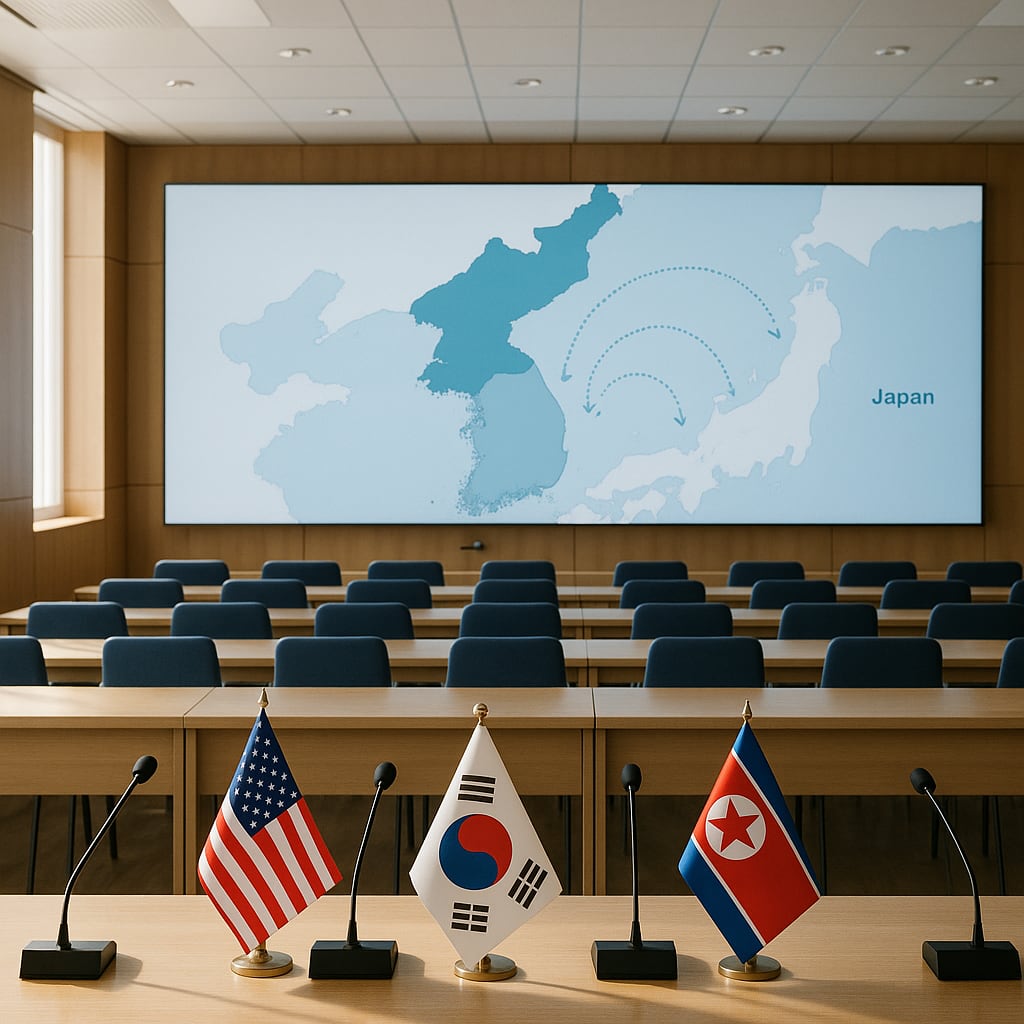
South Korea and Japan detected multiple North Korean launches on August 20, with Seoul’s military assessing about 10 short‑range ballistic missiles fired toward the country’s eastern waters around 5 p.m. local time from the capital region. Reporting from France and the UK corroborates the scale, while Chinese and Canadian outlets note Seoul’s presidential office condemned the action and ordered full readiness during the ongoing US–ROK exercises. Japan’s prime minister’s office confirmed the launches, and Japanese and Chinese reports said the projectiles landed outside Japan’s exclusive economic zone. The volleys came hours after US President Donald Trump said he intended to meet Kim Jong Un this year and followed his order to shorten and scale back the annual Ulchi Freedom Shield drills. Pyongyang had warned of retaliatory measures against the exercises and, the day prior, state media mocked Seoul despite the US adjustment. South Korea’s Joint Chiefs said they remained vigilant for additional launches.
Why It Matters
The episode tests the calibration of deterrence and diplomacy within the US–ROK alliance. Washington’s decision to scale back, and then wrap up the drills early, was presented as a conciliatory gesture toward re‑engagement; Seoul simultaneously framed the launches as a grave act in violation of UN Security Council resolutions and sustained a posture of full readiness. That juxtaposition illustrates the narrow margin for reassurance without eroding allied preparedness or appearing to acquiesce to coercive signaling. It also reinforces an established pattern in which Pyongyang seeks to shape the tempo and terms of dialogue around allied training cycles it labels threatening. For multilateral institutions, Seoul’s characterization as a UN sanctions breach raises enforcement salience even absent immediate Security Council action in these reports. For Japan, the reported splashdowns outside its exclusive economic zone keep immediate risk contained while underlining persistent maritime and air-defense monitoring demands.
Diverging Narratives
Outlets differ in precision and framing rather than basic facts. Le Monde, the Guardian, CBC, CGTN, and TASS report roughly 10 short‑range ballistic missiles and cite the South Korean military; Deutsche Welle and The Hindu use provisional or minimalist descriptions, reflecting early reporting cycles, and the Japan Times initially referenced a single missile with a splashdown outside the exclusive economic zone. Coverage from Hong Kong, France, and the UK stresses linkage to Trump’s diplomatic overture and exercise curtailment, with the South China Morning Post describing the US move as an “olive branch,” while France 24 highlights Pyongyang’s contemptuous rhetoric toward Seoul. Russian and North Korean state messaging, carried by TASS, foregrounds the exercises as an “immediate and open threat,” providing Pyongyang’s stated rationale for “retaliatory measures.” Canadian and Chinese reports emphasize Seoul’s legal framing—calling the launches violations of UN Security Council resolutions—and readiness orders. The Toronto Star’s account that drills were wrapped up six days early, which North Korea deemed insufficient, underscores disagreement over whether allied restraint can meaningfully alter Pyongyang’s behavior during exercise periods.
What Happens Next
Two decision points emerge from the reporting. First is whether Washington translates the President’s stated intent into a scheduled Trump–Kim meeting. Movement here will be visible in formal planning signals and in North Korean state media rhetoric that either sets preconditions or acknowledges engagement. Second is allied force posture around exercises: Seoul and Washington have already shortened and then ended Ulchi Freedom Shield early; further adjustments or announcements about future training cycles would indicate continued conciliatory calibration, while a return to standard scope would emphasize deterrence. Analysts should watch for additional launches given Seoul’s stated vigilance, North Korean messaging that reiterates or escalates its portrayal of the drills as a direct threat, and Japanese reporting on splashdown zones relative to its exclusive economic zone, which would affect regional risk assessments and responses.