
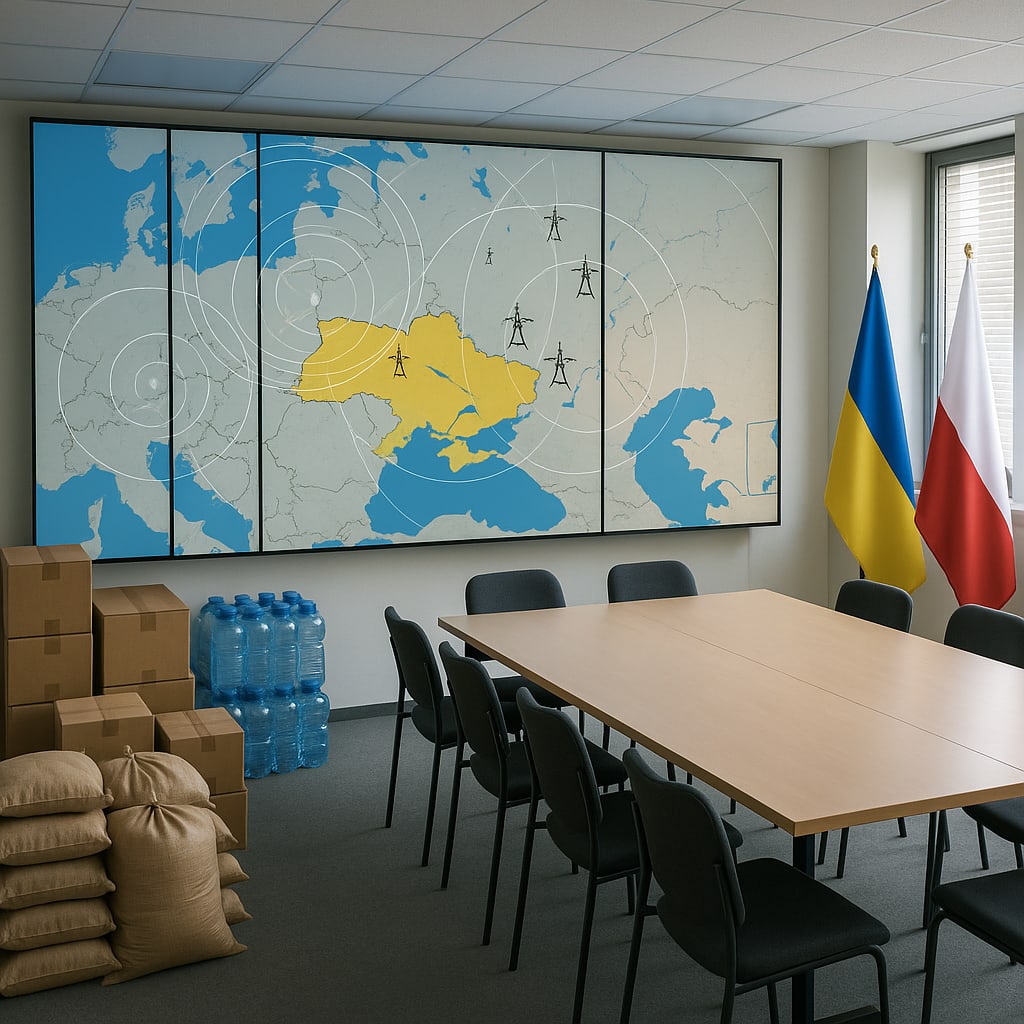
Russian overnight barrage batters Kyiv amid strained air defenses, with civilian sites hit and casualties mounting
Narrative Snapshot
Across outlets, coverage converges on the scale and lethality of the overnight strikes and on the use of mixed salvos. Several describe a “massive attack,” with reports of ballistic and cruise missiles and drones used together. Casualty tallies diverge by update and emphasis, ranging from at least six to at least 16 killed, and dozens injured. Statements from President Volodymyr Zelensky that Russia had “been preparing for a long time,” and that different missile types were combined, appear prominently in some European and Latin American reporting, while other outlets focus more narrowly on damage assessments and emergency response.
The pattern of harm to civilian infrastructure is consistently documented but with differing granularity. European and Italian sources specify residential buildings, warehouses, and public services, including a healthcare facility and educational institutions, with French reporting citing extensive damage to “approximately 20” residential buildings, a school, a children’s hospital, and a nursery. Ukrainian local coverage adds that a critical infrastructure facility in the capital was deliberately targeted during daytime for the first time in months, indicating a shift in targeting beyond nighttime salvos.
Air defense capacity and civilian adaptation receive uneven attention. U.S. and French reporting highlight Ukraine’s depleted interceptor stocks and weakening anti-air defenses, which aligns with on-the-ground behavior described in Kyiv of residents preemptively sheltering overnight in metro stations. Regional spillover appears in German coverage noting Poland’s preventive airspace operations. Chinese state media situate the Kyiv strikes within a broader escalation of long-range attacks by both sides, citing Russian authorities’ claims about a large Ukrainian drone operation days earlier—an angle not echoed elsewhere in this corpus.
What Happened
Overnight on August 20, Russia launched a large-scale barrage against Kyiv and its surrounding region using ballistic and cruise missiles and drones, according to Ukrainian authorities. Strikes hit multiple districts, including Darnytskyi, Sviatoshynskyi, and Solomianskyi, damaging residential blocks, warehouses, a healthcare facility, and an educational institution. Reported death tolls varied across outlets and updates—at least six, eight, 11, 12, 13, 14, 15, and 16—with dozens injured. Kyiv’s mayor reported 18 hospitalizations and damage across three districts. Power company DTEK said roughly 90,000 homes lost electricity, with service restored to more than half by mid-morning. City authorities planned a day of mourning on Friday. President Zelensky said Russia had prepared the operation for a long time and combined different missile types. In neighboring Poland, the military began preventive measures to protect its airspace.
Why It Matters
Reports of depleted interceptor stocks and weakening anti-air defenses point to a structural vulnerability that Russia appears intent on exploiting, with a rising civilian toll. The pattern of strikes against residential areas and public services—including a children’s hospital and a nursery—underscores humanitarian and legal stakes, while Kyiv’s planned day of mourning and mass power outages signal mounting pressure on municipal services and critical infrastructure. Preemptive overnight sheltering in metro stations reflects a shift in civilian behavior as strikes intensify and air defenses strain.
Regionally, Poland’s preventive airspace operations highlight the cross-border security implications of repeated long-range salvos near NATO borders, even as most coverage centers on Kyiv’s immediate impacts. The attack also fits a broader trend identified in Chinese state media of stepped-up long-range attacks by both sides since early 2022, complicating escalation management and forcing difficult allocation choices for scarce air defense resources that Ukraine’s leadership is urging the international community to address.
Diverging Narratives
The immediate metrics of harm vary by outlet and update, producing casualty ranges from single digits to at least 16 dead and 33–40 injured. Some reports prioritize urban damage and emergency response, listing specific districts and facilities, while Ukrainian local reporting adds that a critical infrastructure site in Kyiv was deliberately struck during daytime for the first time in months—an element absent from several international dispatches that focus on the overnight barrage.
Interpretations of cause differ in emphasis. The New York Times frames the strikes as Russia leveraging Ukraine’s depleted interceptor stocks and intensifying attacks; French reporting similarly references weakening anti-air defenses. Other outlets stress the strike package itself—ballistic and cruise missiles and drones—without foregrounding defense depletion. Zelensky’s claim that Russia had prepared “for a long time” and combined missile types appears in European and Latin American coverage, but not uniformly.
Context-setting also diverges. Deutsche Welle highlights Poland’s preventive airspace measures, underscoring regional spillover overlooked elsewhere. CGTN embeds Kyiv’s ordeal in a wider exchange of long-range attacks, referencing Russian authorities’ claims of a massive Ukrainian drone operation days earlier—a claim not reflected in the other sources here.
What Happens Next
Key inflection points revolve around air defense capacity, targeting patterns, and regional risk management. Whether Ukraine can close gaps highlighted by depleted interceptor stocks and weakening defenses will shape the effectiveness of future interceptions; continued mixed-salvo barrages would test that capacity. Indicators include the frequency and composition of Russian strikes and any reported adjustments in Ukrainian interception rates.
Targeting trends bear close watch. Kyiv authorities reported a deliberate daytime strike on critical infrastructure for the first time in months; recurrence would elevate risks to power and utilities. Restoration metrics from DTEK after outages to some 90,000 homes offer a tangible gauge of grid resilience.
On the diplomatic and regional fronts, analysts should track whether Zelensky’s call for a global response translates into concrete measures, and how Poland calibrates its preventive airspace operations. Official casualty and damage updates, including declarations like days of mourning, will continue to signal local impact and response capacity under sustained pressure.