
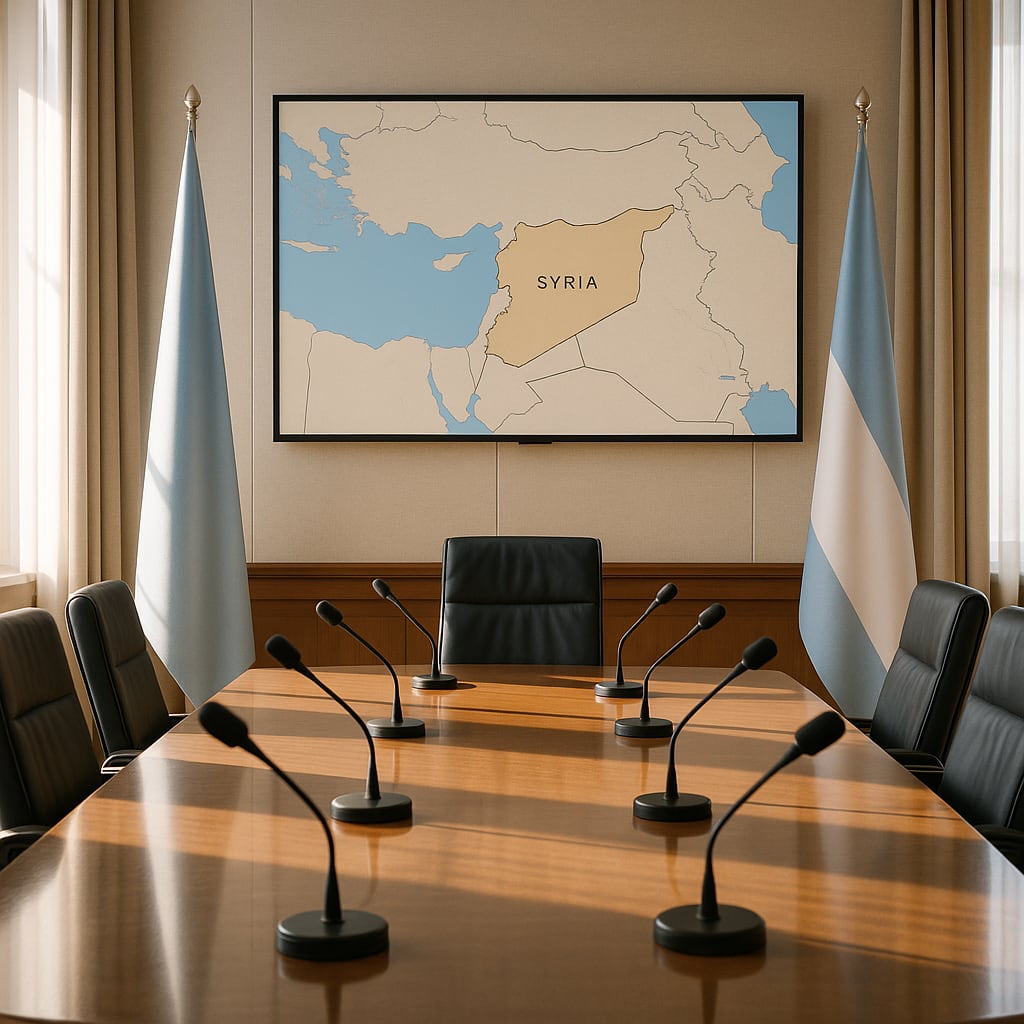
After Syria airbase strike, Israel warns Turkey; Ankara denies presence as U.S. envoy rebukes escalation
Narrative Snapshot
Across outlets, there is broad agreement that Israel struck Syria’s Abu al-Duhur airbase in Idlib province and then publicly warned President Recep Tayyip Erdogan against “dangerous adventures” in Syria. Reports converge that the action was framed by Israel as a preemptive move against a potential Turkish military footprint at the base, with multiple accounts noting damage to runways and infrastructure and no reported casualties.
The sharpest divergence concerns whether Turkey had any presence or imminent plans at Abu al-Duhur. Ankara denied a military delegation was at the base “before or during” the strike and cast the attack as an assault on Syria’s sovereignty (Telesur English). Israel asserted Damascus was preparing to host Turkish forces (The Times of Israel; South China Morning Post), while Damascus rejected any planned deployment; one report added that the Syrian foreign minister acknowledged Turkish officer visits for training and exchanges (Fox News). Middle East Eye and RT also reported that both Ankara and Damascus denied any build-up.
A second axis of divergence centers on U.S. involvement. The U.S. special envoy to Syria criticized the strike as an “unnecessary escalation” and said Washington received no prior warning (Le Monde; Toronto Star; Clarín). Israeli officials pushed back, saying criticism was “full of inaccuracies” and claiming parties had been alerted (Le Monde; Clarín). Fox News described Washington as working to contain tensions between two key partners, while The Times of Israel reported the envoy was seeking a deconfliction mechanism among Israel, Syria, and Turkey.
Analytical frames vary by outlet. Le Monde highlights accumulated personal and strategic rivalry between Benjamin Netanyahu and Erdogan. Al Jazeera English and Haaretz foreground Israeli electoral dynamics. Middle East Eye and TASS amplify arguments circulating in Israel that NATO protections would not extend to Turkish troops inside Syria. RT’s analysis characterizes the strike as a potential bid to make Syria a venue for competing regional visions, including an alleged effort to disrupt deliveries of advanced Turkish systems—claims that are attributed to unnamed U.S. and Israeli officials in that piece (RT). Folha de S.Paulo situates the spat within friction among emerging powers in a shifting Middle Eastern order, while La Repubblica emphasizes a widening strategic competition spilling across domains and alliances.
What Happened
On 18 August, Israel struck Syria’s Abu al-Duhur airbase in Idlib province, with multiple accounts noting eight strikes that damaged runways and military infrastructure and caused no reported casualties (TASS; RT; South China Morning Post). Israel framed the action as a warning against a Turkish military deployment that it said would breach a “status quo” understanding (The Times of Israel; RT; South China Morning Post). Two days later, Israel’s defense minister publicly warned President Erdogan against “dangerous adventures in Syria” (Deutsche Welle; Fox News; RT). Turkey denied any presence at the base at the time of the strike and condemned the attack as violating Syria’s sovereignty (Telesur English). Syria denied plans for a permanent Turkish deployment, with one report noting its foreign minister acknowledged Turkish officer visits for training and exchanges (Fox News). The U.S. special envoy criticized the strike as an unnecessary escalation and said Washington was not warned; Israel disputed aspects of that account (Le Monde; Toronto Star; Clarín). Days later, Syria reported another Israeli strike near Damascus (BBC News).
Why It Matters
The episode exposes a fault line where Israeli threat perceptions intersect with a NATO member’s Syria policy, without a clear alliance framework to manage off-territory incidents. Commentary in Israeli and Russian outlets underscores that NATO’s collective defense obligations would not cover Turkish personnel operating inside Syria, highlighting a vulnerability that could incentivize or deter future deployments depending on Ankara’s calculus (Middle East Eye; TASS). Washington’s role is consequential: the U.S. envoy’s criticism and claim of no prior notification point to gaps in crisis management, even as he reportedly works on a deconfliction mechanism among Israel, Syria, and Turkey (Le Monde; Toronto Star; The Times of Israel). Regionally, the strike interacts with newer alignments and initiatives—from a Turkish-Saudi “Mecca defense” agreement to Erdogan’s reported outreach to Damascus—raising the cost of missteps for states attempting to recalibrate ties (Middle East Eye). The dispute also reinforces the erosion of norms around Syrian sovereignty cited by Ankara and Damascus (Telesur English; BBC News).
Diverging Narratives
Israel presents the strike as a preventive move to uphold a security “status quo” by stopping a Turkish military deployment it deemed threatening, with official messaging calibrated as a direct warning to Erdogan (The Times of Israel; Deutsche Welle; Fox News; RT). Ankara rejects the premise, denies a presence at the base during the strike, and frames Israel’s action as unlawful and destabilizing, with officials attributing Israeli motives to domestic political considerations ahead of elections (Telesur English; Fox News). Damascus publicly denies any planned permanent Turkish deployment while, according to one account, acknowledging prior Turkish officer visits for training and exchanges, a nuance Ankara does not reflect in its statements (Fox News; RT).
On the U.S. angle, the special envoy’s assertion that Washington was not warned and his description of the strike as an “unnecessary escalation” face Israeli pushback that American criticism contains inaccuracies and that alerts were issued (Le Monde; Toronto Star; Clarín). Opinion and analysis pieces amplify distinct strategic frames: some Israeli and Russian outlets argue Turkish troops in Syria would lie outside NATO’s protective scope (Middle East Eye; TASS), while RT’s long-form analysis suggests Israeli aims included disrupting advanced Turkish systems and shaping Syria as an arena for competing regional projects—claims not independently corroborated in other reporting (RT). French coverage foregrounds the longer arc of Netanyahu–Erdogan rivalry as an explanatory lens (Le Monde), while Israeli and Qatari outlets link the timing to Israel’s electoral calendar and to deconfliction efforts at risk (Haaretz; Al Jazeera English; The Times of Israel).
What Happens Next
Several decision points will shape the trajectory. First, whether Washington can stand up a functional deconfliction channel among Israel, Syria, and Turkey, as reported by The Times of Israel. Clear public signals from the U.S. envoy or participating capitals on scope, modalities, and compliance would indicate progress; absent that, the risk of operational overlap and miscalculation remains, especially amid continued Israeli strikes noted by the BBC.
Second, Ankara’s posture toward Syrian facilities: Turkey publicly denies a build-up and condemned the strike, while Israel alleges imminent deployment. Any confirmed Turkish military embedding or infrastructure support at Syrian bases would likely trigger further Israeli warnings or action under the stated “status quo” rationale; conversely, visible restraint by Ankara and Damascus on basing would ease immediate pressures (The Times of Israel; Telesur English; Fox News; RT).
Third, political calendars and regional initiatives: reporting links the episode to Israel’s election season and to Ankara’s recent defense diplomacy, including the Mecca agreement and reported outreach to Damascus (Al Jazeera English; Middle East Eye; Haaretz). Analysts should watch for Israeli campaign messaging about Turkey, any scheduling of a high-level Ankara–Damascus meeting, and whether U.S. criticism moderates Israel’s operational tempo or public framing (Le Monde; Toronto Star; BBC News).