
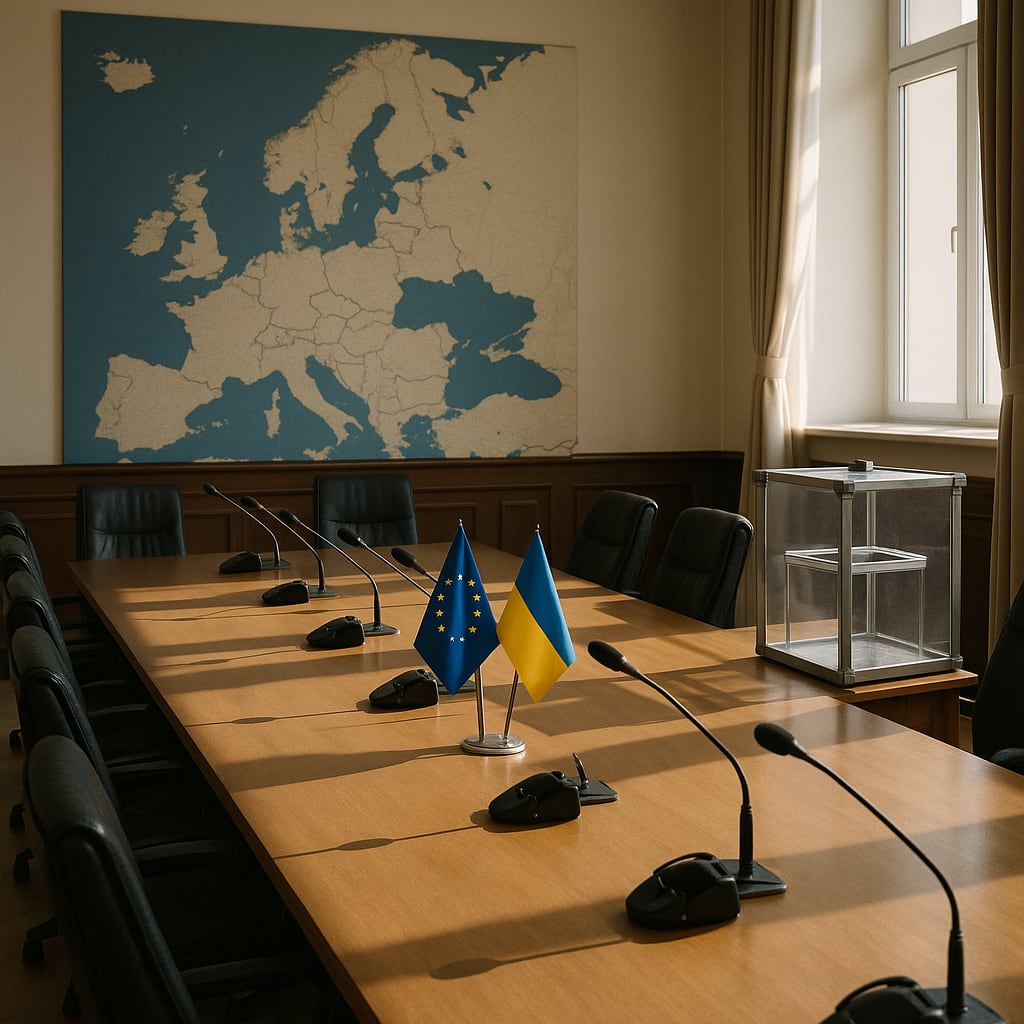
Zelensky rejects wartime elections after Fedorov’s call as EU says timing is Kyiv’s decision
Narrative Snapshot
Across Ukrainian and European outlets, there is broad acknowledgment that a prominent former official’s appeal has moved a once-taboo question into open debate, followed by President Volodymyr Zelensky’s firm public refusal to hold a vote now. Ukrainian and international reporting converge on the core risk framing: elections amid ongoing attacks could splinter the polity, yet prolonged suspension of normal politics concentrates power and strains democratic legitimacy. Interviews and editorials amplify the dual hazard rather than treating it as a binary choice.
What diverges is the prescriptive emphasis. Ukrainian voices aired by Kyiv Independent and France24 scrutinize feasibility and accountability under fire, while senior Ukrainian figures quoted in Italy’s Corriere della Sera downplay public demand for elections and stress internal vulnerabilities such as corruption. European institutional messaging, via Ukrinform, defers to Kyiv’s sovereignty and offers support if and when a process is chosen; Italian commentary in La Repubblica ties the moment to justice reforms and EU accession benchmarks rather than the ballot box itself.
Russian state media present a sharply different narrative: TASS platforms predict systemic collapse and suggest protests could be instrumentalized for leadership change, casting the political debate as evidence of imminent failure. Global wire-based reports from India, Brazil, Thailand, and Germany focus on Zelensky’s rationale that a wartime vote would “split” the country, with Deutsche Welle adding his claim that Russia plans a large mobilization after its own elections.
What Happened
On Aug. 20, former defense minister Mykhailo Fedorov publicly urged Ukraine to prepare for elections, arguing for a “safe and realistic” path to voting, a topic Kyiv media say had been largely dismissed when raised by Russia and the United States (Kyiv Independent, Aug. 20). The same day, the European Commission said Ukraine must decide the timing itself and that the EU stands ready to support the process (Ukrinform, Aug. 20). Ukrainian editors debated conditions and risks around a wartime vote (Kyiv Independent, Aug. 21), while ex–foreign minister Dmytro Kuleba was quoted in Italy saying society is not demanding elections and criticizing Fedorov’s readiness, linking domestic corruption to internal resilience (Corriere della Sera, Aug. 21). Between Aug. 22–23, Zelensky publicly rejected holding elections now, calling them dangerous and potentially divisive (The Hindu; Folha de S.Paulo; Bangkok Post; Deutsche Welle). ANSA also reported Fedorov attacking Zelensky on corruption and cited the president outlining a peace plan with the United States and EU that includes a truce, a free zone, and troop withdrawal (ANSA, Aug. 23). Russian outlet TASS amplified predictions of political crisis and regime-change scenarios via former and pro-Russian commentators (TASS, Aug. 21; Aug. 23).
Why It Matters
The dispute intersects with Ukraine’s wartime governance under martial law, EU accession trajectory, and information contestation. European Commission messaging that Kyiv alone sets election timing, with EU support if needed, preserves procedural sovereignty while keeping assistance options open (Ukrinform). Italian editorial focus on justice reforms and the Kachka-Kos plan links immediate governance choices to the structural demands of EU integration and the shedding of illiberal legacies (La Repubblica). Ukrainian commentary warns of the twin risks of postponement and premature voting—centralization without accountability versus destabilizing competition under fire (France24; Kyiv Independent).
For external partners, the debate is a test of institutional resilience under extreme security pressure and a potential precedent for democratic practice in active conflicts. It also sits within broader strategic messaging: Russian state media cast the moment as symptomatic of collapse (TASS), while European outlets carried Zelensky’s claim of a looming Russian mobilization after its elections (Deutsche Welle). Any movement on the peace plan reported by ANSA, coordinated with the United States and EU, could recalibrate political timelines and donor conditionality.
Diverging Narratives
Ukrainian and Western coverage frames the issue as a governance dilemma with no easy answers. France24’s interview with Volodymyr Yermolenko underscores that suspending elections risks unhealthy centralization, yet proceeding amid bombardment risks turmoil that could weaken resistance, pushing the question toward safeguards and accountability mechanisms rather than a simple yes/no (France24). Kyiv Independent’s editors similarly treat feasibility and the dangers of indefinite delay as the operative concerns, debating legal and logistical changes that would be required (Kyiv Independent, Aug. 21).
Within Ukraine’s political class, quoted positions harden the cautionary stance: Kuleba asserts society is not demanding elections and faults Fedorov’s readiness while highlighting corruption as an internal vulnerability (Corriere della Sera). ANSA, meanwhile, reports Fedorov counterattacking Zelensky over corruption even as it notes the president’s opposition to early elections and references a proposed truce-based plan with Western partners (ANSA).
European institutional and Italian editorial lines emphasize sovereignty and reform: the Commission defers to Kyiv on timing and offers support (Ukrinform), while La Repubblica argues that an election is unaffordable during war and urges justice reforms linked to EU accession (La Repubblica). By contrast, Russian state outlet TASS amplifies voices forecasting a Ukrainian defeat amid political crisis and speculates that protests could serve as a pretext to replace Zelensky if ordered (TASS, Aug. 21; Aug. 23). International wires and regional outlets in India, Brazil, and Thailand largely foreground Zelensky’s warning that a vote would “split” Ukraine and note the suspension of elections under martial law enjoys broad public backing (The Hindu; Folha de S.Paulo; Bangkok Post).
What Happens Next
Key decision points center on whether Kyiv defines a “safe and realistic” electoral pathway, as urged by Fedorov, or sustains the suspension under martial law as Zelensky currently insists. Signals to watch include any legal or procedural proposals from Ukrainian authorities to enable voting under wartime conditions, or public statements reaffirming that such moves are off the table (Kyiv Independent; The Hindu; Bangkok Post; Deutsche Welle).
European positions may crystallize around technical assistance offers or support for alternative accountability measures if elections remain paused, consistent with the Commission’s stance that timing is Kyiv’s call (Ukrinform). Domestically, the salience of corruption claims—raised by Kuleba and by Fedorov against Zelensky—could shape demands for reforms or oversight short of elections (Corriere della Sera; ANSA). Externally, any concrete steps on the truce-centered plan ANSA attributes to coordination with the United States and EU, and developments around the Russian mobilization scenario cited by Zelensky, would materially affect the security and political calculus (ANSA; Deutsche Welle).