
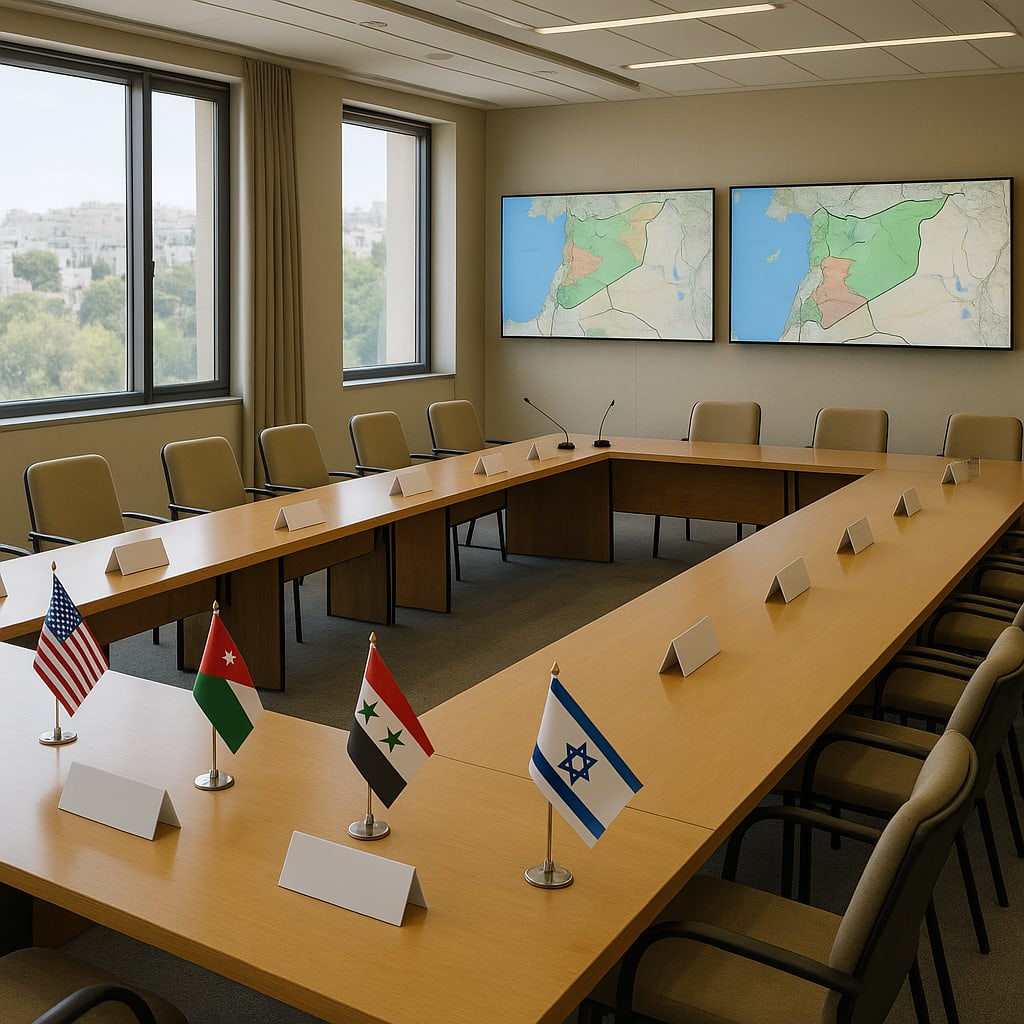
Syria and Israel hold US-mediated talks in Jordan after Abu al-Duhur strike
Narrative Snapshot
Across regional and international outlets, there is broad agreement that high-level, US-mediated talks took place in Jordan between a Syrian delegation led by Foreign Minister Asaad al-Shaibani and an Israeli team that included Mossad chief Roman Gofman, with the immediate agenda centered on de-escalation and insulating Syria from Israel–Turkey tensions after Israel’s strike on Abu al-Duhur airbase. Multiple outlets emphasize that the meeting marked the first formal engagement in months and sits within a longer track aimed at reviving structured security understandings.
Israeli reporting underscores process control and deterrence. Haaretz cites Defense Minister Israel Katz saying Israel warned Syria before the strike and framed the action as preempting Turkish “intentions,” while the Times of Israel reports Israel has laid down “red lines” and that Washington is pressing for a fuller renewal of direct Jerusalem–Damascus talks.
Syrian and aligned narratives stress sovereignty and limits to concessions. Syrian state media, reported by Haaretz and picked up by TASS, conveyed Damascus’ insistence on the right to develop its military and retain foreign alliances, alongside demands to halt Israeli strikes and roll back to positions held before December 2024. SANA also highlighted Damascus’ reaffirmation that the Golan Heights are occupied Syrian territory and that its final status is not up for near-term discussion, as relayed by Middle East Eye.
Several outlets situate the talks within an emerging deconfliction architecture. The Hindu and the South China Morning Post note the sides agreed in January to establish an intelligence-sharing mechanism as they moved toward a security agreement; Middle East Eye reports the Jordan meeting examined a US-supervised “special operations room” in Jordan to prevent confrontations, including scenarios involving Turkey. Al-Quds News frames the meeting as part of efforts to revive a “complex security agreement” between Damascus and Israel.
What Happened
US-mediated talks were held in Jordan on Sunday between Syria’s foreign minister, Asaad al-Shaibani, and an Israeli delegation including Mossad chief Roman Gofman, according to SANA reporting cited by Middle East Eye and confirmed across multiple outlets. The meeting followed Israel’s strike on Syria’s disused Abu al-Duhur airbase; Israel’s defense minister said Israel had warned Syria in advance and acted on intelligence about Turkish “intentions,” Haaretz reported. The agenda included de-escalation and keeping Syria out of Israel–Turkey frictions, as reported by France24, Al Jazeera, the South China Morning Post, and the Bangkok Post. Middle East Eye, citing diplomatic and Syrian government sources, said the sides discussed creating a US-supervised “special operations room” in Jordan to prevent confrontations. Syrian state media conveyed that Damascus would not limit its military buildup or alliances, sought an end to Israeli strikes and a withdrawal to pre-December 2024 lines, and reaffirmed the Golan’s occupied status, per Haaretz and SANA.
Why It Matters
The talks connect to an ongoing attempt to institutionalize Syria–Israel deconfliction after years of episodic strikes and ad hoc channels. The Hindu and the South China Morning Post point to a January understanding on an intelligence-sharing mechanism as the basis for a prospective security agreement; discussion of a US-supervised operations room in Jordan, reported by Middle East Eye, signals interest in operational guardrails that extend to scenarios involving Turkey. For Washington, outlets including the Times of Israel and Fox News depict a mediation role that must balance tensions between two close partners, Israel and NATO-member Turkey, while maintaining a channel to Damascus. Syrian assertions—reported by Haaretz and SANA—about retaining foreign alliances and military development, alongside demands for an end to strikes and pullbacks to pre-December 2024 positions, highlight the limits of what a security deal could cover. The Golan’s status, flagged by SANA, remains off the table for now, constraining any broader political track.
Diverging Narratives
Israel and Syria frame both the trigger for and the scope of talks differently. Haaretz quotes Israel’s defense minister saying the Abu al-Duhur strike was preceded by a warning to Damascus and aimed at thwarting Turkish “intentions,” a rationale echoed in France24’s account that the action sought to prevent a Turkish deployment. By contrast, Syrian messaging reported by multiple outlets stresses de-escalation and non-involvement in Israel–Turkey tensions; Fox News adds that Damascus denied plans for a permanent Turkish base or deployment, while acknowledging Turkish officers had visited the facility for training and exchanges. The Times of Israel highlights Israeli “red lines” for any diplomatic agreement and a US push to resume direct talks, whereas Syrian state media, relayed by Haaretz and TASS, asserts that Damascus will not curtail its military buildup or foreign ties, and seeks an end to Israeli strikes plus a withdrawal to lines held before December 2024. Middle East Eye reports Damascus also reaffirmed that the Golan Heights are occupied Syrian territory and that determining their final status is premature, indicating that territorial issues are cordoned off from the current security-focused track.
What Happens Next
Three decision points emerge from the reporting. First is whether the proposed US-supervised “special operations room” in Jordan materializes; its creation, reported by Middle East Eye, would institutionalize real-time deconfliction, including around Turkey-related scenarios, while failure to establish it would leave existing ad hoc channels in place. Second is the scope and format of talks: the Times of Israel reports US pressure to resume direct Jerusalem–Damascus negotiations; movement here would signal a shift from intermittent contacts toward a structured security dialogue anchored in the January intelligence-sharing understanding noted by The Hindu and the South China Morning Post. Third are substantive trade-offs: Syrian positions reported by Haaretz and SANA—no limits on military development or alliances and demands for halting strikes and rolling back to pre-December 2024 lines—will meet Israeli “red lines” referenced by the Times of Israel. Analysts should watch for public signaling on these points from SANA, Israeli ministries, and Washington, and for any renewed Turkish activity around Abu al-Duhur flagged by Israeli or Syrian officials.