
New Zealand proposes under-16 social media ban with fines up to 10% of platforms’ global revenue
Narrative Snapshot
Across outlets, the core picture is consistent: the government is advancing a measure to bar under-16s from social media, backed by substantial penalties and explicit age-verification requirements. Multiple reports detail the same compliance toolkit—platforms would need to take “reasonable steps” using existing account data, facial technology, and digital identity documents—and the same sanction ceiling of up to 10% of a platform’s global revenue for violations, as noted by the South China Morning Post, the Guardian, and the Japan Times.
Coverage diverges on procedural footing and political headwinds. Some describe the bill as proposed or set to be introduced, while others say legislation was presented or introduced on Monday, creating ambiguity around the exact legislative stage. Political viability is treated unevenly: Deutsche Welle notes opposition within the ruling coalition, and BBC News reports MPs who argue a ban will not work, while outlets such as the Hindu and the Toronto Star foreground the government’s harm-based rationale, including mental health, sleep, and education impacts. Several publications situate the move in a wider trend—following Australia’s lead and joining other countries seeking restrictions—framing the stakes as both domestic policy and part of an emergent international pattern.
What Happened
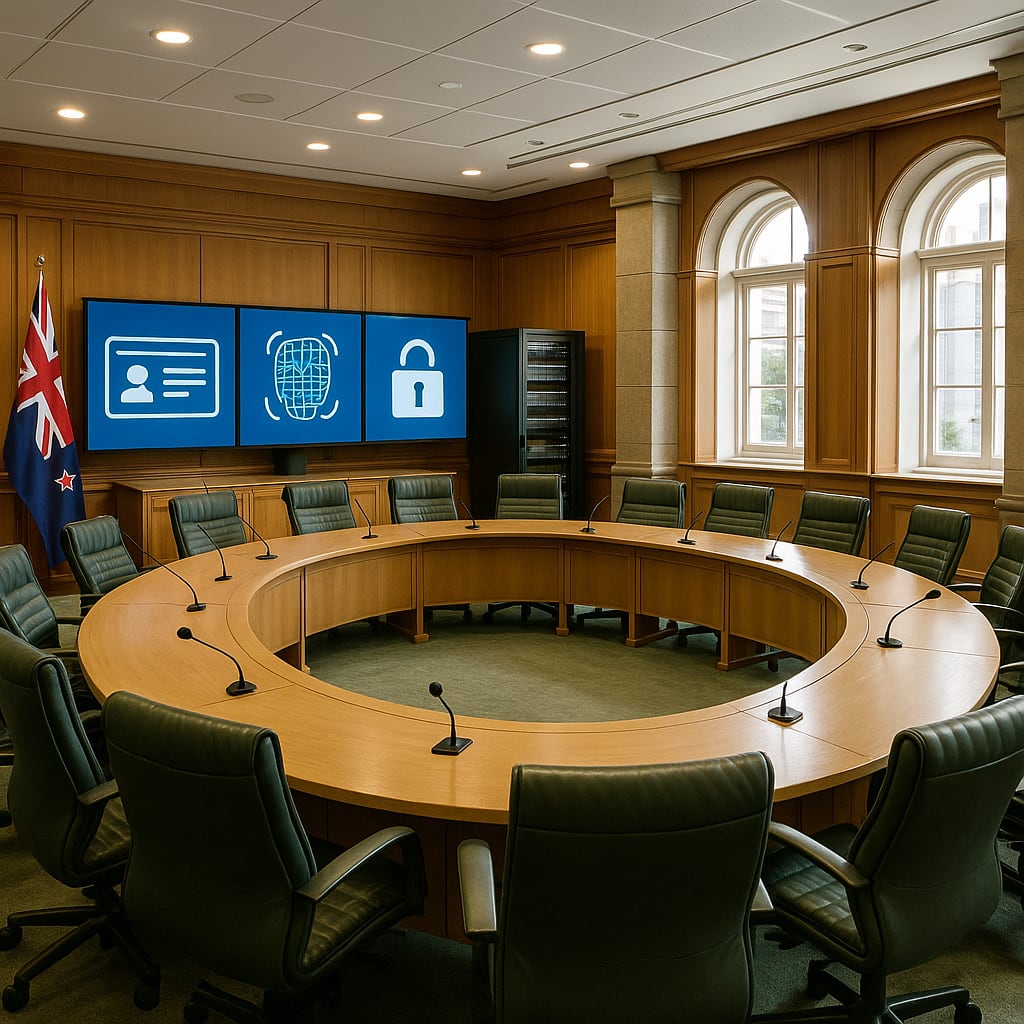
On August 24, 2026, Prime Minister Christopher Luxon said his party would introduce a bill to bar children under 16 from using social media. Reports align on the bill’s enforcement architecture: platforms would be required to take reasonable steps to verify users’ ages by drawing on existing account information, facial technology, and digital identity documents; non-compliance could trigger fines of up to 10% of a platform’s global revenue, according to the South China Morning Post and the Guardian, with similar verification details carried by the Japan Times. Outlets vary on procedural description—several say the government would introduce the bill, while others report that legislation was presented or introduced the same day. The rationale emphasized in multiple reports is harm to young people, including exposure to harmful content, addictive design, and effects on mental health, sleep, and education, as reported by the Hindu and the Toronto Star. Deutsche Welle and BBC News note early opposition, including within the ruling coalition and from MPs skeptical a ban will work. Several outlets place the move alongside steps in Australia and other countries.
Why It Matters
If enacted with fines tied to global revenue, the measure would set a high-stakes compliance baseline for multinational platforms operating in a small market, leveraging financial exposure beyond domestic turnover, as reported by the South China Morning Post and the Guardian. The age-verification mandate, described across outlets as relying on account data, facial technology, and digital identity documents, would require concrete, testable controls rather than general commitments, signaling an implementation-focused approach. Framed by Deutsche Welle, Folha de S.Paulo, and the Bangkok Post as following Australia and aligning with a broader set of countries considering restrictions, the bill reflects diffusion of youth online-safety policies across jurisdictions. Early opposition within the governing coalition and skepticism among MPs, reported by Deutsche Welle and BBC News, underscores that legislative capacity and coalition management will shape whether New Zealand adds binding force to this trend, or contributes to a record of contested and potentially short-lived regulatory experiments.
Diverging Narratives
Two frames dominate. One centers on child protection: Prime Minister Luxon’s case for action cites “harm being done to a generation,” and outlets highlight concerns over harmful content, addictive technology, and impacts on mental health, sleep, and education, as reported by the Toronto Star and the Hindu. The other foregrounds feasibility and effectiveness: BBC News reports MPs who believe a ban will not work, and Deutsche Welle points to opposition within the ruling coalition, suggesting doubts about enforceability and political durability. A second divergence concerns the measure’s procedural status. While several outlets say the government would introduce a bill, others report it was presented or introduced on Monday, leaving the exact stage and text subject to clarification as parliamentary processes unfold. Finally, coverage emphasizes specific enforcement mechanisms—age checks via facial technology, digital IDs, and existing account data—indicating a concrete compliance design; however, outlets differ in whether they primarily treat these as technical requirements or situate them within broader political and international contexts.
What Happens Next
The first decision point is procedural clarity: whether the government formally tables the bill and how its text codifies “reasonable steps” for age verification and the calculation of fines, given differing reports on whether it has been introduced or presented. The second is coalition alignment: Deutsche Welle’s reporting of internal opposition and BBC News’s coverage of MPs’ skepticism point to potential amendments, dilution, or obstacles to passage if dissent hardens; conversely, consolidated support would move the proposal into committee scrutiny and floor votes. A third concerns policy positioning relative to other countries: outlets referencing Australia and broader international moves suggest policymakers may benchmark provisions or sequencing to external examples. Analysts should watch parliamentary statements from coalition partners, the publication of any bill text clarifying verification modalities and penalty design, and whether government communications continue to emphasize international alignment or pivot toward domestic tailoring in response to criticism.