
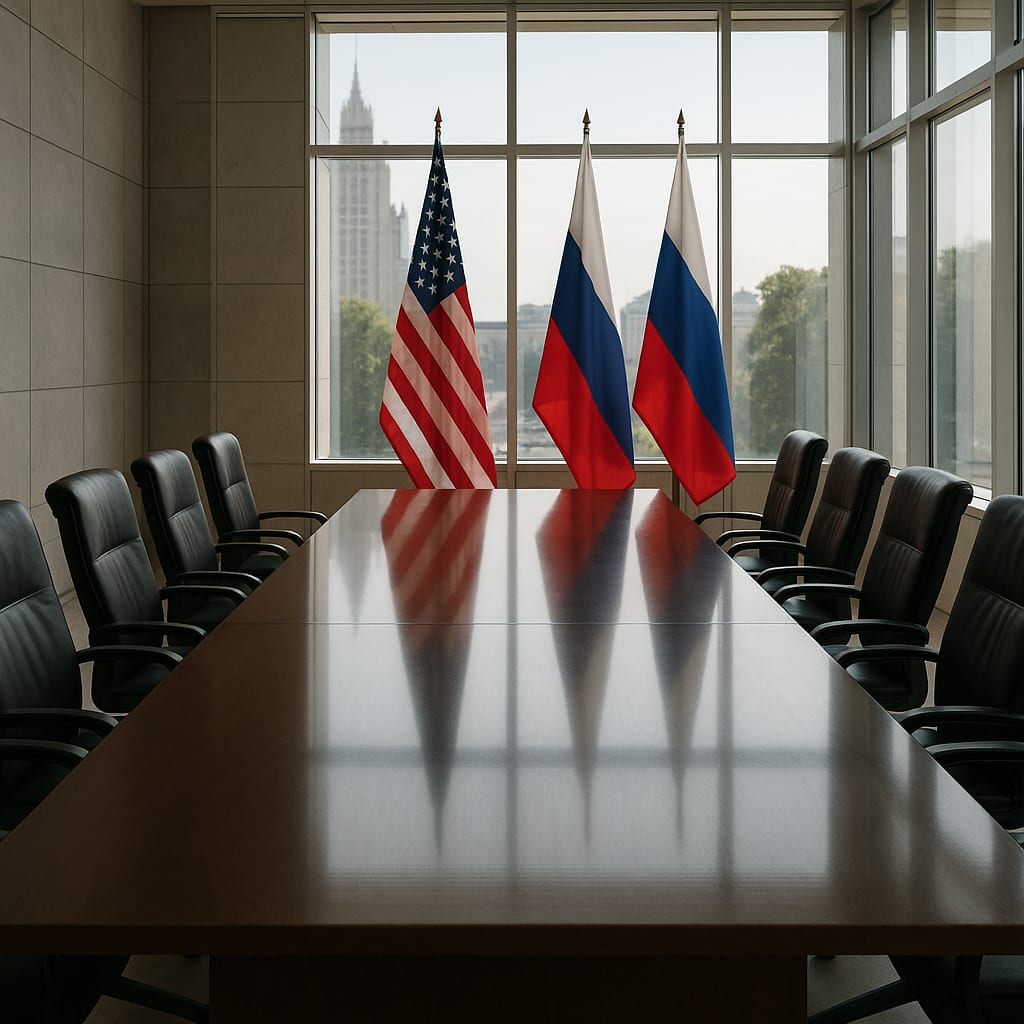
US media report CIA Director John Ratcliffe made an unannounced visit to Moscow for meetings
Narrative Snapshot
Across outlets, there is broad agreement that John Ratcliffe traveled to Moscow on August 25 for meetings, with multiple reports describing it as his first known trip to Russia as CIA director and the first known visit by a U.S. spy chief to the Russian capital since William Burns in November 2021. European and North American coverage leans on verifiable indicators: flight-tracking data showing a U.S. military aircraft arriving at Vnukovo via Latvia and visual evidence of a U.S. diplomatic motorcade in Moscow.
Where outlets diverge is in framing the purpose and implications. Russian official messaging, relayed through TASS and echoed by Ukrainian outlets, emphasizes routine “contacts between security services” and clarifies that President Vladimir Putin did not meet Ratcliffe. Several Western and Asian publications connect the trip to stalled U.S.-brokered efforts on the Ukraine war. RFE/RL additionally situates it against tensions over Russia’s ties with Iran, while some coverage in Latin America raises a detainee-related angle. Italian papers pair the event with historical context on spy diplomacy, with one outlet positing hypotheses ranging from deterrent signaling to exploratory truce discussions.
A second axis of contrast concerns attribution and confirmation. Many reports rely on unnamed U.S. officials or media confirmations, and some note the absence of formal readouts from Washington or Moscow. Meanwhile, a Russian state outlet amplified a domestic U.S. political reaction praising Ratcliffe’s efforts, signaling a parallel narrative that highlights the initiative without detailing substance.
What Happened
U.S. media reported that CIA Director John Ratcliffe made an unannounced visit to Moscow on August 25 for meetings with Russian officials. BBC News and other outlets cited flight-tracking data indicating a U.S. military aircraft flew from the United States to Russia via Latvia, landing at Vnukovo Airport, with reports of a U.S. diplomatic motorcade in the capital. Multiple outlets said this was Ratcliffe’s first known trip to Russia as CIA chief and the first known visit by a U.S. spy chief to Moscow since William Burns in November 2021. The Kremlin’s spokesperson told the Washington Post the visit involved “contacts between security services” and stated Putin did not meet Ratcliffe. Some outlets, including CGTN, noted neither government had officially confirmed details. Telesur reported the trip occurred within a single day. A Russian state outlet quoted a U.S. lawmaker praising Ratcliffe’s efforts.
Why It Matters
The visit underscores the persistence of intelligence-to-intelligence channels as an operational backstop in adversarial relationships. Italian and Asian coverage situates the trip within a Cold War–era tradition of “spy diplomacy” that continued after the Soviet Union’s collapse, pointing to past director-level engagements in 2016 and 2021. That this channel is active while U.S.-mediated efforts to end the Ukraine war have stalled suggests governments are still relying on security services to manage risk and communicate red lines even when formal diplomatic tracks are constrained. Several outlets link the timing to ongoing conflict dynamics in Europe and regional entanglements—in RFE/RL’s framing, intensified tensions over Russia’s relationship with Iran—illustrating how intelligence dialogues often bundle cross-theater issues. The limited public attribution and absence of leader-level meetings, as reported by Ukrainian and Russian sources, indicate a calibrated, working-level approach that preserves flexibility while attempting to stabilize volatile files.
Diverging Narratives
The central uncertainty is purpose. The Kremlin’s explanation—“contacts between security services”—offers a generic rationale and confirms the absence of a Putin meeting, a point stressed by Ukrainian outlets. By contrast, several Western and Asian reports emphasize strategic context: U.S.-brokered talks over the Ukraine war are described as stalled, positioning the visit as a potential effort to re-energize or deconflict that track. RFE/RL adds an Iran dimension, framing the trip against heightened tensions over Moscow’s ties to Tehran. Telesur introduces a detainee angle by citing speculation around a possible release of a U.S. citizen, while not providing corroborating detail from other outlets. One Italian paper advances hypotheses about deterrent messaging toward NATO and exploratory truce discussions, which remain unconfirmed. Another Italian outlet and multiple Asian publications anchor the story in precedent, highlighting the 2021 Burns visit and earlier cases, thereby treating Ratcliffe’s travel primarily as continuity in intelligence diplomacy rather than a singular policy inflection.
What Happens Next
Analysts should watch for any on-the-record confirmation or readout from Washington or Moscow that clarifies interlocutors and agenda, as several outlets noted the absence of formal statements. Movement on the Ukraine track—such as references to U.S.-mediated engagement, renewed deconfliction mechanisms, or shifts in public negotiating positions—would align with framing in France24, CGTN, and RFE/RL that tied the visit to stalled talks. Any signals regarding Russia-Iran dynamics picked up by RFE/RL could indicate the intelligence channel was used to address cross-regional concerns. Given Telesur’s detainee-related speculation, concrete developments in that case would be a relevant indicator even if unconfirmed elsewhere. Finally, additional director-level or counterpart visits, highlighted by Corriere della Sera’s discussion of enduring “spy diplomacy,” would suggest sustained use of this backchannel beyond a single-touch engagement.