
Governments test new climate-resilience levers: UK household preparedness, French insurance reform calls, and Asia-Pacific health funding
Narrative Snapshot
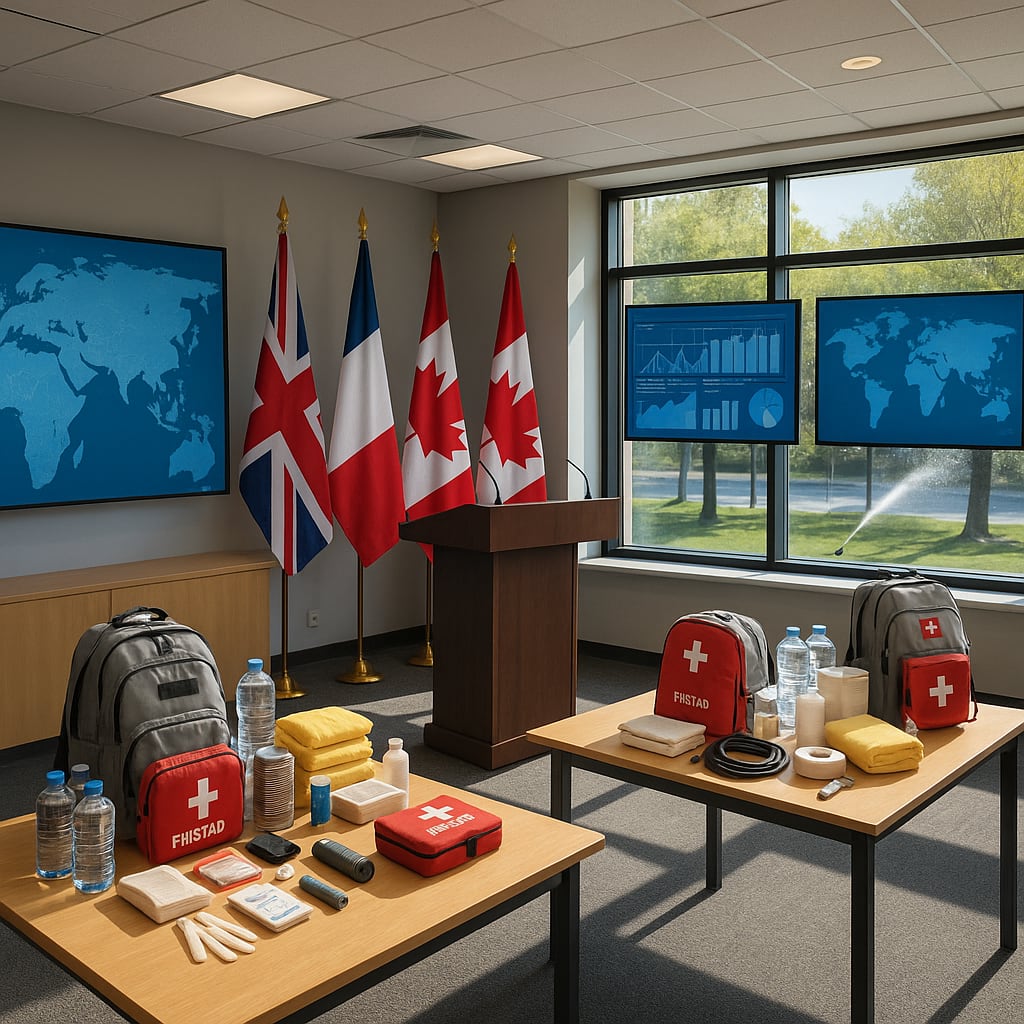
Across these reports, the throughline is less about scientific dispute than about which institutions should carry the next tranche of climate risk. The Guardian describes a UK government campaign to steer responsibility down to the household level with stockpiles of food and bottled water, framed alongside threats from hostile states. In France, two Le Monde op-eds push in the other direction: politicize disasters and overhaul the state-backed natural catastrophe insurance regime to better compensate victims as events intensify. Those pieces converge on the state as the primary risk-bearer and coordinator.
Coverage from South Asia and the Asia-Pacific highlights a different axis: vulnerability and locally driven fixes. BBC News reports activists’ warnings that rising heat and water scarcity are exacerbating entrenched caste inequalities in India’s Bundelkhand. A Toronto Star item on the Nexa Lighthouse initiative positions climate-driven health threats as an immediate operational challenge, with Grand Challenges Canada and AVPN channeling finance to locally led solutions across Asia and the Pacific.
Two further lenses widen the policy aperture. Deutsche Welle treats urban trees as critical cooling infrastructure now endangered by record heat and drought, with experts outlining how cities can protect and redesign their urban forests. La Repubblica’s interview with economist Massimo Tavoni foregrounds macroeconomic drag, citing heat’s hit to construction and agriculture and tallying damages of €50 billion. Framing choices also matter: a Toronto Star piece, invoking the catastrophic opening of Kim Stanley Robinson’s novel and warning that “bigger shocks are on the way,” contrasts with Clarin’s reminder of the UK’s 1976 “Minister of the Drought,” whose public exhortations were swiftly undercut by rain—a caution about policy signaling in highly uncertain conditions.
What Happened
In late August 2026, outlets tracked a set of climate-resilience moves and arguments across sectors and regions. The Guardian reported that the UK Cabinet Office will launch a national resilience campaign advising citizens to prepare for emergencies, including stocking tinned food and bottled water, to free up resources for the most vulnerable and address risks from extreme weather and hostile states. In France, Le Monde carried two op-eds: environmental historian Judith Rainhorn urged “politicizing disasters” amid repeated heat waves and fires, while Green Party deputy Sandrine Rousseau warned that increasing climate extremes threaten to strain France’s natural catastrophe insurance regime and called for reform to better compensate victims. The Toronto Star covered the launch of Nexa Lighthouse by Grand Challenges Canada and AVPN to fund locally led innovations addressing climate-driven health threats in Asia and the Pacific. BBC News highlighted activist claims that intensifying heat and water scarcity are deepening caste inequalities in India’s Bundelkhand. Deutsche Welle featured experts on safeguarding heat-stressed urban trees. La Repubblica relayed Tavoni’s assessment that heat slows economic growth, with construction and agriculture particularly hit and damages amounting to €50 billion. Clarin revisited the UK’s 1976 Drought Ministry episode. Another Toronto Star piece underscored the prospect of escalating climate shocks, invoking a catastrophic heatwave scenario from literature to frame current risk.
Why It Matters
The coverage points to a redistribution of climate risk across public, private, and household balance sheets. The UK’s preparedness campaign, as reported by the Guardian, shifts part of crisis management onto citizens to preserve capacity for the most vulnerable, aligning civil contingencies with national security framing. In France, both Le Monde op-eds argue that state-centered instruments—from the politics of disaster response to the architecture of catastrophe insurance—are not keeping pace with the frequency and intensity of events, implying fiscal and regulatory upgrades ahead. Deutsche Welle’s focus on urban trees recasts city greening as essential infrastructure that now needs climate-proofing, a practical test of municipal capacity.
Simultaneously, the Toronto Star’s Nexa Lighthouse report situates climate-health impacts as a near-term operational burden in Asia and the Pacific, requiring tailored, locally governed interventions and new financing channels. BBC News’s Bundelkhand reporting elevates distributional risk: without targeted policy, heat and water stress can aggravate entrenched social hierarchies. La Repubblica’s economic framing emphasizes the macro stakes, with sectoral losses and a quantified damage estimate functioning as a proxy for the growth headwinds decision-makers must internalize.
Diverging Narratives
The primary cleavage is over locus of responsibility. The Guardian’s account of UK guidance to stockpile essentials points to decentralizing resilience to households, with the added overlay of “hostile states” that merges climate preparedness with national security. By contrast, Le Monde’s op-eds argue for more—not less—centralization: politicizing disasters to drive policy and reforming a national insurance regime they say is already under strain from rising claims. These are not mutually exclusive, but they reflect different default settings for who carries residual risk.
Regional emphasis diverges as well. BBC News surfaces activists in Bundelkhand who center social justice, arguing that climate stress interacts with caste to worsen inequality, whereas La Repubblica distills heat into macroeconomic costs, citing €50 billion in damages and sectoral slowdowns. Deutsche Welle takes a technical adaptation view, focusing on specific assets—urban trees—and expert guidance on their protection. The Toronto Star’s Nexa Lighthouse piece adds a programmatic funding lens aimed at local health solutions, a contrast with the high-level French debates over insurance architecture. Finally, narrative framing varies: the Toronto Star’s invocation of catastrophic scenarios underscores scale and urgency, while Clarin’s 1976 UK anecdote underscores the volatility of public messaging when weather turns quickly, a reminder that policy communications carry political risk in fast-changing conditions.
What Happens Next
Several decision points will shape trajectories flagged here. In the UK, analysts should watch the Cabinet Office’s final campaign materials: the specificity of stockpiling guidance reported by the Guardian, how prominently “hostile states” are featured alongside climate hazards, and any mechanisms to ensure the stated aim of freeing resources for the most vulnerable. In France, the test is whether calls in Le Monde translate into government proposals to adjust catastrophe insurance coverage, premiums, or public backstops, and whether broader “politicization” yields concrete disaster governance reforms.
On implementation, the Toronto Star’s Nexa Lighthouse announcement sets a baseline; subsequent grant portfolios, geographies, and outcome metrics will indicate whether locally led health interventions can scale across Asia and the Pacific. Municipal follow-through is another hinge: Deutsche Welle’s expert recommendations imply budgeted programs for drought-resilient urban forests; city adoption and maintenance practices will be the signal to track. In India’s Bundelkhand, BBC News’s account spotlights inequality risks; observers can monitor whether state or local authorities introduce targeted water access or heat relief measures for marginalized groups. Economic indicators tied to heat-exposed sectors highlighted by La Repubblica will show how quickly losses transmit into policy responses.