
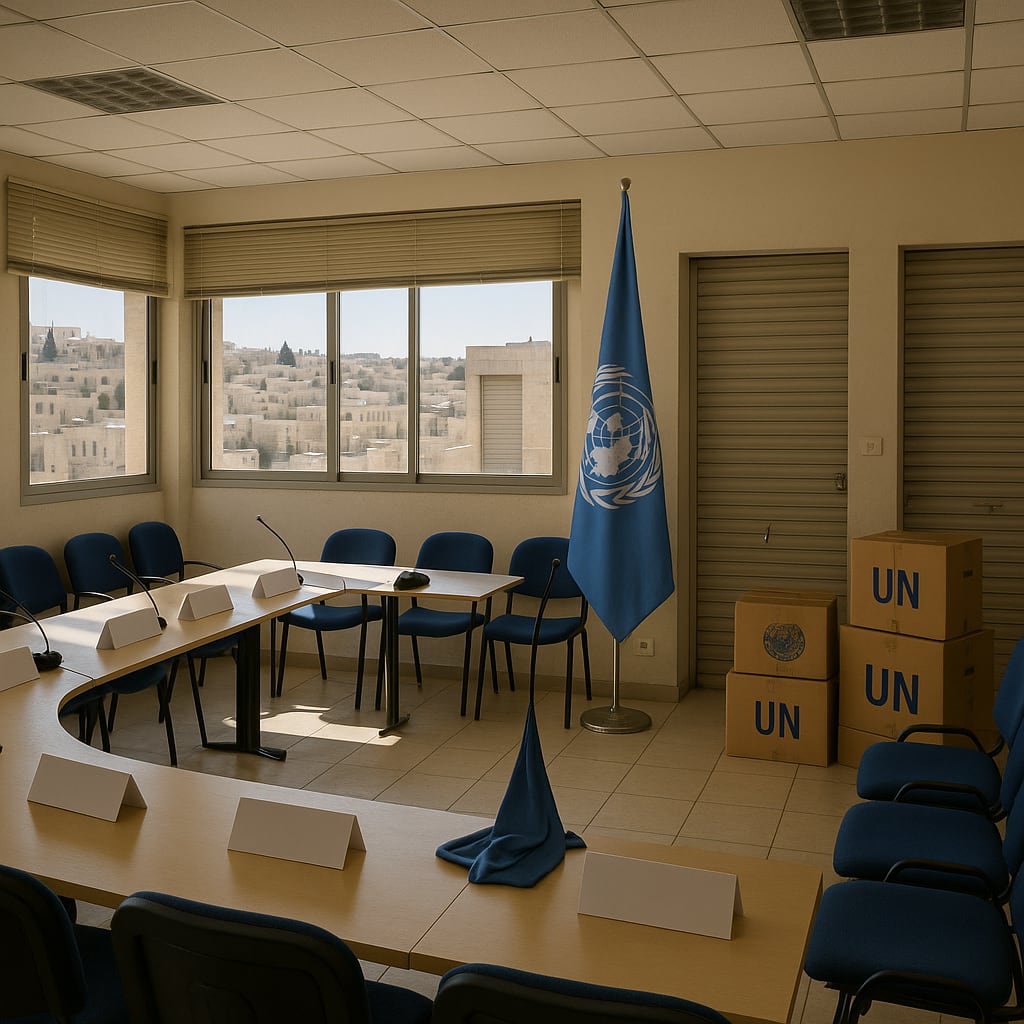
Israel Seizes UNRWA Qalandiya Training Center in East Jerusalem; UN Cites Inviolability
Narrative Snapshot
Across outlets, there is consensus that Israeli forces entered and took control of UNRWA’s Qalandiya vocational training facility in the Kafr Aqab/Qalandiya area of occupied East Jerusalem, with National Security Minister Itamar Ben-Gvir visibly leading and celebrating the action. Israeli and international sources alike note the government’s declared intent to shut the site, while UN and regional coverage foreground the claim that the premises are protected under UN immunities. Where accounts diverge is in legal framing and scope: Israeli outlets emphasize allegations of UNRWA links to terrorism and a disputed ownership claim, while UN and Middle East–based reporting stresses the inviolability of UN facilities and the humanitarian role of the center.
A second axis of divergence is factual emphasis. Some reporting focuses on symbolic elements—the Israeli flag raised on the campus and Ben-Gvir filming from the director’s desk—while others highlight operational impacts, including the expulsion of staff, disruption to vocational programs serving refugees, and reports of a Palestinian minor being shot during the operation. There is also variation on the breadth of the sweep, with several accounts describing simultaneous actions at more than one UNRWA site.
What Happened
On 25 August, Israeli police raided and seized UNRWA’s Qalandiya Vocational Training Institute in Kafr Aqab, described by multiple outlets as the agency’s last remaining facility in East Jerusalem. National Security Minister Itamar Ben-Gvir joined the operation, accompanied by a crew from pro-government Channel 14, and said the site would be permanently closed. Staff were expelled, questioned, and ordered not to return, according to Palestinian and regional reporting. Video published by Al Jazeera English shows Israeli forces raising the Israeli flag at the facility, and a separate Al Jazeera report shows a Palestinian boy being shot during the raid. UNRWA asserted that the site is protected by UN privileges and immunities. Prime Minister Benjamin Netanyahu said Israel would act against UNRWA “with all means at its disposal.” Israeli media also cited a municipal claim that the land has been owned by the Jewish Agency since 1937, which UNRWA disputes.
Why It Matters
This action directly tests the UN system’s privileges and immunities in a highly sensitive, contested jurisdiction. UN leadership underscored that UNRWA premises are United Nations property and are “inviolable and immune from any form of interference,” framing the episode as a challenge to core international norms that enable humanitarian operations. For service delivery, the seizure disrupts vocational education that Japan Times reports serves hundreds annually, and Middle East Eye describes a broader network of centers supporting thousands of Palestinian refugees, indicating a material contraction of humanitarian space in and around East Jerusalem. Politically, the operation aligns with Israeli government statements portraying UNRWA as tied to terrorism and signals a willingness—voiced by the prime minister and enacted by the national security minister—to curtail or close UNRWA activity. Regionally and multilaterally, condemnations by the UN secretary-general and the OIC foreshadow diplomatic friction over both legal protections and access to aid.
Diverging Narratives
Israeli authorities frame the move as lawful and necessary. The Times of Israel reports the government’s claim that the site sits on property owned by the Jewish Agency since 1937 and cites assertions that UNRWA has been “involved in terrorism,” a point also reflected in Telesur’s account of Netanyahu’s justification. Ben-Gvir’s on-site statements and video posts underline a political commitment to eject UNRWA from the area and close the facility.
UN and regional outlets emphasize legal protections and humanitarian impact. Haaretz notes UNRWA’s position that the premises are protected by international law, and Middle East Eye relays the UN secretary-general’s view that UNRWA sites are UN premises that are inviolable and that the raid deprives youth of vocational education. The OIC condemned the takeover as an escalation targeting refugees. IRNA quotes a Hamas official calling the destruction of a UNRWA building a war crime; other outlets, however, describe a raid and seizure rather than destruction, indicating inconsistency in characterizing physical damage. There is also uneven reporting on scope: Middle East Eye says forces stormed centers in both Qalandiya and Kufr Aqab serving around 16,000 refugees, while several outlets focus solely on the Qalandiya campus.
What Happens Next
Three decision points emerge from reported positions. First, whether Israel formalizes closure and exclusion at Qalandiya: Ben-Gvir pledged permanent shutdown and staff were ordered not to return, so further administrative or legal steps to cement control would signal a sustained policy. Second, how the UN responds to asserted inviolability: the secretary-general’s condemnation and UNRWA’s legal framing point to potential diplomatic or legal avenues; watch for formal UN communications, requests for access, or Security Council engagement. Third, the breadth of Israeli actions against UNRWA operations: Middle East Eye reports simultaneous raids at more than one site and suggests potential intensification under current political pressures; additional moves against other UNRWA facilities or services would confirm a wider campaign. Indicators include Israeli statements on property title, municipal or court actions, UNRWA’s operational updates on service disruptions, and international bloc responses following the OIC’s call for protection.