
US Supreme Court allows Trump administration to advance mail‑in voting restrictions ahead of midterms
Narrative Snapshot
Across outlets, there is broad agreement that the ruling opens a legal and administrative lane for the White House to press ahead while leaving significant uncertainty about scope and timing. International and U.S. coverage alike emphasize that the decision is preliminary and preserves space for further litigation, with several reports underscoring the practical difficulty of making large changes before November, given that ballots are already being prepared in many states.
Framing diverges sharply. Fox News and several Italian outlets present a clear political victory that can be implemented immediately, citing USPS and Justice Department statements of intent and characterizing the move as an “election integrity” measure and Republican win. The Guardian, CBC, and the New York Times emphasize ongoing injunctions, continued lower‑court challenges, and the risk of voter confusion rather than concrete procedural change. French and Italian coverage situate the ruling within an unresolved constitutional question: how far a president can go in altering election administration, with the Court’s order described as provisional and time pressures mounting.
Substantively, some outlets detail the policy mechanics—a federal “state citizenship list,” voter‑eligibility lists shared with USPS, and barcode requirements—while others focus on the political context of tight midterm contests and Trump’s longstanding criticism of mail voting. Several reports underscore that the ruling may not decide what happens in November; instead, it shifts leverage to federal agencies and accelerates parallel disputes over ballot custody and audits already unfolding in the states.
What Happened
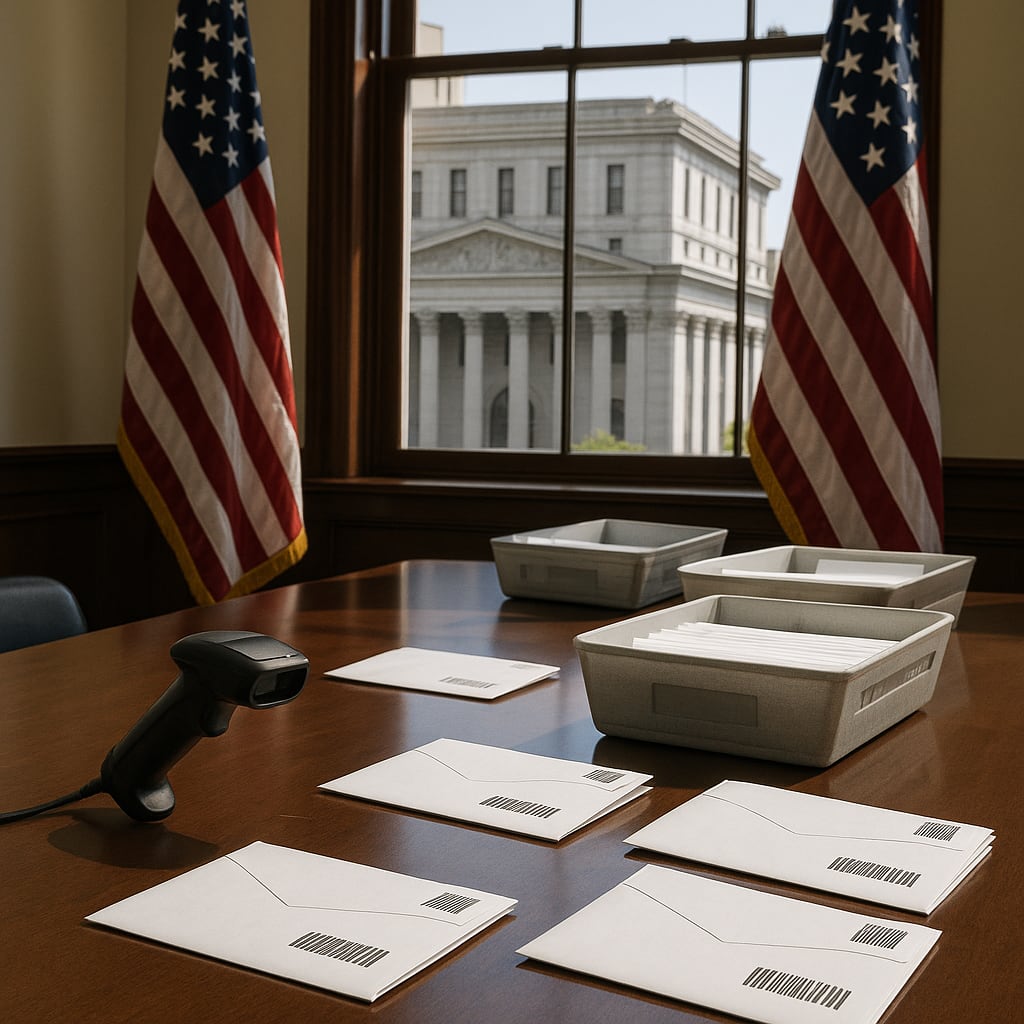
The U.S. Supreme Court on August 24 granted the Trump administration’s emergency appeal and lifted a lower‑court injunction blocking its March 31 executive order to restrict mail‑in voting. Multiple outlets report the decision was 6–3, with Justices Sonia Sotomayor, Elena Kagan, and Ketanji Brown Jackson dissenting. The order requires creation of a federal list of eligible voters for mail balloting and directs that mail ballots be sent only to people on that list; it also instructs the Justice Department to prioritize cases against officials who issue ballots to ineligible voters. Ahead of the ruling, USPS published a rule aligning with the order, requiring states to notify the agency 90 days before an election, submit voter lists 60 days prior, and include serialized barcodes on outbound and return ballots. While one injunction was lifted, reporting notes other challenges remain, and a federal judge has allowed USPS’s efforts “for now” amid ongoing lawsuits by Democratic state attorneys general.
Why It Matters
The ruling tests the balance of federal and state authority in U.S. election administration. Outlets in Europe and North America highlight that the Court’s provisional green light could expand executive influence over voter eligibility data flows and postal operations, areas traditionally implemented by states even when governed by federal statutes. USPS’s new compliance and barcode requirements signal an operational turn with consequences for election logistics and intergovernmental coordination, particularly under compressed timelines.
Several sources connect the decision to broader dynamics of institutional trust and electoral norms. By enabling rapid policy shifts close to an election while litigation continues, the ruling risks administrative fragmentation and voter uncertainty that could persist beyond November. For decision‑makers—state officials, federal agencies, and courts—the immediate implications center on data‑sharing obligations, enforcement priorities, and the precedence this sets for future executive interventions in voting modalities.
Diverging Narratives
One narrative, prominent in Fox News and echoed by ANSA and Japan Times, frames the decision as a straightforward victory enabling immediate enforcement. Fox reports that USPS and DOJ would “immediately implement” the revised restrictions and notes the injunction had blocked the order in 23 states; ANSA characterizes Democratic states’ lawsuit as annulled. This camp emphasizes election integrity and administrative alignment behind the president’s order.
A contrasting narrative, seen in the Guardian, CBC, the New York Times, and Clarin, stresses legal and practical constraints. These reports underline that another injunction remains, additional challenges are expected, and operational hurdles—such as ballots already printed—make sweeping changes before November unlikely. The New York Times highlights the prospect of voter confusion from overlapping legal signals while lower courts continue to hear cases.
There are also differences in policy detail. The Guardian and La Repubblica focus on a federally driven eligible‑voter list and DOJ enforcement posture, while Fox details USPS’s rulemaking on state notification, voter lists, and barcode requirements. Al Jazeera situates the move within Trump’s long‑standing opposition to mail voting, underscoring the political continuity rather than the administrative specifics. Italian and French coverage foreground the unresolved constitutional question of presidential reach over election rules under tight timelines.
What Happens Next
Key decision points sit with lower courts, federal agencies, and states. Ongoing suits by Democratic attorneys general could still block elements of the order and USPS rules; a federal judge’s “for now” posture on USPS efforts signals that subsequent findings could tighten or halt implementation. Analysts should watch for rulings affecting the remaining injunction noted by the Guardian and the pace of filings in the spate of challenges described by the New York Times.
On the administrative side, USPS’s published timelines—90‑day notification and 60‑day voter list submissions—collide with the election calendar. State responses will indicate whether compliance is feasible this cycle, especially where Clarin reports ballots are already printed. Fox’s reporting on related disputes over ballot custody in California reflects an enforcement climate that could shape how aggressively federal and local actors proceed. Signals to track include USPS operational guidance, DOJ enforcement actions prioritized under the order, and any Supreme Court movement from provisional relief to merits review.