
Meta settles with US states over teen addiction claims, agrees to multibillion-dollar payout and new youth safeguards
Narrative Snapshot
Across outlets, there is broad agreement that Meta has struck a multibillion-dollar deal with US state attorneys general that trades a large financial payment for new restrictions on teen use of Facebook and Instagram. The reported size varies: France24, the South China Morning Post, the Toronto Star, and multiple US outlets describe a $17 billion framework; Al Jazeera and the Bangkok Post cite $16.68–$16.7 billion; Le Monde, the Japan Times, and the Times of Israel place it at up to $18 billion, with the latter two also highlighting platform “guardrails” such as time limits. Deutsche Welle summarizes the core: billions in payments and usage limitations aimed at overuse.
Coverage diverges on scale and consequence. Le Monde emphasizes how the sum equates to roughly one month of Meta’s revenue, underscoring the company’s ability to absorb the hit. A Fox News analysis frames the agreement as a comparatively favorable outcome for Meta versus the risk it previously estimated at up to $1.4 trillion in penalties, and notes the company may not ultimately take a loss. RT similarly stresses the avoided exposure, the absence of a jury verdict, and that Mark Zuckerberg did not take the stand.
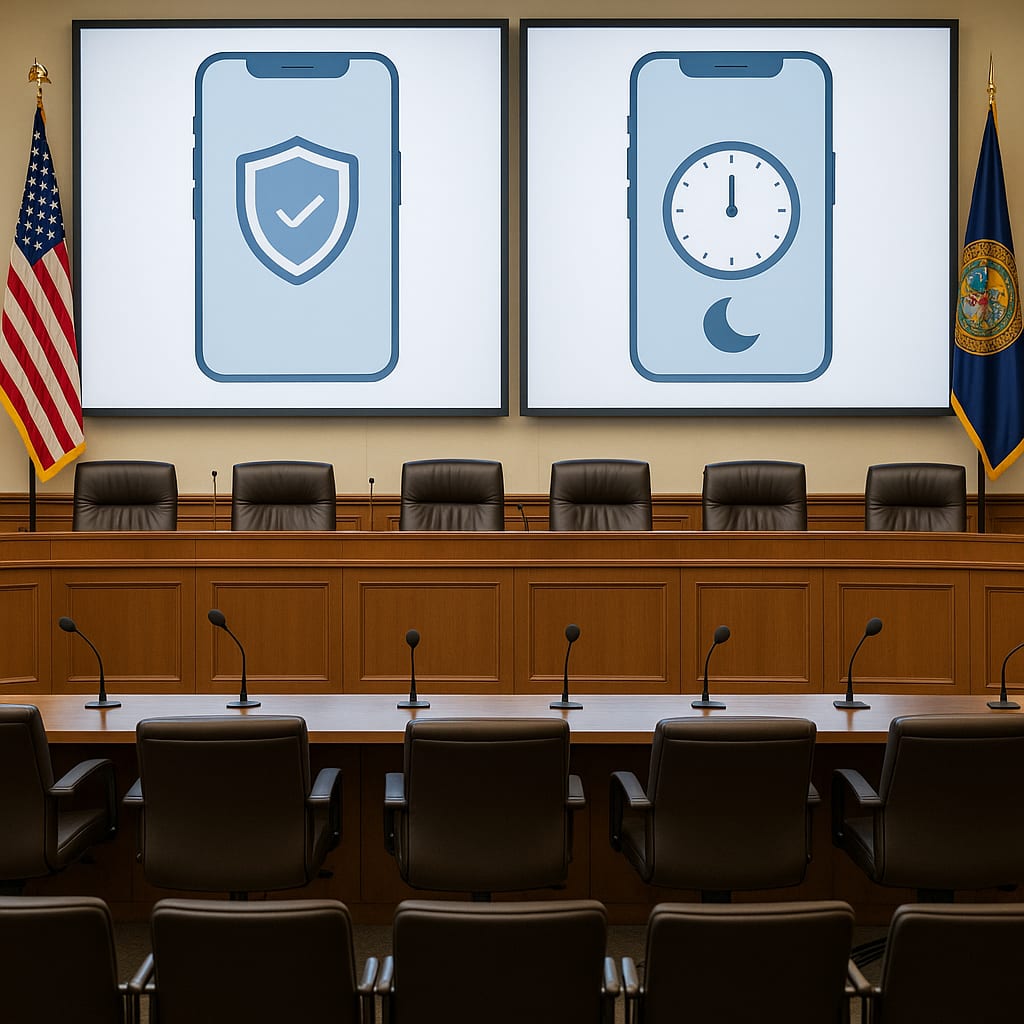
On substance, several outlets detail specific product commitments while others note gaps. The Times of Israel reports daily two-hour time limits for minors that only parents can disable; Fox News adds “nighttime blocks” from midnight to 6 a.m. and other changes, while the New York Times says Meta was short on some specifics even as it agreed to more time limits and enhanced protections. The Guardian features whistleblower Arturo Béjar’s criticism that the measures are insufficient, and Clarín highlights Instagram chief Adam Mosseri’s acknowledgment that few adolescents used existing safety features—underscoring the challenge of translating design changes into meaningful uptake.
Accounts also differ on the coalition’s breadth. France24, the South China Morning Post, and the Toronto Star report 47 states participating, while several outlets note the litigation originated with 29 states consolidated in a California federal trial. RT points to 52 attorneys general including territories and Washington, DC. Telesur English reports that Florida refused to join, with the state’s attorney general calling the payouts “peanuts” and vowing to proceed separately.
What Happened
Meta agreed to resolve a landmark set of state claims alleging Facebook and Instagram were deliberately engineered to addict minors, misled the public about harms, and collected children’s data in violation of privacy laws such as COPPA, according to France24, Telesur English, and RT. The deal ends a California federal trial that had consolidated suits from 29 states, a proceeding that the South China Morning Post said was expected to include CEO Mark Zuckerberg’s testimony before a jury—an outcome avoided by settlement. Reported financial terms range from roughly $16.68 billion to as much as $18 billion, alongside new youth safety measures including daily time caps and nighttime blocks described by Fox News and the Times of Israel, even as the New York Times notes some specifics remain undefined. Meta denies liability, Telesur English reports. Florida declined to join and will continue litigating, according to Telesur English.
Why It Matters
The settlement tests an emergent US legal strategy that frames “addictive” product design as a personal-injury harm—an approach the New York Times notes is also being pursued against TikTok, Snap, and YouTube. As a state-driven enforcement action, it signals growing attorney-general capacity to set platform norms without new federal statutes. The Fox News analysis explicitly likens the framework to tobacco and opioid settlements that paired payments with product and marketing constraints, suggesting a model for structuring digital platform remedies. Several outlets report that Meta’s changes encompass time limits and after-hours restrictions for teens, potentially establishing de facto standards competitors may face pressure to match; Fox News adds that some payments are contingent on whether peer platforms adopt parallel protections. Le Monde’s observation that the sum approximates a month of Meta revenue frames a key policy question: whether penalties of this scale deter harmful design or mainly codify operational guardrails state enforcers can audit.
Diverging Narratives
Two axes of disagreement recur. First is sufficiency and deterrence. The Guardian quotes whistleblower Arturo Béjar arguing that capped daily usage does not address underlying harms. Florida’s attorney general, cited by Telesur English, rejects the deal as inadequate and vows to pursue trial, while Le Monde’s “one month of revenue” framing and Fox News’s assessment that Meta may not incur a net loss both undercut the notion of strong deterrence. Second is clarity on scope and commitments. France24, the South China Morning Post, and the Toronto Star say 47 states are in the deal, while the litigation began with 29; RT expands the count by including territories and DC. On features, the Times of Israel and Fox News describe concrete time caps and midnight-to-6 a.m. blocks; the New York Times emphasizes that Meta’s commitments were light on implementation detail, and Clarín reports Adam Mosseri’s admission that few teens used existing safety tools—raising questions about real-world efficacy. RT and Fox News accentuate the scale of avoided liability, including Meta’s own prior estimate of potential exposure up to $1.4 trillion, while Clarín and Le Monde stress earlier threats of penalties near $200 billion—contrasting baselines that shape perceptions of whether the settlement represents accountability or risk management.
What Happens Next
Several decision points will determine trajectory. Court approval is required, as the Times of Israel notes; approval would finalize payment schedules and codify platform obligations. Implementation design bears watching: the New York Times reports vagueness around how time caps and “nighttime blocks” will function, while Fox News specifies a midnight–6 a.m. window and parent-controlled overrides; Clarín’s account of low adoption of safety tools by teens suggests monitoring actual uptake and enforcement. The coalition’s scope could still shift at the margins: France24 and others cite 47 states, while Telesur English notes Florida’s opt-out and continued litigation. Beyond Meta, the New York Times points to parallel suits against TikTok, Snap, and YouTube; Fox News adds that parts of Meta’s payment scale depend on whether rivals adopt comparable protections, making competitors’ responses and any copycat settlements key indicators of whether this framework becomes an industry baseline.