
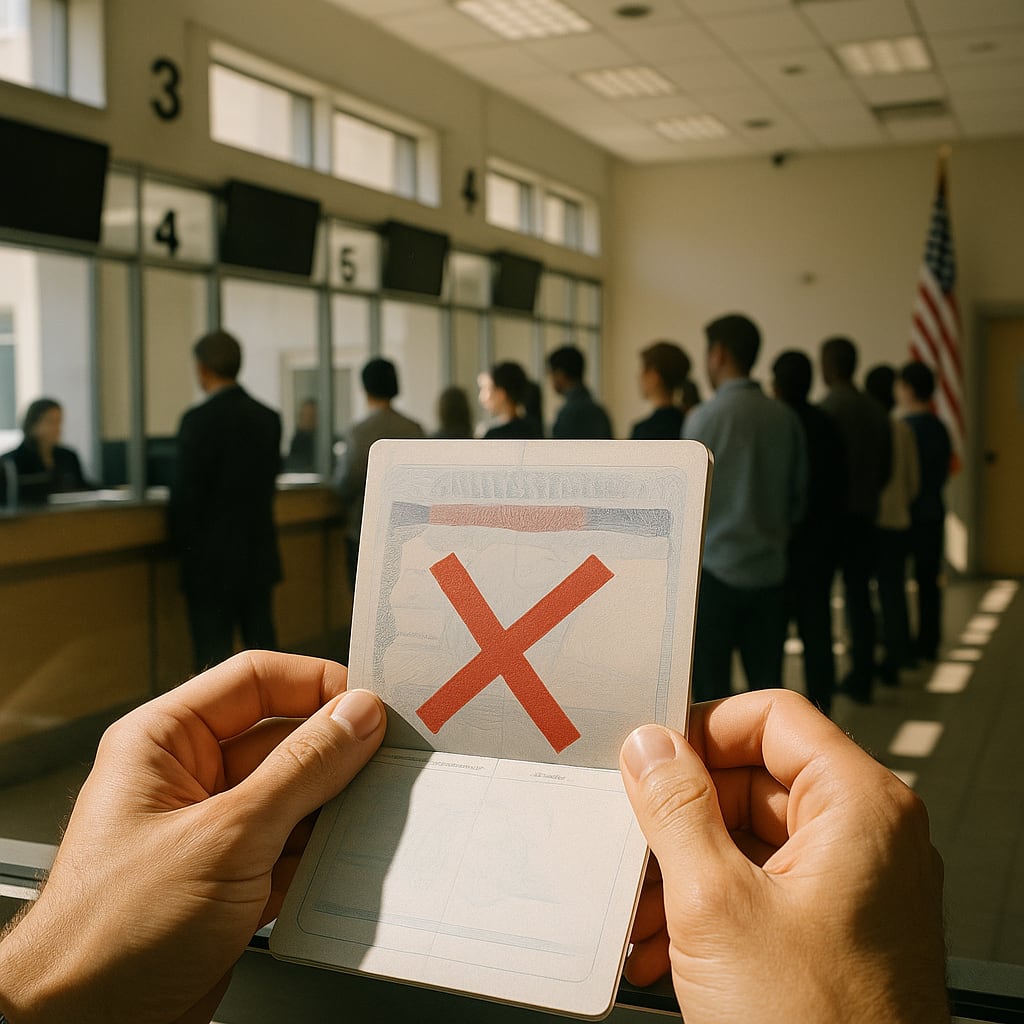
US plans mass revocation of B1/B2 visas for asylum applicants, in move reported to affect up to 200,000
Narrative Snapshot
Across outlets, the core contours are consistent: State Department coordination with the Department of Homeland Security to revoke B1/B2 visas of foreigners who entered as short‑term visitors and then sought asylum, with reporting that up to 200,000 could be affected and that implementation would be staged. What diverges is the framing. Several outlets cast the action as part of a broader “immigration crackdown,” emphasizing scale, legal risk, and deterrent effects on future asylum claims, citing the Associated Press and a State Department spokesperson’s statement carried by multiple services (France24; The Guardian; Deutsche Welle; CGTN; Al Jazeera English). Others stress enforcement against visa misuse and related initiatives, including a targeted campaign against “birth tourism” and the use of public‑charge screening in immigrant visa adjudications (Fox News; Fox News Digital).
International coverage also differs in how much weight is put on parallel consular moves. Multiple outlets report that immigrant visa interviews worldwide are being postponed for “in‑depth training” on public‑charge guidance, leaving applicants in limbo while officials recalibrate screening standards (Fox News; The Guardian; CGTN citing the Financial Times; Telesur English). Latin American outlets foreground U.S. officials’ rationale that leveraging visitor visas to pursue permanent status violates the visas’ terms, and situate the step within a widening focus on people who entered legally (Clarín, 25 Aug; Toronto Star; Clarín, 27 Aug). A smaller set of coverage explicitly links the measures to alleged discrimination or political‑opinion vetting and highlights recent court pushback on other Trump‑era restrictions, signaling where legal challenges may concentrate (The Guardian, 26 Aug; Telesur English).
What Happened
Multiple outlets, citing State Department documents and two U.S. officials, report that the administration plans to revoke B1/B2 business and tourist visas issued between 2016 and 2026 to foreigners who have applied for or are currently seeking asylum, with as many as 200,000 people potentially affected (France24; The Guardian; Deutsche Welle; CGTN; South China Morning Post; Japan Times; RT). A State Department spokesperson said the department is coordinating with DHS “to identify and revoke the nonimmigrant visas of foreigners who have come to the United States claiming to be short-term visitors, but then file for asylum to stay here permanently” (The Guardian; Fox News, 25 Aug; CGTN, 25 Aug). The New York Times reports the review has begun and cancellations could occur in waves. Officials have not confirmed a final tally, describing rolling revocations and a “dynamic” total; outlets also note the step would not automatically trigger immediate deportations and could face legal challenges (Fox News, 25 Aug; SCMP; DW).
Why It Matters
Several outlets place the move within a structural shift toward scrutinizing and constraining legal entry channels, not only unauthorized migration. Reporting highlights a global pause of immigrant visa interviews to train consular officers on public‑charge determinations—an admissibility screen for applicants deemed likely to rely on certain U.S. public benefits—indicating a systemic tightening of consular adjudication standards (Fox News, 26 Aug; CGTN, 26 Aug; The Guardian, 26 Aug). The Toronto Star underscores that the administration is intensifying enforcement against people who arrived legally. CGTN notes State Department claims of more than 175,000 visas revoked since January 2025, signaling institutional capacity for large‑scale action. Al Jazeera English reports potential deterrence effects on asylum filings. For decision‑makers, the aggregation of revocations, enhanced screening, and training pauses implies operational stress at consulates, heightened litigation exposure, and precedent for mass action tied to post‑entry intent, with ripple effects for travelers, employers, and partner governments whose nationals rely on U.S. visitor and immigrant visas.
Diverging Narratives
Enforcement‑first reporting emphasizes preventing misuse and fraud. Fox News frames the plan alongside a crackdown on “birth tourism,” with State highlighting interagency efforts to identify fraud and revoke visas. Clarín reports State’s position that using visitor visas to seek permanent residency constitutes fraud under visa terms, while U.S. officials describe revocations proceeding on a rolling basis with numbers not fixed (Fox News, 25 Aug; Clarín, 25 Aug). This strand stresses administrative discretion and coordination with DHS.
Civil‑liberties‑focused coverage presents the initiative as part of a “sweeping immigration crackdown,” underscoring scale, potential deterrence of legitimate asylum claims, and expected court challenges (The Guardian, 25 Aug; Al Jazeera English; Deutsche Welle; SCMP). The Guardian’s newsletter cites legal constraints against discriminatory application of immigration laws and recalls a February ruling overturning an attempt to suspend the refugee system; Telesur English characterizes the broader suite of actions as ethnically biased and alleges revocations based on political opinions or protests, while also noting a federal ruling against a separate ban covering applicants from 75 countries. Across reports, key uncertainties remain: the precise scope of affected nationalities is not detailed, timelines are “in coming weeks,” and outcomes will depend on staged implementation and judicial review (France24; The Guardian; NYT; Fox News, 25 Aug).
What Happens Next
Analysts should watch three decision points. First, the State Department’s formal announcement and implementing guidance, reportedly due within weeks, will clarify eligibility criteria, notice procedures, and coordination with DHS on enforcement; outlets signal revocations will occur in waves and on a rolling basis with a “dynamic” total (NYT; Fox News, 25 Aug). Second, litigation risk: multiple reports flag likely court challenges, and coverage highlighting prior rulings against discriminatory measures indicates where plaintiffs may focus; early filings, temporary restraining orders, or agency revisions would be key indicators (SCMP; The Guardian, 26 Aug). Third, consular operations: posts have paused immigrant visa interviews for training on public‑charge screening, with rescheduling timelines unspecified; the completion of training and any updates to adjudication manuals will shape processing backlogs and refusal rates (Fox News, 26 Aug; CGTN, 26 Aug; The Guardian, 26 Aug). CGTN also notes parallel fee proposals for H‑1B petitions, situating the move within a continuing tightening of legal pathways.