
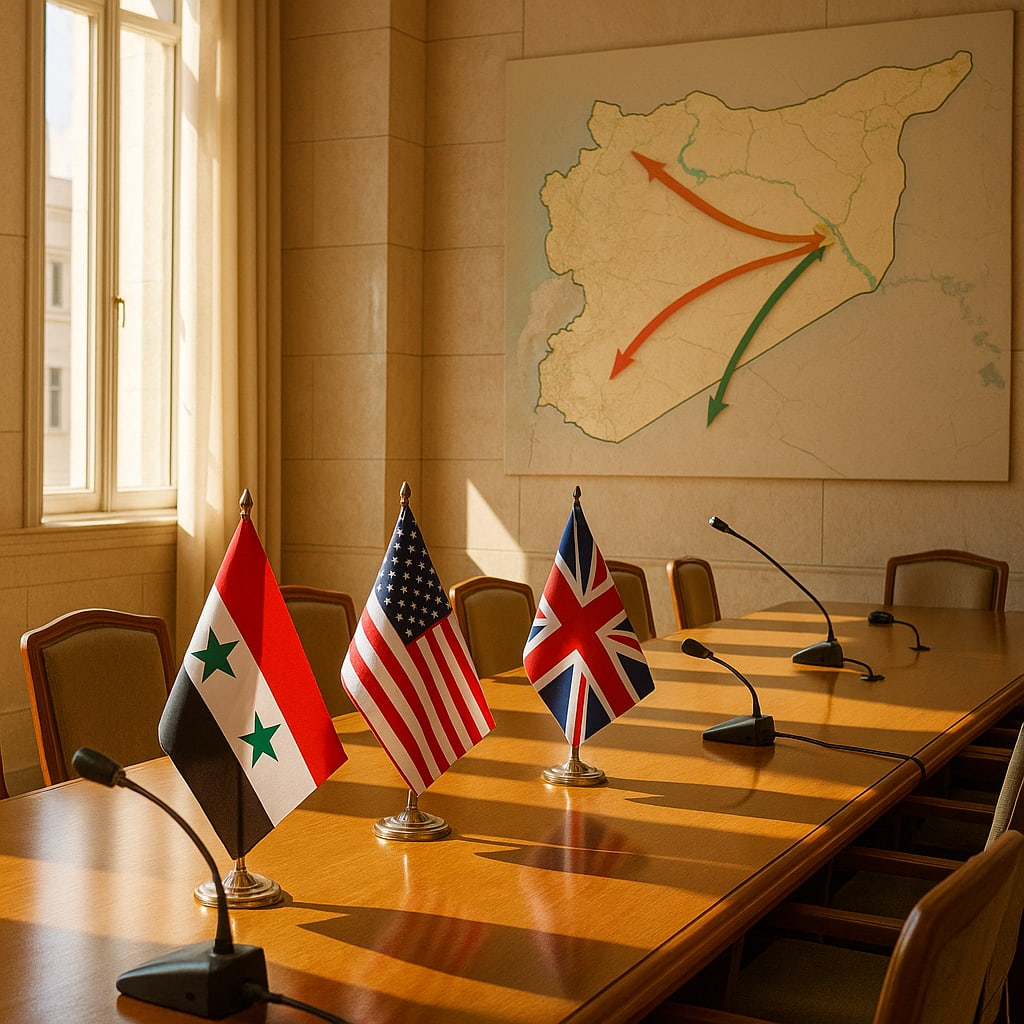
Syria appoints Mazloum Abdi as presidential adviser after dissolution of Kurdish-led SDF
Narrative Snapshot
Across outlets, there is consensus that Mazloum Abdi’s appointment as a presidential adviser followed his announcement that the Kurdish-led Syrian Democratic Forces (SDF) would dissolve under an integration deal with Damascus. State-focused reports emphasize the sequencing and formality of the move, with multiple outlets noting the official appointment by President Ahmed al-Sharaa days after the dissolution announcement. Coverage also converges on the broader scope of integration: both military units and associated administrative structures in northeastern Syria are in play.
Where emphasis diverges is on stakes and framing. Le Monde characterizes the development as sealing the end of Kurdish autonomy, while TASS spotlights military incorporation into the Syrian army. The Hindu zeros in on internal security arrangements by reporting that the SDF’s women’s units (YPJ) are discussing a merger with the interior ministry, signaling granular institutional negotiations still underway. Middle East Eye highlights international signaling, reporting that the move was hailed by the United States and, separately, welcomed by the United Kingdom as part of Syria’s political recovery and a deepening relationship with the UN.
What Happened
Mazloum Abdi announced that the SDF would cease to exist as an independent military force following agreements to integrate its military and civilian structures into the Syrian state, an outcome Telesur says capped months of negotiations and followed a March 2025 agreement he signed with Ahmed al-Sharaa. Le Monde dates the dissolution announcement to Tuesday, 25 August, and reports that Kurdish leaders are negotiating their integration into the Syrian state. Days later, multiple outlets including TASS, France24, Middle East Eye, and Al Jazeera reported that President Ahmed al-Sharaa appointed Abdi as a presidential adviser. The Hindu notes that the YPJ, part of the former SDF, began discussing a merger with the interior ministry two days after the dissolution announcement. Middle East Eye adds that the dissolution was part of a deal with Damascus and was hailed by the United States, and that the UK publicly welcomed the step.
Why It Matters
Le Monde’s framing that the dissolution “seals the end” of Kurdish autonomy situates the development within Syria’s long-running fragmentation and the reassertion of central authority over parallel governance structures in the northeast. TASS’s emphasis on integrating the SDF into the Syrian army underscores a consolidation of the national military chain of command. The Hindu’s reporting on YPJ merger discussions points to a shift from decentralized security arrangements toward centralized interior governance, with consequential implications for policing, public order, and gender-integrated force management under Damascus.
Internationally, Middle East Eye reports that the United States hailed the move and the UK publicly applauded it as part of Syria’s political recovery and a deepening government-UN relationship, indicating an external diplomatic opening contingent on state integration steps. Telesur cautions that turning the political breakthrough into functioning institutions will be protracted and complex, highlighting implementation capacity as the near-term constraint shaping policy outcomes.
Diverging Narratives
Outlets differ in how they describe Syria’s leadership and the political weight of the change. Telesur refers to Ahmed al-Sharaa as “interim leader,” while TASS, France24, Al Jazeera, and Middle East Eye identify him as president, reflecting varied portrayals of the new authorities in Damascus. On substance, Le Monde interprets the dissolution as the definitive end of Kurdish autonomy, whereas Telesur stresses that institutional unification will be lengthy and complicated, implicitly limiting immediate expectations for on-the-ground transformation.
Coverage also diverges in institutional focus. TASS concentrates on military integration into the Syrian army, presenting the SDF’s end in command-and-control terms. The Hindu brings the interior ministry into view by reporting YPJ merger talks, indicating that internal security architecture—and not just military structures—is being renegotiated. Middle East Eye adds an external dimension, reporting that the United States hailed the dissolution and that the United Kingdom welcomed it as a milestone, suggesting an alignment of Western diplomatic messaging around reintegration steps. Collectively, the reports surface open questions about the sequencing and scope of civilian and security integration, the precise status of autonomous institutions, and the practical modalities of merging specialized units like the YPJ into central ministries.
What Happens Next
Three decision points emerge from the reporting. First, military incorporation: TASS’s account of SDF integration into the Syrian army implies formal decisions on command assignments, unit reflagging, and legal status for former SDF personnel. Analysts should watch for decrees specifying chains of command and terms of service. Second, internal security restructuring: The Hindu’s report on YPJ merger talks points to pending choices on the placement of former SDF-affiliated security units within the interior ministry; outcomes there will indicate how far Damascus centralizes policing in the northeast and how it manages gender-integrated forces. Third, political integration: Le Monde notes ongoing negotiations for Kurdish leaders’ integration into state structures, exemplified by Abdi’s appointment; further appointments or institutional arrangements will signal the breadth of political incorporation.
Telesur’s warning about complex implementation highlights a final indicator set: the pace and coherence of administrative steps converting agreements into functioning institutions across the region.