
At G20 in North Carolina, US escalates Iran sanctions push, signals pressure on China, and restricts media access
Narrative Snapshot
Across outlets, there is broad alignment that Washington is using the Asheville G20 finance gathering to consolidate support for an expanded campaign of secondary sanctions on Iran and those trading with it. Reporting details a declared effort to “asphyxiate” Iran’s economy via “Operation Economic Outcast,” including threats to remove non‑compliant countries and firms from access to the US dollar system and to close perceived sanctions‑evasion “leakage” points. That framing is attributed to the US Treasury secretary himself and underpins the week’s diplomacy.
Coverage diverges sharply over feasibility and systemic risk. US and some Gulf readouts emphasize coordination to “safeguard” the financial system while tightening pressure, whereas multiple analyses and reports warn that isolating Iran without the cooperation of key partners—particularly China and India—could be destabilizing and difficult to enforce. A high‑profile on‑camera remark by the Treasury secretary about not wanting to “blow up the global financial system” has been seized upon by critics to argue the policy risks overshooting.
Stakeholders are cast differently across geographies. Chinese and Russian outlets highlight the global costs of US secondary sanctions and the leverage—and potential exposure—created by dollar dominance. Regional and UK outlets focus on the operational scope of the new designations and Gulf coordination, while US and Canadian coverage ties the Asheville agenda to an oil‑price shock from the Iran war and to pre‑existing tariff strains with allies. Domestic optics are also a subplot: the Treasury’s denial of credentials to several major financial outlets at the G20 adds a transparency and process dimension to an already contentious policy push.
What Happened
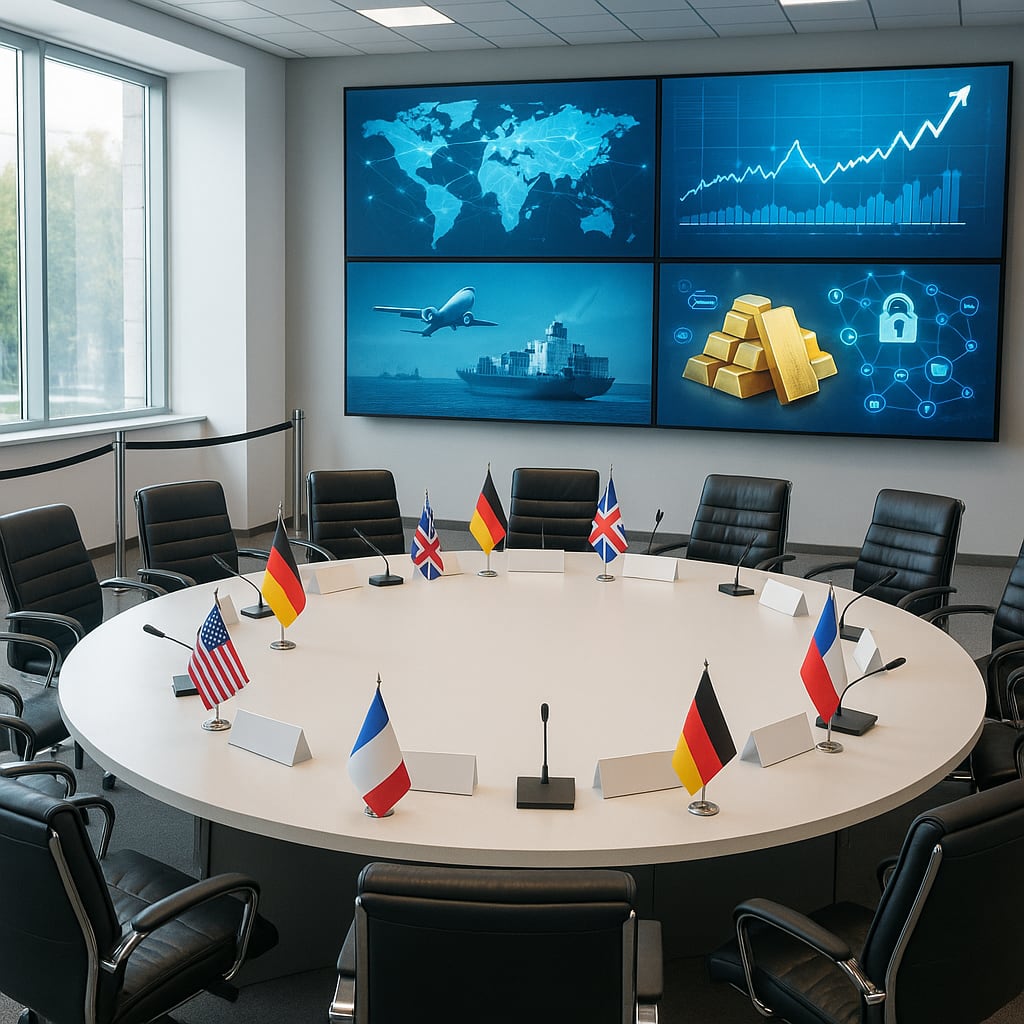
In the run‑up to the G20 finance ministers’ meeting in Asheville, North Carolina, US Treasury Secretary Scott Bessent announced an expanded sanctions campaign against Iran and its “enablers,” branding it “Operation Economic Outcast” and describing the goal as the regime’s economic “asphyxiation.” Reporting details widened secondary sanctions exposure across five sectors—digital assets, technology, gold, aviation, and shipping—with warnings that violators risk exclusion from the dollar system, new designations by OFAC, blocked tankers, and suspended licenses. In a separate call, Bessent coordinated with Bahrain’s finance minister on sustaining financial pressure. Coverage notes his on‑camera remark—“why would I want to blow up the global financial system?”—which drew criticism. As G20 officials convened, Bessent said he would meet Chinese counterparts, with Russian reporting adding that “all options” were on the table to sanction China over ties with Iran. The Treasury denied G20 credentials to reporters from several US outlets. The meeting’s economic backdrop includes elevated oil prices tied to the six‑month Iran war and visible fuel shortages inside Iran.
Why It Matters
The US approach relies on extraterritorial financial enforcement—particularly dollar clearing—to compel third‑country compliance. Chinese analysis underscores that the campaign explicitly raises the costs for non‑US actors across finance and trade, while Russian and other reporting stresses that the policy’s effectiveness hinges on cooperation from Iran’s top partners, notably China and India. The G20 forum, chaired in this instance by the US Treasury, is one of the few remaining venues where major economies can test whether consensus or at least coordinated tolerance for US secondary sanctions exists amid wider tariff disputes.
Institutionally, the combination of broadened sectoral exposure, suspended licenses, and threatened disconnection from US financial infrastructure signals a willingness to weaponize regulatory reach at scale. That bears on norms around sanctions multilateralism, the credibility of G20 economic coordination during conflict‑related shocks, and the durability of the dollar’s centrality if major economies openly resist. Denying credentialed access to several leading financial newsrooms at the G20 adds a governance and transparency layer to an agenda already facing scrutiny for potential systemic spillovers.
Diverging Narratives
US officials frame the sanctions surge as a decisive, whole‑of‑government campaign to end the “Iranian threat,” insisting that Tehran faces a binary choice between isolation and a return to “normalcy.” UK‑based reporting documents this rhetoric in detail, including claims of a “zero leakage approach” and comprehensive mapping of Iranian evasion networks. Gulf coordination is presented as an alignment to “safeguard” the integrity of the financial system.
Skeptical readings stress risk and practicality. Russian reporting channels expert views that an effective embargo is unlikely without China and India, and that a sweeping trade ban could destabilize the global economy. Chinese commentary characterizes the pivot to economic warfare as a cost‑containment move after months of military pressure, with systemic costs shifted onto third countries. Critical voices in Iran and the region cast the “economic D‑Day” framing as bluster, pointing to the Treasury secretary’s remark about not “blow[ing] up] the global financial system” as evidence of acknowledged risk. Meanwhile, US and Canadian outlets tie Asheville to a tense macro backdrop—oil shocks from the Iran war and strains from US tariffs—that could complicate alliance management. On‑the‑ground reporting from Argentina notes fuel queues in Iran but does not indicate policy capitulation.
What Happens Next
The first hinge is whether Asheville produces tangible alignment. Readouts, communiqués, or ministerial remarks that echo the US “asphyxiation” and “zero leakage” framing would indicate allied buy‑in; equivocation or silence from key G20 members, particularly India and China—whose participation and bilateral meetings are reported—would signal limits to coalition enforcement.
The second is enforcement scope. Additional OFAC designations, expanded sectoral determinations, further blocked property, or broader license suspensions—each documented in recent actions—would mark escalation toward the threatened removal from dollar access that US statements have dangled. Conversely, continued “warning shot” language without major new disconnections would suggest a calibrated approach mindful of systemic risk.
Third‑country behavior is the operational test. Trade adjustments by Iran’s top partners, as mapped by regional reporting, will determine leakage. Signals to watch include Chinese and Indian import patterns and any US move—foreshadowed in Russian coverage—to extend secondary sanctions directly to major Chinese entities. Regionally, additional US‑GCC coordination like the Bahrain call would indicate deepening alignment, while macro indicators tied to the Iran war—oil prices and domestic shortages inside Iran—will shape the policy’s economic backdrop.