
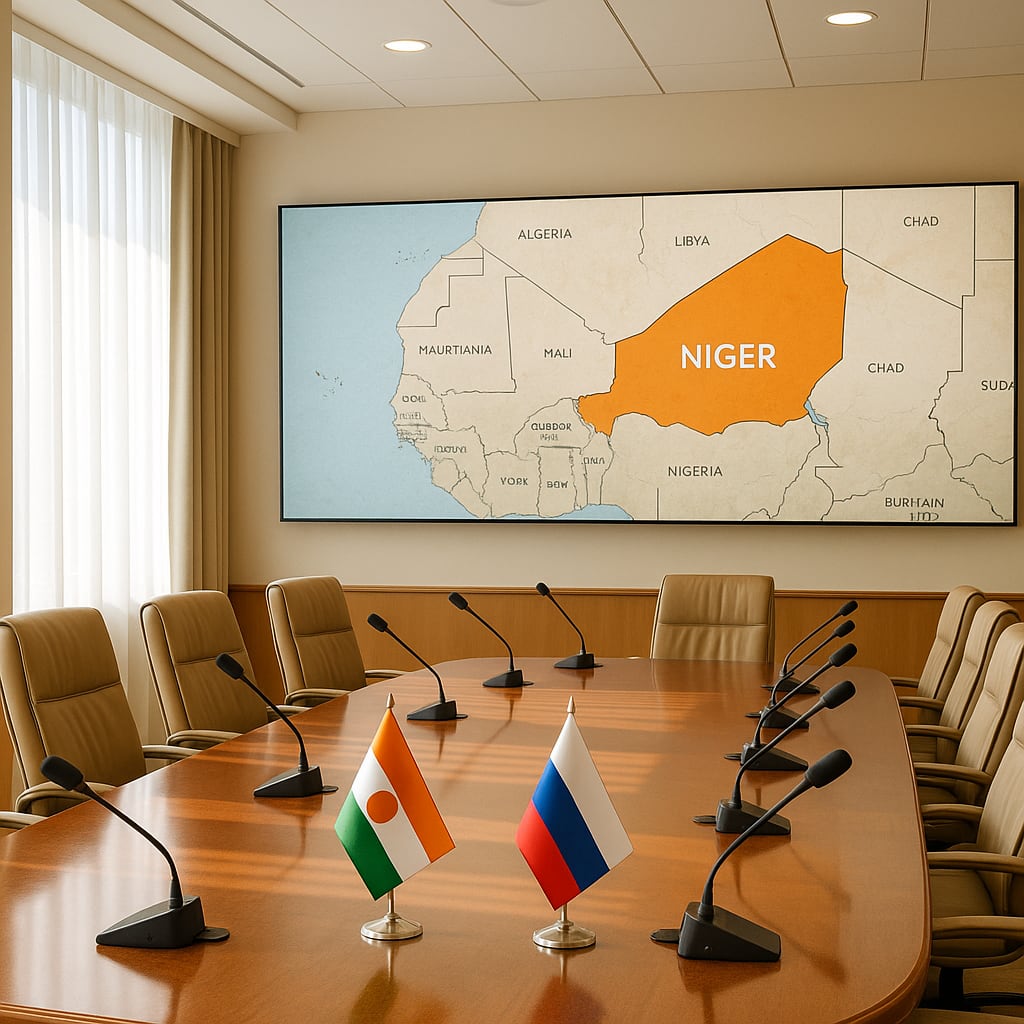
Niger quells Niamey mutiny; junta asserts control with Russia‑linked support
Narrative Snapshot
Across outlets, there is broad convergence on the geography and character of the unrest: reporting centers the violence on Niamey’s Air Base 101 at the airport and on sensitive sites around the presidential palace and the state broadcaster, with sustained gunfire and explosions noted by multiple sources. Early coverage emphasized uncertainty over perpetrators even as authorities later framed the events as a mutiny by soldiers (CGTN; France24, Aug. 29; Le Monde, Aug. 29; Daily Nation; South China Morning Post; Al Jazeera English, Aug. 30).
There is also wide, albeit differently framed, acknowledgment of Russian involvement on the loyalist side. France24 cites analysts who say Russia’s Africa Corps intervened; Le Monde says the coup attempt was ended “thanks to” these Russian allies; BBC reports Moscow’s claim that it helped repel the attempt; TASS carries both a Russian ambassador’s account of Niger’s request for assistance and Nigerien officers’ thanks at the Africa Corps base; AP copy carried by Toronto Star and coverage in the Bangkok Post similarly credit Russian forces or “paramilitary partners” alongside Nigerien loyalists (France24, Aug. 30; Le Monde, Aug. 30; BBC; TASS, Aug. 29–30; Toronto Star; Bangkok Post).
A number of analyses highlight the episode’s exposure of Niger’s internal strains. The Hindu points to mounting tensions within an armed force battered by al‑Qaeda and Islamic State affiliates; Deutsche Welle underlines divisions, poor equipment, and pay; and Al Jazeera (Aug. 31) frames the Africa Corps’ role as a test of Russia’s expanding Sahel footprint. A distinct regional angle appears in AllAfrica’s Agenzia Fides report that Algeria deployed fighter jets to Niamey’s Air Base 101—described as Algiers’ first overseas deployment—an assertion not echoed elsewhere in this set (AllAfrica, Aug. 31).
What Happened
Overnight into Saturday, gunfire and explosions were reported across Niamey, with residents citing clashes near Air Base 101 at the airport, the presidential palace, and the national broadcaster (CGTN; Le Monde, Aug. 29; Deutsche Welle, Aug. 29; Daily Nation; South China Morning Post). State television briefly went offline before resuming, as the defense ministry announced it was progressively retaking targeted sites (France24, Aug. 29). Mutinous soldiers tried to storm the presidential palace and held positions at the airport base before loyalist forces pushed them back (France24, Aug. 30; South China Morning Post). By Sunday, authorities said order had been restored in the capital, with AP reporting calm after loyalists—assisted by Russian forces—repelled the unrest (Toronto Star). State media later showed footage of dozens of detained, mostly young soldiers (TASS, Aug. 30). Russia’s ambassador said Niamey requested assistance and senior Nigerien officers visited the Africa Corps base; Moscow pledged continued support (AllAfrica, Aug. 31; TASS, Aug. 29–30). AllAfrica’s Agenzia Fides separately reported an Algerian air deployment to Base 101 (AllAfrica, Aug. 31).
Why It Matters
The incident consolidates a post‑2023 pattern in which Niger, having withdrawn from ECOWAS alongside Mali and Burkina Faso, leans on alternative security arrangements and deepened ties with Russia (CGTN). The visible role of Russia’s Africa Corps in suppressing domestic military unrest—reported across several outlets—underscores Moscow’s expanding Sahel posture and introduces a precedent of external partners aiding regime security during intra‑military crises (France24, Aug. 30; Le Monde, Aug. 30; BBC; TASS, Aug. 29–30; AllAfrica, Aug. 31). Russian official framing that links support in Niger to combating “extremists” allegedly incited by former colonial powers situates the episode within a broader information and influence contest with European actors (TASS, Aug. 30).
At the same time, coverage highlights structural fragility inside Niger’s forces—low morale, poor equipment and pay, and sustained losses against al‑Qaeda and Islamic State affiliates—raising questions about the junta’s capacity to wage counterinsurgency while managing internal dissent (The Hindu; Deutsche Welle, Aug. 31). If corroborated, Algeria’s reported first‑ever overseas deployment to Niamey would signal a notable regional stake in Niger’s stability (AllAfrica, Aug. 31).
Diverging Narratives
Outlets differ on characterization. French and UK reporting describe an “attempted coup” or “putsch,” while others, echoing Niger’s defense ministry, emphasize a “mutiny” by soldiers. Le Monde labels it a “tentative de coup d’Etat,” and BBC says an attempted coup was repelled; Deutsche Welle and France24’s ministry‑based accounts refer to mutiny and progressive retaking of sites (Le Monde, Aug. 29–30; BBC; Deutsche Welle, Aug. 29; France24, Aug. 29). Al Jazeera calls it a failed uprising that spread toward the presidential palace and state broadcaster (Al Jazeera English, Aug. 30).
Accounts also differ in apportioning credit to external actors. TASS reports formal thanks from Niger’s top brass to Russia’s Africa Corps and quotes the Russian ambassador that assistance was requested; France24 attributes the intervention to Africa Corps on the basis of analysts’ assessments; BBC presents Russia’s role as Moscow’s claim; AP copy in the Toronto Star and the Bangkok Post state that loyalists were aided by Russian forces or partners (TASS, Aug. 29–30; France24, Aug. 30; BBC; Toronto Star; Bangkok Post). On regional responses, only AllAfrica’s Agenzia Fides reports an Algerian fighter jet deployment to Base 101, describing it as unprecedented for Algiers—an assertion not corroborated across the other sources here (AllAfrica, Aug. 31). Analytical pieces diverge in emphasis between restored control and the underlying cracks and resource constraints that persist amid jihadist pressure (The Hindu; Deutsche Welle, Aug. 31; Bangkok Post; Al Jazeera English, Aug. 31).
What Happens Next
First, internal consolidation. Authorities have detained dozens of young soldiers and used state media to broadcast arrests (TASS, Aug. 30). Indicators to watch include additional arrests, changes among the General Staff or base commanders, and continued loyalty messaging on RTN.
Second, the scope of Russian engagement. The Russian ambassador says Niamey requested help; senior Nigerien officers visited the Africa Corps base; Moscow has pledged continued support (AllAfrica, Aug. 31; TASS, Aug. 29–30). Signals would be announcements of expanded Africa Corps activities, formalized training or deployments, and whether future internal incidents again feature visible Russian participation.
Third, regional security posture. AllAfrica’s Agenzia Fides reports Algeria sent Su‑30s and support aircraft to Base 101. Confirmation from Algiers or Niamey, the duration of any deployment, and evidence of coordination would mark a broader regional role (AllAfrica, Aug. 31). Concurrently, the trajectory of jihadist attacks and conditions for Nigerien troops—highlighted by The Hindu and Deutsche Welle—will show whether the mutiny’s aftermath affects frontline capacity.