
US-Iran confrontation sharpens after Larak strike as Tehran retaliates and Washington weighs escalation
Narrative Snapshot
Across outlets there is broad acknowledgment that the United States struck Iranian rocket launchers on Larak Island in the Strait of Hormuz and that Iran mounted retaliatory actions, but coverage diverges on scale, sustainability, and strategic effect. Middle East Eye pairs President Donald Trump’s vow to “hit [Iran] hard” with reporting, attributed to the Washington Post, that top U.S. service chiefs warned prolonged high-intensity operations against Iran would be unsustainable, underscoring a capability–intent gap. Fox News, by contrast, foregrounds operational gains at sea, detailing a months-long U.S. effort to clear Iranian mines from international shipping lanes while cautioning that the Strait remains at a “SEVERE” threat level and oil flows are far below prewar levels.
Iranian and pro-Tehran outlets emphasize deterrence and readiness alongside calibrated restraint. IRNA quotes President Masoud Pezeshkian pledging decisive responses to aggression while insisting Iran does not seek war, and highlights naval readiness; TASS amplifies both Pezeshkian’s preference for a peaceful settlement and a lawmaker’s warning that the U.S. would “pay a heavier price” if escalation continues. Tehran Times cites Kayhan to argue that U.S. threats have repeatedly yielded to Iranian resolve. Telesur centers Iranian retaliation, reporting strikes on U.S. targets in Jordan and the UAE and the downing of a U.S. drone. A senior Iranian source, cited by Middle East Eye via Reuters, frames the episode as a “limited and contained confrontation” but warns of harsher responses and tighter enforcement of Iranian “rules” for Hormuz transit.
Economic pressure is a parallel throughline. Middle East Eye details new U.S. sanctions designed to squeeze Iran’s regional trade while stopping short of the most punitive measures, and notes an oil price spike after Trump’s remarks. The Times of Israel reports Tehran’s defiant posture against “fresh sanctions” amid domestic steps to address soaring prices and planned fuel hikes. The South China Morning Post, via an interview with Trita Parsi, situates these dynamics in a broader assessment that U.S. strikes have strengthened Iran’s hand rather than triggering internal revolt.
What Happened
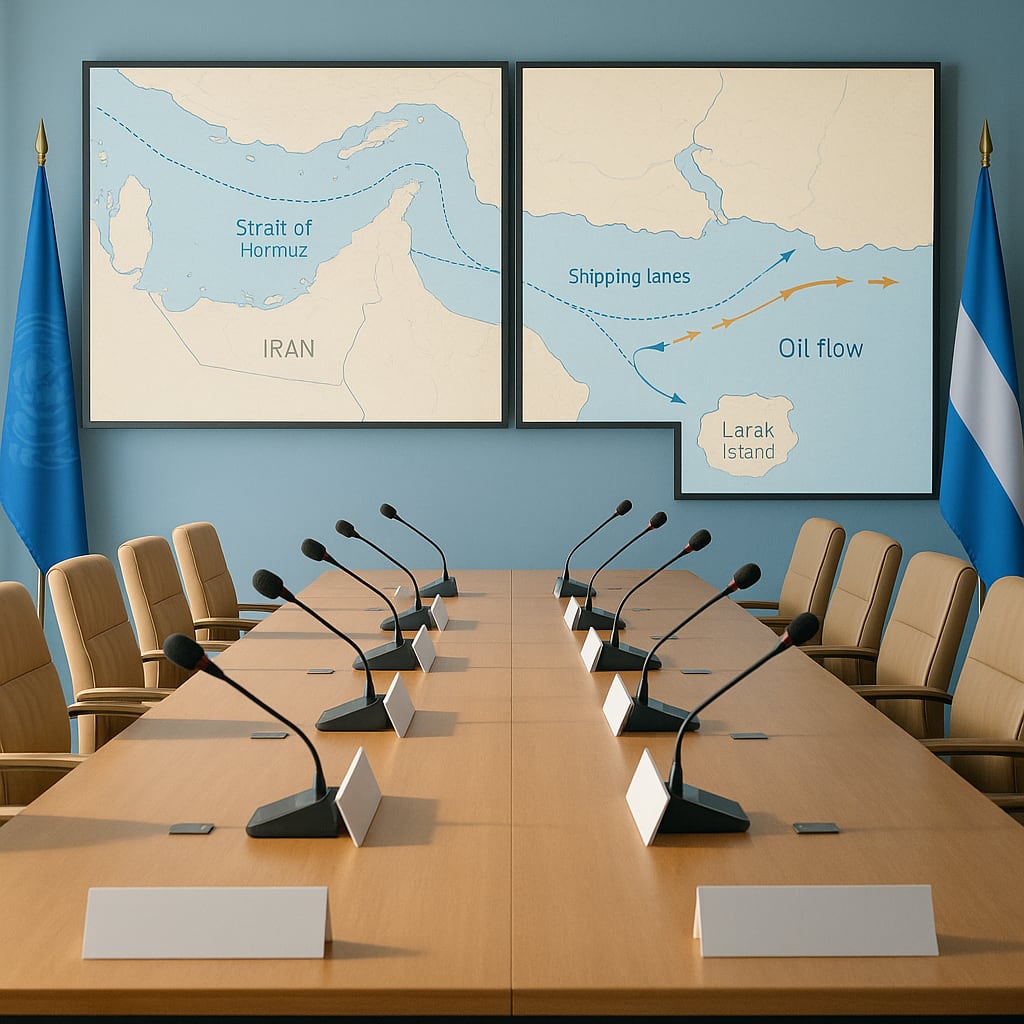
U.S. Central Command said it struck two Iranian rocket launchers on Larak Island in the Strait of Hormuz after observing Islamic Revolutionary Guard Corps personnel preparing to launch rockets and sea mines; Iran said the attack killed and wounded military personnel and civilians (Telesur). Following the Larak strikes, Iran said it carried out retaliatory drone and ballistic missile attacks on U.S. military targets at air bases in Jordan, and claimed action against U.S. targets in the UAE as well as the downing of a U.S. drone over the Strait (Telesur). President Donald Trump told Fox News the U.S. would “hit [Iran] hard,” and oil prices rose on the day of his remarks (Middle East Eye). Middle East Eye, citing a Washington Post report, said top U.S. military leaders warned that sustaining a large-scale war with Iran would undermine U.S. readiness elsewhere. Fox News reported U.S. forces cleared Iranian mines from recognized shipping lanes, though threat levels remain severe. Tehran’s leadership messaged resolve without seeking war (IRNA; TASS) and warned of harsher responses if attacked again, including stricter Hormuz passage rules (Middle East Eye).
Why It Matters
The confrontation intersects three structural arenas: maritime security, coercive economic statecraft, and strategic bandwidth. The Strait of Hormuz remains under acute risk despite U.S. mine‑clearing of international lanes, with official guidance still at a “SEVERE” threat level and oil flows below prewar baselines (Fox News). An Iranian warning that conditions will worsen for vessels violating Tehran’s rules signals ongoing friction over navigational norms and practical freedom of navigation in and near chokepoints (Middle East Eye).
On the economic front, new U.S. sanctions aim to constrict Iran’s regional trade while cautioning third countries against continued commerce, testing partner compliance and regional supply chains (Middle East Eye). Iran’s stated intent to stand firm against “fresh sanctions,” coupled with domestic adjustments such as fuel price hikes, reflects the internal balancing act between resilience and economic strain (Times of Israel). Strategically, Middle East Eye’s reporting on U.S. generals’ warnings underscores potential constraints on U.S. escalation amid global commitments, while Iran pairs deterrent rhetoric with signals of limited aims and interest in a peaceful settlement (IRNA; TASS). Pezeshkian’s travel to the SCO summit situates Tehran’s approach within non‑Western multilateral venues (IRNA).
Diverging Narratives
Accounts diverge on both the efficacy and trajectory of force. Trump’s pledge to “hit them hard” projects intent (Middle East Eye), while Middle East Eye’s citation of a Washington Post report that senior U.S. commanders judge a prolonged high‑intensity war with Iran as unsustainable highlights institutional caution and the risk of overextension. Fox News emphasizes concrete U.S. operational success in clearing mines from international lanes, yet notes the Strait’s overall risk and depressed oil throughput, tempering claims of restored stability.
Iranian and aligned outlets stress deterrence and endurance. IRNA and TASS quote President Pezeshkian saying Iran does not seek war but will respond decisively to aggression, and TASS cites a lawmaker warning the U.S. would pay a “heavier price” if escalation continues. Tehran Times, via Kayhan, frames recent cycles as evidence that U.S. threats give way under Iranian resolve. Telesur reports Iranian retaliatory strikes extending beyond Jordan to the UAE and the shoot‑down of a U.S. drone; other outlets cite Iranian action in Jordan but do not corroborate UAE strikes or drone losses. A senior Iranian source, via Middle East Eye, characterizes the exchange as a contained confrontation while warning of harsher responses and stricter Hormuz rules, juxtaposing restraint with coercive signaling. The South China Morning Post adds an analytic layer through Trita Parsi’s view that U.S. strikes have strengthened Iran’s hand rather than catalyzing domestic revolt, contrasting with the U.S. economic pressure campaign described by Middle East Eye and the Times of Israel.
What Happens Next
Three decision points will shape the immediate trajectory. First, U.S. response options: Trump’s stated intent to “hit [Iran] hard” sits alongside reported military warnings about sustainability (Middle East Eye). Signals to watch include any additional U.S. strikes beyond Larak, changes in CENTCOM posture, or public guidance narrowing objectives to containment versus punishment.
Second, Iran’s retaliation threshold and maritime enforcement: a senior Iranian source warned of harsher responses to further attacks and said conditions would worsen for vessels violating Tehran’s Hormuz rules (Middle East Eye). Indicators include declared or enforced transit rules, interdictions, and any shift in Iran’s announced posture of not seeking war but responding decisively (IRNA; TASS).
Third, sanctions implementation and trade realignments: U.S. measures target Iran’s regional commerce while warning third countries (Middle East Eye). Outcomes depend on partner compliance and Iran’s capacity to absorb pressure, manage domestic adjustments reported by the Times of Israel, and leverage diplomatic venues such as the SCO summit noted by IRNA. Maritime threat levels and oil price moves will reflect risk transmission from the security and sanctions tracks.