
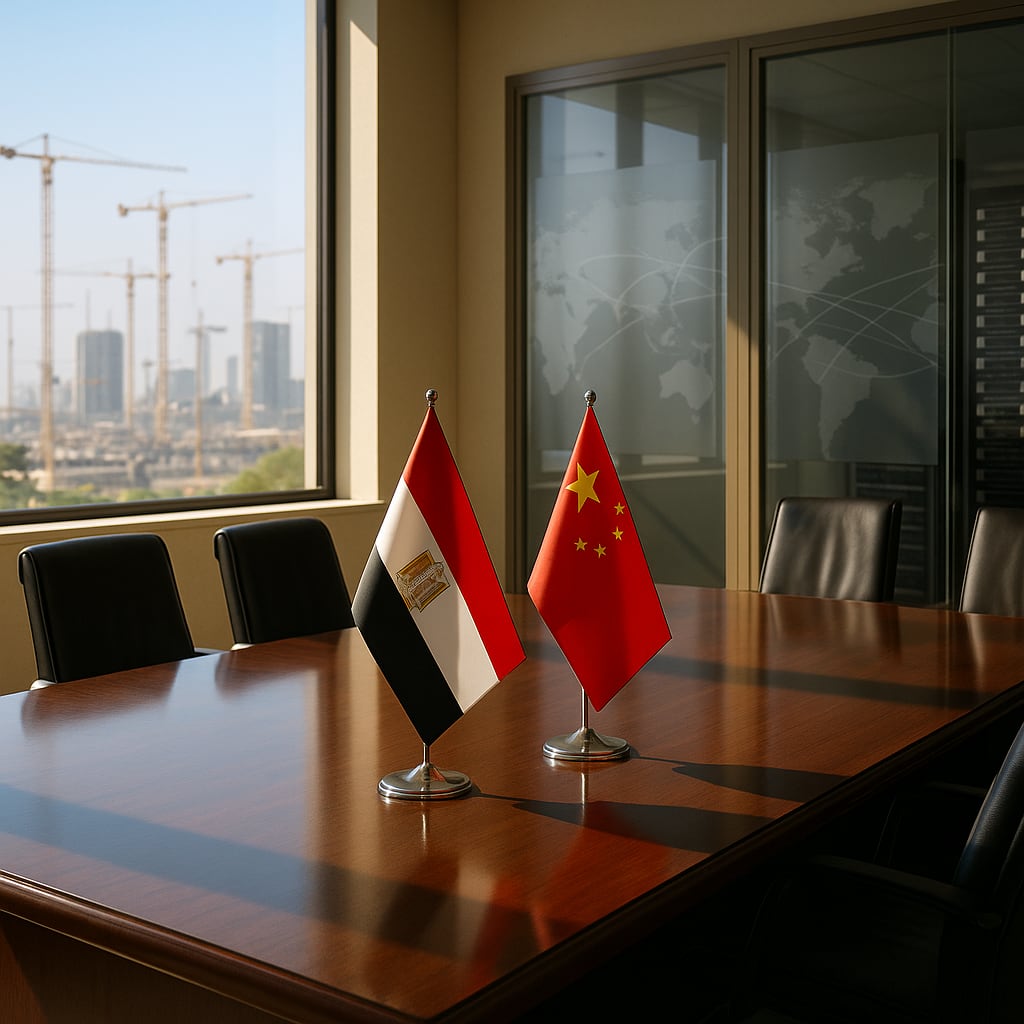
Xi’s Cairo visit marks 70 years of China–Egypt ties as U.S. Iran sanctions tighten on Egyptian banking
Narrative Snapshot
Chinese state outlets foreground the symbolic and programmatic arc of the relationship. ECNS quotes Xi Jinping calling China–Egypt an example of “friendship, solidarity and coordination between developing countries,” stressing political trust and multilateral coordination. CGTN situates the visit in 70 years of ties, highlighting Belt and Road projects such as the Chinese-built Central Business District in Egypt’s New Administrative Capital, including a 385.8-meter tower slated to be Africa’s tallest, and noting expanded cooperation in trade, technology, and green energy, alongside zero-tariff access for more Egyptian goods to China.
Regional and international coverage gives greater weight to the sanctions environment and shifting power balances. The Japan Times frames Xi’s return to a “transformed Middle East” marked by war and renewed U.S. economic coercion against Tehran. The Hindu casts the trip as China cultivating a comprehensive relationship with a key U.S. ally in West Asia, while Al Jazeera emphasizes strategy alignment amid regional crises.
Outlets closest to the sanctions story anchor the financial risk. Middle East Eye details the U.S. Treasury’s move to cut Banque Misr’s UAE branches from dollar transactions over Iran dealings, the 30-day notice and comment period, and the bank’s review of the notice. The Times of Israel ties Xi’s visit to Washington’s boosted sanctions regime that could hit Egyptian and Chinese banks, adding that Beijing is shoring up ties with U.S.-friendly states ahead of a Xi–Trump meeting. Corriere della Sera reports Beijing’s belief that expanded sanctions will not “hit China,” citing continued imports of roughly 500,000 barrels per day of Iranian oil.
What Happened
Xi Jinping arrived in Cairo on September 1 for his first state visit to Egypt since 2016, welcomed at the airport by President Abdel Fattah el-Sisi and their spouses, according to ECNS. Chinese and Egyptian readouts presented a program to deepen bilateral cooperation and consult on regional and international issues, coinciding with the 70th anniversary of diplomatic relations, as reported by Telesur and CGTN. Chinese coverage highlighted Belt and Road projects, including the New Administrative Capital’s Central Business District, and framed the partnership as a model for developing countries (ECNS, CGTN). The trip unfolded as the U.S. Treasury moved on August 28 to cut Banque Misr’s UAE branches off from dollar transactions over Iran-related dealings, with a 30-day notification window and an effective date of September 28 (Middle East Eye). Banque Misr said it is reviewing the notice (Middle East Eye). The U.S. Treasury Secretary separately signaled plans to sanction another bank (AP via Toronto Star), and The Hindu noted broad warnings of secondary sanctions while stopping short of penalties on major Iranian trade partners such as China and India. The Times of Israel linked the visit to potential sanctions exposure and an upcoming Xi–Trump meeting.
Why It Matters
The visit intersects with intensifying U.S. secondary sanctions on Iran that are now touching Egyptian finance, testing the resilience of China–Egypt economic initiatives and the risk management of institutions exposed to U.S. dollar channels. Middle East Eye’s documentation of correspondent banking restrictions on Banque Misr’s UAE branches underscores the operational consequences that can flow from Washington’s Iran enforcement. Against that backdrop, Chinese narratives of South–South solidarity and long-term project delivery (ECNS, CGTN) signal Beijing’s intent to entrench commercial and political ties with a U.S.-aligned state even as sanctions widen. The Hindu’s reporting that Washington has warned broadly but spared major partners such as China and India to date delineates an enforcement boundary that is central to policy calculations. Corriere della Sera’s account of continued Chinese imports of Iranian crude illustrates the scale at which sanctions compliance choices could reverberate through energy and financial channels.
Diverging Narratives
State-linked Chinese outlets describe the trip as a milestone in a mature partnership, emphasizing mutual trust, multilateral coordination, and tangible development outcomes under the Belt and Road Initiative, without reference to sanctions exposure (ECNS, CGTN). Telesur amplifies the ceremonial and people-to-people aspects and frames the agenda as following up on the 2014 Comprehensive Strategic Partnership. In contrast, The Japan Times and The Hindu center the strategic context: a region “convulsed by war” and a global rivalry in which China is expanding ties with a key U.S. ally. Al Jazeera’s framing of strategy alignment amid regional turmoil is compatible with this but avoids the sharper great-power language.
Coverage tied to Israel and U.S. sanctions provides a different lens. The Times of Israel couples Xi’s visit with the threat that Egyptian and Chinese banks could face U.S. measures over Iran links and notes Beijing’s engagement with U.S.-friendly states ahead of a Xi–Trump meeting. Middle East Eye supplies granular detail on the U.S. Treasury’s action against Banque Misr’s UAE branches, including the public comment process and the effective cutoff from dollar transactions. Corriere della Sera presents Beijing’s view that expanded sanctions will not bite China and points to continued Iranian crude shipments. The Hindu reports that, despite broad warnings, Washington has so far refrained from penalizing major Iranian trade partners like China and India. The unresolved question across these accounts is how far U.S. enforcement will extend and whether financial pressure will intersect with, or sideline, the China–Egypt economic agenda.
What Happens Next
Key decisions cluster around sanctions enforcement and diplomatic signaling. The U.S. Treasury’s 30-day notice on Banque Misr’s UAE branches precedes a potential cutoff from dollar transactions on September 28; whether Treasury finalizes, modifies, or retracts the measure after public comment will indicate enforcement direction (Middle East Eye). The U.S. Treasury Secretary’s statement that another bank sanction is planned sets expectations for additional actions (AP via Toronto Star). The Times of Israel’s note of an upcoming Xi–Trump meeting creates a separate channel where Iran sanctions and third-country exposure could feature. Analysts should watch for any Chinese or Egyptian announcements that operationalize the Comprehensive Strategic Partnership or expand Belt and Road cooperation during the visit (Telesur, CGTN), alongside any signals from Washington on the scope of secondary sanctions, especially given The Hindu’s observation that China and India have not been penalized to date. Corriere della Sera’s reporting on sustained Chinese imports of Iranian oil offers a measurable indicator of sanction tolerance.